Are businesses investing in tomorrow's artificial intelligence while still operating with yesterday's organizational structures? And could that explain why so many enterprise AI initiatives struggle to deliver the results leaders expect?
In this episode of AI at Work, Neil C. Hughes joins Jesper Schleimann, Head of Business AI for EMEA at SAP, to discuss why adopting AI technology and achieving meaningful business transformation are two very different challenges.
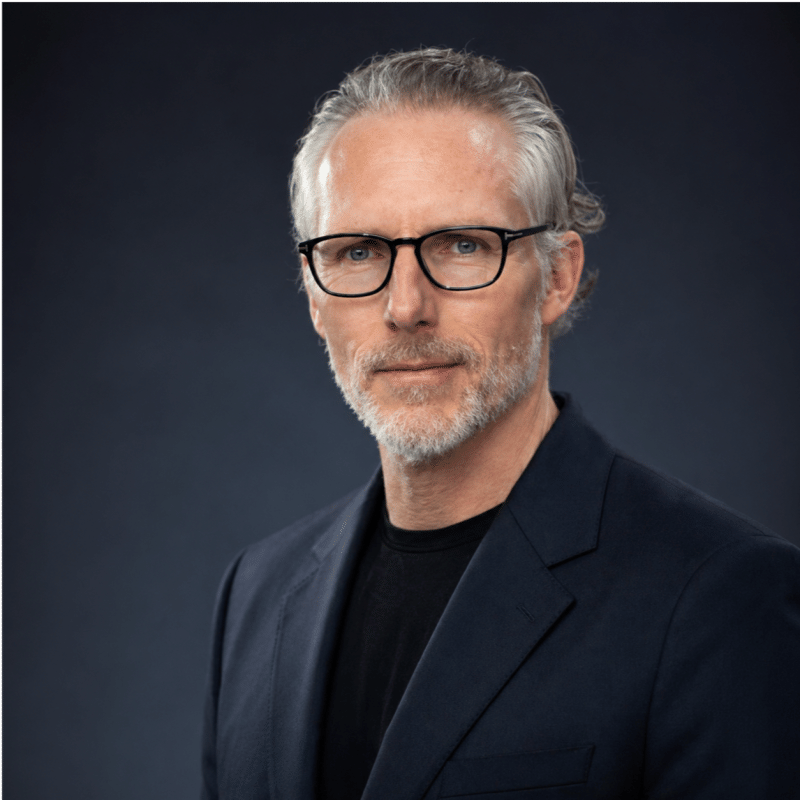
Jesper shares what he's seeing across organizations in Europe, the Middle East, and Africa, where AI adoption is accelerating but progress remains uneven. While some businesses already report improvements in productivity and customer service, others are finding that isolated projects and impressive demonstrations don't automatically translate into business value.
The conversation examines why companies should start with a business problem rather than a technology solution, and why adding AI to inefficient processes can limit its potential.
They also discuss the growing interest in autonomous AI agents and the practical realities of allowing intelligent systems to take action inside an enterprise. Jesper explains why business context, defined authority, reliable data, and human accountability all play an important role in building trust.
As businesses progress toward increasingly autonomous operations, what happens to traditional management structures? How should leaders decide when humans need to intervene? And could the greatest opportunity come from redesigning how work happens rather than simply making existing tasks faster?
Jesper also draws on his book, The Intent-Driven Leader, which examines the leadership and organizational thinking changes required as AI becomes more capable.
As companies invest heavily in enterprise AI, this conversation offers a timely reminder that technology alone can't drive organizational transformation.
Are businesses ready to rethink the way they operate, or will familiar structures and habits continue to limit what AI can achieve?
Useful Links
Connect with Jesper Schleimann on LinkedIn

[00:00:00] [SPEAKER_01] Scale your business with agentic AI with limited risk. With Denodo's AI data layer, your agents are provided with real-time company data and guardrails for company protection. Create the business you always dreamed of with Denodo, and you can do that by simply visiting denodo.com to learn more. But now, back to my guest.
[00:00:23] [SPEAKER_01] What if years of AI investment are only saving each employee just about enough time to fetch a cup of coffee? Well, my guest today calls this the coffee cup level of productivity. I will argue that moving beyond it requires companies to redesign their work instead of attaching AI to yesterday's processes.
[00:00:50] [SPEAKER_01] So today, here on AI at Work, I'm going to be joined by the head of business AI for SAP, EMEA. His name's Jesper, and we're going to discuss why business outcomes should come before models, and where bounded AI agents can work reliably today, and why context turns plausible answers into incredibly useful decisions.
[00:01:17] [SPEAKER_01] And we'll cover everything from the autonomous enterprise, human accountability across the every loop, and the leadership changes needed to move from pilots towards trusted execution. And Jesper will also tell us a little about his forthcoming book. I think he's going to leave us a few teasers today on the intent-driven leader.
[00:01:42] [SPEAKER_01] So if your AI program has plenty of tools but limited business value right here in 2026, today's conversation could explain exactly what you've been missing. Intrigued? I was hoping you'd say that. Let me introduce you to Jesper right now. So thank you for joining me on the podcast today. Can you tell everyone listening a little about who you are and what you do?
[00:02:11] [SPEAKER_01] Well, thank you so much for having me, Neil.
[00:02:12] [SPEAKER_00] My name is Jesper Sleiman. I am the head of what we call business AI in SAP in the EMEA region, which covers everything from Svalbard in northern Norway to South Africa, and then all across Europe from the UK, where you are, and Ireland, over to the other side of Europe.
[00:02:32] [SPEAKER_01] Well, it's a pleasure to have you join me today. We've heard a huge amount of noise around AI transformation over the past few years, but a few question marks about return on investment in some quarters. But I'm curious, from everything that you're seeing there right across the world, how much genuine progress are you actually seeing inside large enterprises? What's happening there?
[00:02:55] [SPEAKER_00] I think if you zoom back a little bit, you're going to see that what we would call adoption, or traditional adoption, is actually accelerating again. But the problem is, in my view, that the true transformation of organization is moving much, much slower than the technology, right? So the progress is real, but it's really also very uneven, especially the last enterprises.
[00:03:21] [SPEAKER_00] And in certain industries like high-tech, pharma, to some parts of retail and service, I would say, have moved quite far in strong adoption, and also in areas like specific areas like employee productivity, obviously customer service, the front end, but also the IT office, obviously. And now the middle office is where we are still to see the bigger revolution, in my view.
[00:03:51] [SPEAKER_01] And I'm curious, from what you're seeing there, what is it that is separating the organizations that are successfully generating value from AI, from those that are still struggling to get beyond pilots and experimentation? What is it different about those organizations now?
[00:04:08] [SPEAKER_00] Look, I think it's not about who has the best models, or even who has the most models. It's about who can return the intelligence into trusted execution. The ones that are really successful, in my mind, are the ones who start with valuable business outcomes and focus on that, and then walk backwards. And not with a focus of technology.
[00:04:36] [SPEAKER_00] What we've seen in a lot of the early deployments is the IT departments get hands up amazing technology that for sure has capabilities we have never seen before, but it becomes technology in search of a problem. And it's actually one of the things I've uncovered in writing my book, that is a common pattern that has been deployed across many IT departments. And the realization is now in that we really have to, of course, flip this on its head
[00:05:00] [SPEAKER_00] and start with a business problem at hand, and then work backwards towards the technology. And then, of course, comes the challenges of then scaling this, which is really the second phase of the journey, which is what I would say we're in the middle of now, where it's about moving away from just building single-state projects or silo projects
[00:05:24] [SPEAKER_00] and begin evaluating and putting value to reuse of projects of technology and building projects that lay the foundation for the next problem so we can get to that exponential scale. And that really requires another level of true executive ownership and therefore also understanding of the technology. And that, I think, unfortunately, is still lacking a bit.
[00:05:49] [SPEAKER_01] And I've also heard a lot around companies tagging on AI onto their existing workflows, workflows that were possibly built for an entirely different era instead of building new workflows with AI. Are you seeing much of that and debates around that as well?
[00:06:06] [SPEAKER_00] Yeah, it's clear that with this technology, when the new programming language is English, it's as easy as it's ever been to really build and deploy new solutions. And therefore, I believe we have seen, as you said, quite a lot of technologies popping up all over and really, let's say, extending the current reality. But taking a bad process and adding AI to it is not going to make it better, right?
[00:06:36] [SPEAKER_00] That's really not the right way to go in my mind. It really... The hard part is not building an agent. That's easy. Trusting it to act inside an enterprise, that's the difficult part. And building that trust part is hard. And that requires adding in context. It requires adding in trusted tools and grounding it in this area and the right level, of course, of autonomy to be introduced.
[00:07:06] [SPEAKER_00] And that's not so easy. And we can see it in the productivity statistics, right? We're reaching this coffee cup level type productivity where on average we're seeing 5% to 7%. That's why I call it coffee cup. It's about the time saved it takes me to go and pick up a cup of coffee or tea in this case. But really, to move to the next stage, to get that factor improvement, we have to rethink our operating models.
[00:07:31] [SPEAKER_00] And that's the third stage that I believe we are at the dawn of today.
[00:07:37] [SPEAKER_01] And you've mentioned AI agents there. They've quickly become one of the biggest talking points in enterprise technology this year in particular. So how much of what we're hearing today is hype and how much is already achievable? Because I've been to, what, 15 tech conferences this year. It's the number one topic covered at every single one of those conferences. But how much is hype and how much is achievable, do you think?
[00:08:01] [SPEAKER_00] I think there's a lot of hype around fully autonomous, general purpose agents. You know, these kind of super agents that can do everything, that operate the entire business. They're definitely not here yet. And I'm not quite certain they're ever going to be here, right? But more bounded agents that can perform specific tasks that are grounded in the context of business. I.e. they know who your customers are or your products and your market and operate within these constraints are very achievable.
[00:08:32] [SPEAKER_00] And that's also when they're particular effective, in my view, right? When we have structured, repeatable work, observable work supported by clear escalation path. And that's also where we're seeing quite rapid scaling right now. So examples of that could be embedding it within a finance flow for doing accounts payable together with a tax agent, together with a posting agent, working in collaboration as an auto-sapient CFO colleague, so to speak.
[00:09:03] [SPEAKER_01] And there's a lot of talk around the autonomous enterprise at the moment. And just to ensure we don't leave anyone behind here, what does an autonomous enterprise actually look like in practice? And again, how close are we to achieving it?
[00:09:18] [SPEAKER_00] The autonomous enterprise is not an organization just with more AI. It's an organization that's designed so intelligence can easily move from intent to trusted execution. From intent to trusted execution. So that's not really a company without humans or leaders or hierarchy. And I think that's another important misconception we're going to put down.
[00:09:42] [SPEAKER_00] But it means that a lot more work can now move from intent to execution without really waiting for repeated human coordination. And this is quite achievable today. But it does require spending the time and the effort to getting the architecture and the setup right. And it requires that you rethink the roles of the organization. And that's not as easily done as putting in the technology.
[00:10:11] [SPEAKER_01] And I'm curious, from what you're seeing and hearing here, are there certain business functions or processes that are genuinely ready for AI-led decision-making today? Or just are more attractive to leaders? Are there any trends in the kind of areas that they're looking at?
[00:10:27] [SPEAKER_00] So if it's more high-volume, repetitive, or relatively what I would call bound processes, they are obviously the easiest one. So good examples, as I mentioned before, another one could be things like invoice processing. This can be a quite tedious manual task. And there's really a standard there for the invoices you get. It could be things like service tickets classification. It could be things like forecasting demand if you're a retail business, which has been traditionally hard.
[00:10:54] [SPEAKER_00] Or other things like validating documents and applying quality certificates at scale, or even more routine HR topics. These are the things that a lot of people do every day that we can really help now accelerate these days. And where AI-led decision-making becomes more and more interesting. And that's really the crux of it, right? That AI is a technology that is not just a tool, like a natural extension of our human abilities.
[00:11:25] [SPEAKER_00] But it's really a way for us to get to a state of decision compression. To have a natural extension of our cognitive capabilities and outsource, in a way, decision-making, to some extent, under bounded autonomy. And that leads to a whole new area of, let's say, more complex decision-making.
[00:11:46] [SPEAKER_00] But initially, I would say the augmentation, providing recommendations, simulation, AI-assisted, AI-guided, are really the scenarios that we see a lot of AI in use of today.
[00:11:58] [SPEAKER_01] And another big buzzword I hear at every tech conference is the importance of the human in the loop. So as AI becomes capable of making more decisions and taking more and more actions autonomously, where does human oversight still need to sit? Where is this human in the loop typically required?
[00:12:20] [SPEAKER_00] Look, I think the future is not the human in every loop. Yeah. But I also don't believe in the human out of the loop as a concept. For me, it is human accountability across every loop. So I think what is needed is really, from a human standpoint, where are the consequences and the uncertainty of decisions high? Where are humans involved? That's where we need to be in.
[00:12:45] [SPEAKER_00] So people should really retain authority over high impact, especially irreversible, ethically sensitive or ambiguous decisions. Applying judgment is a crucial skill for the future. And that's a very human-like emotion.
[00:13:05] [SPEAKER_00] It's really, as we move towards the age of autonomy, pushing us as humans towards the edge here, right? And the front end of the human capability. So oversight doesn't mean we have to go in and improve every single action, because then we might as well do it ourselves to some extent. But it's more about defining authority and monitoring outcomes and intervening when needed.
[00:13:34] [SPEAKER_00] I call it autonomy zones. And it's important here to be clear on the intent. So that's one of the things in my upcoming book called The Intent-Driven Leader that I focus quite a lot on, the role of intent in the future. Because when intelligence becomes abundant, it's really going to come down to trusted execution and clarity of intent.
[00:13:58] [SPEAKER_00] And the better we can define intent and structure this, the more we can operationalize it with intelligence and trusted execution. The better and with more trust we can delegate it. That's really the model we are looking into. And that also says a lot about where we are going as humans in this hybrid human AI organization.
[00:14:18] [SPEAKER_01] And another big buzzword we've heard over the last few years is no data, no AI. Because AI is widely considered to be only as good as the data that sits behind it. So what does this mean in practice when businesses start deploying AI agents when they're now throwing these into the mix? What are you seeing here?
[00:14:37] [SPEAKER_00] You know, if you don't have shared meaning or context, an agent, as we talked about before, they can use a technically very, very plausible answer, right? But very, very operationally or factually wrong. So essentially it may look like a beautiful answer. The problem is it's not right, right? Because what the model does is really provides amazing intelligence. But context is what provides the understanding.
[00:15:04] [SPEAKER_00] It's like when we work together, you understand what's happening. And if we go and have a cup of coffee together, we understand the policies and things. But I can't talk to the model. I can't have a coffee with it, right? And every time I talk to it, unless I give it the context through data, it does not know the policies, the orders, and the product numbers.
[00:15:27] [SPEAKER_00] So we have to give it that reliable business context, but also an understanding of what the data actually means. And that's things like semantics, process insights, or it could also be relationships or business situations. Shared meaning, right?
[00:15:43] [SPEAKER_01] It really is. And I think the final buzzword in every big vendor keynote that we see on stages around the world is guardrails. So what governance and accountability challenges still need to be solved before businesses can become essentially comfortable giving AI greater autonomy and handing the keys over?
[00:16:04] [SPEAKER_00] So as a company, you really have to define who is accountable when an agent makes a decision or takes an action, right? So there needs to be a clear set of accountabilities and traits defined for every single agent, like the explicit calling out of the authority, the constraints, the access controls, the observability, but also the escalation rules, right?
[00:16:33] [SPEAKER_00] I think an agent cannot exist without clear ownership. And I think it leads to another great misconception of the future. We talk about the hierarchy a lot, right? The hierarchy, I believe, will retain and stay in the future. Orchestration will be more fluent, right? That will be how we move work around the enterprise. Because intelligence is cheap, but trust is scale.
[00:17:05] [SPEAKER_01] And I'm curious, from everything you're seeing and hearing, are there any other big mistakes that you see business leaders making when approaching AI transformation? Like I mentioned a few times your book here, so I'm thinking you've done a lot of research and spoke to a lot of leaders. But are there any trends in the kind of mistakes that they're making?
[00:17:22] [SPEAKER_00] I think the biggest mistake is really taking tomorrow's intelligence and putting it inside yesterday's organization. Yeah. We talked about it a little bit before, right? If you start with AI tools rather than outcomes, you're very focused on the first order effects of productivity, which are good. But you're really missing the bigger picture, which is really to build a compounding learning loop, right? And you have to reorchestrate your organization around that.
[00:17:51] [SPEAKER_00] And you also have to provide a clear path for people for future and not just tell them it's going to be a better future with AI tools. But you have to really do the hard work and build out a clear path and also think about different incentives and to really pull out the best of humans. And redesign as well end-to-end work because work has to look different, right? And that comes back to this yesterday's organization.
[00:18:18] [SPEAKER_00] And then I would say when I talked to leaders, one of the things they unanimously said was, look, scaling is really, really hard. Underestimating adoption and the role of adoption, not just taking it for granted that it's going to be enough with a lot of training because training is just a part of it to get the true adoption. What you really mean is a change of culture and a change of thinking and a focus on intent. And that's hard.
[00:18:45] [SPEAKER_00] And then lastly, the leadership role. Leadership is absolutely crucial. I think as leaders today, especially I would say myself, we're guilty of having to think that we always have to have the right answer or be the most clever person in the room. But I think the future of leadership does not entail that. It entails that we need to be the architects of change.
[00:19:12] [SPEAKER_00] We need to design the guardrails and the architecture and the environment where humans and intelligence can coexist to really release and move to this next stage of business value of AI together. And so we've got to focus on the leadership role and educate leadership because they're the ones who have to lead this way before we can get to the true adoption. And this is why I'm seeing another underestimation taking place.
[00:19:43] [SPEAKER_01] And if I was to pull out a virtual crystal ball here and ask you to look into the future a little bit, this year has all been about agents. If we look over the next 12 to 24 months, start thinking about 2027, even 2028. What do you think will change significantly about how enterprises adopt and use AI and tick those return on investment box and start unlocking real opportunities? How do you see that unfolding over the next two years?
[00:20:13] [SPEAKER_00] The next phase of AI will define less by what AI actually knows and more by what enterprises and organizations will trust it to do. I think we'll see AI move primarily from a technology that answers questions to AI that actually takes action within bounded autonomy for us as organizations.
[00:20:35] [SPEAKER_00] And the focus will, for many, if you look at it from an IT perspective, shift from individual co-pilots to orchestrated systems of agents. And we'll see the challenge will become how can we act like air traffic controllers to secure a perfect journey, bringing our bags along, switching between airplanes. It is complex orchestration that is done at an airport.
[00:21:01] [SPEAKER_00] I think companies will be more disciplined about moving from these pilots towards measuring value. We're already seeing token budgets being introduced today as well. And the role of governance will also change from our passive rule setting to something that moves a lot closer to actual execution and become more continuous, very contextual, and very, very evidence-based.
[00:21:28] [SPEAKER_00] And then long-term, when you have these operational conditions in place, I think one of the biggest questions I'm continuously getting from business leaders is, what will the future look like? How will I compete in the future? And competitive advantage will come increasingly from more proprietary business context, like the data discussion we had before, like unique access to the data from my supply chain, my suppliers, my customers.
[00:21:55] [SPEAKER_00] And accumulating this as organization learning, or what I would call intelligence capital. So together with the execution of the intelligence loop of AI and the clarity of intent, they can deliver towards better organizational performance.
[00:22:15] [SPEAKER_01] And I know you've been working incredibly hard on your book there, on the personal side of things. And I can only begin to imagine how challenging it must be writing about cutting-edge technology at a time where the speed of technological change is moving at breakneck speed. But I know you've been talking to a lot of business leaders. We're now at the point where the book is almost coming out. Anything you can share about the book? What we can expect? When it will be available? And who it's aimed at?
[00:22:42] [SPEAKER_00] So I think as you were talking about the technology, because it's been moving so fast, we've been lagging hopelessly behind in how we think about how we orchestrate and design the operating model, which is really what it's about as organizations. How do we deliver prosperity, economic profit, and benefit for the world and for the constituents we work with? And so I got a lot of questions outside the technology. What does it mean? What does an autonomous enterprise actually look like? Technology is fine. I know that's one thing, but what about the rest?
[00:23:13] [SPEAKER_00] So the book is really about answering those questions in three simple parts. Part one is around the shift, as I call it, where we're moving away from enterprises and organizations that's focused around processes and workflows towards intent. And how that shift in the nature of how work is done leads to a new operating model,
[00:23:38] [SPEAKER_00] an operating model that is built around the intelligence loop that leverages context, insight, intelligence, but also things like evidence in particular to build trusted execution. And then the third part is about the compounding. It's about how you as leaders build an organization that compounds learning and sustain competitive advantage. How do you build an architect for that change?
[00:24:08] [SPEAKER_00] And where should we move on that adoption level? Because I think that the winners will not be the ones with the most AI, but the ones best at turning intent into trusted execution. And plan-wise, the book will be out mid-October. We will have it available as an e-book, of course, but also in print copy. And look forward to sharing more, perhaps also with you, Neil, and the listeners on that as we get out.
[00:24:37] [SPEAKER_01] A hundred percent. It'd be great to stay in touch with you and talk a little bit more about that later in the year. And for people listening that are intrigued, we've left them with a bit of a teaser there. Maybe they want to connect with you, find out more about the book, or indeed stay up to speed with all things SAP and some of the things we talked about today. Anyway, in particular, you'd like me to point everyone listening?
[00:24:58] [SPEAKER_00] I mean, first of all, I mean, LinkedIn is one profile that I will make sure. We will also bring interviews and updates on the elements of the book. We will tease that out in the coming weeks. That's an amazing place to follow. Also connect with me and follow there. We will also bring out some unique assets there. And then, of course, as you said, the book will come out. We will do a book tour in October with 10 stops around Europe and the Middle East. So people can also come and have a view.
[00:25:28] [SPEAKER_00] And I would love to hear from you and from the listeners. What are your challenges? How are you managing the journey to the autonomous enterprise?
[00:25:39] [SPEAKER_01] There we have it. A great call to action here. Everybody listening, check out the show notes. There'll be a blog post associated with this episode over at techtalksnetwork.com. I will have a link to everything that you mentioned there. This is a dialogue, not a monologue. And I'd love to keep this conversation going and hear your stories, your insights, your experiences, what's working, what's not. And I know Jesper does too because he's just said it. So please, let's keep this one going. But Jesper, more than anything, thank you for bringing all this to life today.
[00:26:10] [SPEAKER_00] Thank you, Neil. It was a great pleasure. Thanks for having me.
[00:26:13] [SPEAKER_01] I think Jesper left us today with the idea that it's well worth carrying into every future AI meeting because tomorrow's intelligence cannot deliver much inside yesterday's organisation. Building an agent today has become relatively easy. That is the easy part. Giving it enough business context, setting its authority, monitoring its actions and earning people's trust.
[00:26:39] [SPEAKER_01] These are the things that require a much, much harder level of work. So leaders should begin with an outcome, work backward towards the technology and decide where human accountability must remain, where it's non-negotiable. Otherwise, we do risk spending heavily to save everybody enough time for one extra cup of coffee. And yes, that is lovely, but it's unlikely to impress the board. And maybe that's what we've seen over the last few years.
[00:27:09] [SPEAKER_01] So massive thank you to Jesper from SAP for such a thoughtful conversation about bounded autonomy, trusted execution and redesigning of work. Remember, you can follow Jesper on LinkedIn. Look out for the intent-driven leader, which is coming our way in October. And over to you. Is your organisation redesigning work for AI or merely placing smarter tools inside the same old structure?
[00:27:39] [SPEAKER_01] Lots to think about there. Techtalksnetwork.com. That's where you can find me and all my other interviews. And if you're already up to date, and seeing as we're publishing around 50 to 60 interviews a month at the moment, I'm going to question that. But assuming you are up to date, I'll be back again tomorrow with another one. Thanks as always. Bye for now. Bye for now.
[00:28:01] Well, thank you. Bye for now. Bye. Thank you.