
How can customs agencies inspect vast volumes of cargo without slowing legitimate trade or handing consequential decisions entirely to an algorithm?
In this episode of AI at Work, I speak with David Smason, founder of CargoSeer and Head of Customs AI at BigBear.ai, about a form of workplace AI that operates far from the usual office productivity conversation. CargoSeer was built to help customs teams combine cargo documents, x-ray images, routes, commodity codes, tariffs, and historical patterns before an experienced officer makes the final decision.
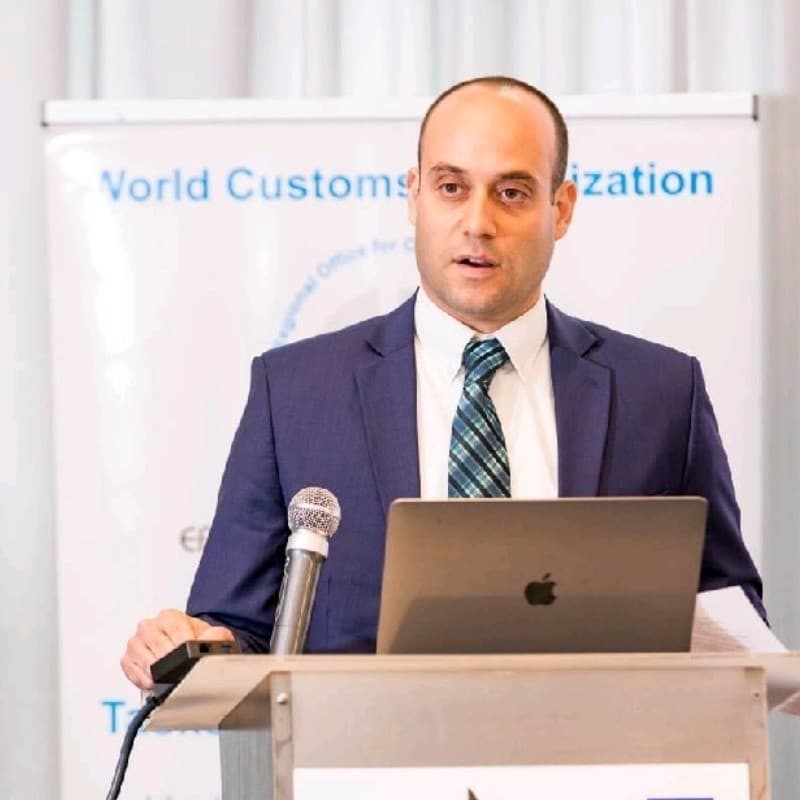
David explains why traditional customs work can overwhelm even highly trained people. A single shipment may involve dozens of documents, different languages, handwritten information, revenue questions, and national security risks. His vision is one operator overseeing hundreds or eventually thousands of analyses while concentrating attention where human experience matters. He compares the result to a James Bond command center, although the real work involves careful data processing, explainable recommendations, and a clear role for the officer.
We discuss CargoSeer’s internal findings that an operator using its supporting technology can assess a shipment in under five seconds, compared with several minutes in some existing processes. That speed comes with an important qualification. False positives may delay legitimate cargo, while false negatives may allow serious risks through. David says each customs agency must define its own risk appetite, operating procedures, success measures, and thresholds rather than accept a universal model.
Human feedback remains central to the system. David compares an AI model to a baby that must be taught continuously. When an officer corrects a false alert, the correction can improve later recommendations. He argues that operators value this influence because their knowledge becomes part of the technology instead of being discarded.
We also discuss localization and proof. David estimates that CargoSeer’s models are currently about 85 percent standardized, with the remaining work shaped by local data, language, culture, tariffs, agreements, and operating practices. His advice to public agencies is direct: demand evidence that the system works on your data, in your environment, and within your workflow. Test it, try to break it, and define performance before live deployment.
Could this model of AI-supported judgment work in other high-consequence roles where speed, evidence, and accountability must coexist? Listen to the conversation and share your thoughts with me.
Useful Links
Connect with David Smason
[00:00:00] [SPEAKER_01] AI agents are only as strong as the data that they're given. When provided with an outdated data set, your agents could end up doing more harm than good. But not with Denodo. With an AI data layer built within your platform, your agents are provided with real-time data changes. So with Denodo, your agents can finally make the right business decisions. Simply visit denodo.com to learn more.
[00:00:27] [SPEAKER_01] What happens when a customs officer must assess thousands of containers, dozens of documents, multiple languages and several kinds of risks, all without slowing legitimate trade? Well, in today's episode, I'm going to be speaking with the founder of CargoSeer and head of customs AI at
[00:00:53] [SPEAKER_01] BigBear.ai. And we're going to be talking about using artificial intelligence to support human judgment at the border. He will explain today how AI can combine documentation, routes, images, commodity codes and historical patterns before presenting an operator with the information that they need to make that final call. And we'll also discuss CargoSeer's reported reduction in decision time
[00:01:20] [SPEAKER_01] from several minutes to under five seconds. And the very different costs around false positives and false negatives and why local testing matters, we'll cover that today. And also David's James Bond style command centre analogy, which is particularly memorable. But his message is refreshingly practical. Technology earns trust by helping experienced people do their jobs better. With that scene set,
[00:01:48] [SPEAKER_01] let me officially introduce you to him now. So thank you for joining me on the podcast today,
[00:01:56] [SPEAKER_00] David. Can you tell everyone listening a little about who you are and what you do? Yeah, excellent. Thank you so much for having me now. It's a real pleasure to be here. But we have introduction. My name is David, as you've already mentioned. I founded a company called CargoSeer just under four years ago. Our company was acquired by BigBear AI. At the beginning of this year, in January, BigBear AI is a specialized defense tech company, providing really cutting-edge
[00:02:23] [SPEAKER_00] artificial intelligence solutions to governments worldwide. And we were acquired, as I said, at the beginning of this year to start bolstering or to continue enhancing more accurately the customs and borders portfolio that BigBear is really going hard on. BigBear has a real deep bench of customs border enforcement experts, starting from the top, Mr. Kevin McAleeman, who served in multiple very,
[00:02:49] [SPEAKER_00] very high-level positions within the U.S. government, including being in charge of CBP. He was acting secretary of DHS during the first Trump administration and so on and so forth, all the way down to operators who have been at the sharp edge for the better part of the last 30 years. And that's where it really gets interesting because CargoSeer was founded in my personal kind of mission or North
[00:03:14] [SPEAKER_00] Star, if you would, is to really build something for operators that operators like, feel confident in, and can really use and have the biggest impact in the field. So we built CargoSeer. We did a great job with the technology. And then we got acquired by BigBear. And now I'm heading up customs AI at BigBear. Uh, and it's, again, it's really a pleasure to be here, uh, with you. And I'm really looking forward
[00:03:39] [SPEAKER_01] to our conversation. Yeah, the pleasure is mine, my friend, because every day on this podcast, I try and get people thinking differently about the way that technology impacts our lives, our work, and indeed entire world, and also get people thinking differently about technology in industries you don't associate with tech and customs agencies, for example, they're challenged with moving
[00:04:02] [SPEAKER_01] enormous volumes of cargo while also identifying smuggling and trafficking and so much more. So why is that balance so difficult with, let's say, the traditional processes?
[00:04:14] [SPEAKER_00] That's a really good question. I mean, anytime you have really complex processes with, you know, hundreds of thousands of moving parts by nature, it's going to get difficult to find a balance. Um, traditionally, you know, customs was one of those industries that it was all paper-based, uh, literally people running around with clipboards, um, imports, trying to find the container that
[00:04:40] [SPEAKER_00] they're supposed to be looking at. I mean, if you, if you can imagine, uh, up until 10 years ago, that's really how it was. And it is, it is still that way in some parts of the world. You have a container ship docks, um, thousands of containers come off. Customs is tasked with looking at each and every one of those containers to identify, um, many, many different threats, right? It can start from national security. Are there drugs in that container all the way down to revenue collection?
[00:05:04] [SPEAKER_00] Um, have the right taxes been paid on the goods in the container? And you know, they have 50, 60, 70 different documents. Some of them are sometimes even, even in different languages, um, not to get started on the handwriting, right? Uh, so you have all of these really, really complex data points that are all being funneled into the brain of one person, uh, as talented and as smart and as well
[00:05:27] [SPEAKER_00] trained as they might be. No human being can efficiently process all of that data, uh, within the time that they need to process it. And that's where artificial intelligence really comes in and helps the operator understand all the different data points and makes the process much more better for the operator, right? And it's important to understand here, my take on technology and the way that we approach this is we're not replacing humans. We're not replacing operators.
[00:05:55] [SPEAKER_00] We're here to bolster and enhance their processes and make them more efficient. And that's really where the balance is going to come in, Neil. It's going to come in from understanding on the one hand, what the operator really, really, really needs and wants and feels confident in. And in the other hand, what the technology can really provide. And it's interesting. And I hope we get into it later in our conversation, some of the limitations of artificial intelligence, right? So if you don't
[00:06:21] [SPEAKER_00] balance between the operator and the technology or between the human and the technology, then the process is going to get out of whack. Containers aren't going to get through. There's going to be stoppages, there's going to be delays and so on and so forth. Nobody's going to be happy. But if you can really strive to hit that sweet spot between what the operator needs, trust, wants, can use, et cetera, and et cetera, and what the technology can actually do, then you're going to get closer to that equilibrium. And I'm not going to say that the process is always smooth. I'm not going to say
[00:06:47] [SPEAKER_00] that it works 100% of the time. We're still getting better. We get better every day, but
[00:06:52] [SPEAKER_01] we're getting closer to that goal. And one of the things I wanted to bring up here, just to highlight the scale of what we're talking about, is I was reading before you joined me that you described AI as essentially allowing one operator to oversee hundreds of analysis rather than just replacing the operator, which again is great to hear. But what does that working relationship look like drawing a, let's say a real inspection decision? Have you ever seen a James Bond movie where they
[00:07:20] [SPEAKER_00] have the command and control center with about 10,000 screens, right? And James Bond is sitting in the middle, looking at everything, pulling clues out of thin air, right? So that's where, that's where we're going. And that's, we've been in those command and control centers for customs. We've been in those inspection centers and that's what we do for them, right? One operator suddenly has James Bond-like qualities, right? And they become superhuman and they can understand all the different data. Language is no longer a barrier, right? Horrible handwriting on the part
[00:07:49] [SPEAKER_00] of the importer is no longer a barrier, right? And instead of telling the operator, you need to look at all these data points separately. We're putting them all together. We're trying to replicate the processes that the operator would make on his behalf or on their behalf, right? And say, here, man, this is exactly what you need to know at this specific point in time. No, you go ahead and make your decision. And as opposed to what I mentioned earlier about the operator running around the port,
[00:08:16] [SPEAKER_00] looking at hundreds and thousands of different disparate data points, right now they're able to get all the decision points after all that data has been processed. And all they need to do is make that data and is make that decision. I'm sorry. And that's what they're really, really, really good at. Customs operators are the best in the world and understanding very quickly if a shipment is good or bad, but they need to do all of the processes beforehand. And the way that we built
[00:08:42] [SPEAKER_00] CargoSeer is we observed the way that operators work for tens of thousands of hours and we're essentially just replicating their work, right? We're saying all of these manual processes, zooming in on the x-ray image, extracting data from this document, understanding where the shipment came from, where it's supposed to go, how many taxes are supposed to be paid on it, and so on and so forth. We're automating those processes and at the end of the day presenting that to the operator. Now,
[00:09:07] [SPEAKER_00] we can understand that at a scale of one, we can understand at a scale of two, right? But what we're working towards is scales of thousands and eventually even tens of thousands of shipments or transactions being adjudicated in parallel. And all the operator needs to do is look at it for a split second and say, this is good, this is bad. And the studies that we've done with CargoSeer and with technologies that support us is using these types of technologies, a customs operator can make
[00:09:34] [SPEAKER_00] a decision on a single shipment in under five seconds, right? When previously they needed between four to seven minutes in some countries, in some countries between five to seven, it doesn't matter, right? You get the point to make that same decision. So we're significantly reducing the amount of time and effort that an operator needs to spend on each shipment. And that's how we're reaching the scale. And that's what it looks like. Like I said, James Bond sitting in the command and control center, directing all of these processes simultaneously.
[00:10:04] [SPEAKER_01] Wow. That's incredibly cool. I'm curious which signals can AI detect across things like cargo documentation, routes, images, and historical patterns? What can it detect that maybe a human team would just struggle to connect at that kind of scale that we're talking about?
[00:10:21] [SPEAKER_00] Yeah, that's an excellent question. The best example of that, Neil, is when you're looking at how the bad guys operate, right? So they're looking at threat vectors and threat patterns. So the typical human operator would be able to identify maybe 10 or 15 scenarios, potential scenarios, right? Game them out and say, oh, the bad guy's going to come from here. They're going to do this. They're going to smuggle on this part of the container and so on and so forth. So their limitation, the best human in the world can reach about 10, 15 of those in parallel,
[00:10:48] [SPEAKER_00] right? Artificial intelligence, just as one example of what you asked, what you asked me can look at thousands, tens of thousands, sometimes even millions of different scenarios in parallel. And those are really, really cool data points because we've already gamed out all of the scenarios that the bad guys might use, right? And we're saying this is relevant, this is relevant, this is not relevant, this is relevant, this is high priority and presenting that to the operator. Now, when you take all of the other traditional data signals, documentation, just, you know, the best example
[00:11:17] [SPEAKER_00] of that would be the HS code, right? The commodity code versus the commodity description. Those are the different types of signals we build in, right? And we're taking kind of that superhuman intelligence, looking at everything in parallel, building in the traditional data signals and the non-traditional data signals, and then it all comes together for the operator. The second part of that answer is, and I'm going to say something here that might not sound so
[00:11:45] [SPEAKER_00] conventional, but artificial intelligence can be taught to read anything, right? It's just a matter of time, data, and resources. If you have enough time, if you have enough data, and you have enough resources, artificial intelligence can be taught anything in the world. The big problem is we never have enough time, right? We never have enough data, and there's never enough resources. But as we start getting further and further down the technology path of this, as we're seeing, you know, with the large
[00:12:13] [SPEAKER_00] data centers and LMS, and I'm not going to go down that, right? It's going to be easier, quicker, and cheaper to train, and that's essentially what we're building our technology for, is the future where the limitations one by one are being reduced, right? So it's all up to having, it all comes down to, having the best platform and the best infrastructure in the world to harness all of those different data points and train on them as quickly and efficiently as possible.
[00:12:40] [SPEAKER_01] And on the flip side, false positives, they can delay legitimate trade, while a false negative can have quite severe consequences. So how do you tune a system when both kinds of errors carry very different costs? Is that a tricky balance?
[00:12:55] [SPEAKER_00] It's a very, very tricky balance. I am happy to tell you that I do not make those decisions. The customer makes those decisions, right? As I mentioned several times during this conversation, we build for the operators, right? The reason we build for the operators is not to move responsibility to somebody else. It's because they know their job best and they know what they need. So we're very, very, very particular about building together with the customer a concept of operations,
[00:13:24] [SPEAKER_00] or con ops, right? And that's where the massive customs expertise and background of the folks that I'm blessed to work with comes into play because they've been doing this for so long that they know what the specific concept of operations needs to be. And we're all learning together how technology is introduced into the concept of operations. Now on that, you know, it's a balance, like you said,
[00:13:49] [SPEAKER_00] right? You might want a false negative one out of every 10 times. You might be able to sustain false positives three out of every 20 times, right? You might want a false negative on things that are benign. We have an example. So we have customers that have said, um, if this shipment does not have a potential revenue collection of over $250,000, I don't want to see it, right? I don't care about anything over to under $250,000. Some other countries, some other customers say, I want to know
[00:14:17] [SPEAKER_00] everything. I want to know when there's the slightest anomaly, right? Obviously, if you're looking for everything, you're going to have more falses, right? So it all depends on what the customer is, what, what their risk appetite is, what the risk mitigation strategies are. Uh, we call that risk management in the world of customs. And the nice thing about our technology is it's very, very, very customizable to the specific use cases of the customer. We can have tens of thousands or even hundreds of thousands of different use cases that are deployed simultaneously, each one
[00:14:47] [SPEAKER_00] attacking a different vector. Uh, and that really comes into play when you're looking at, you know, different geographical areas. So as we well know, here in the United States, there's different threats at every port, right? We have the Northern border, Southern border, we have airports and so on and so forth. Everybody's looking for something different. So that's kind of how we approach that. Uh, at the end of the day, it's working with the customer, it's working with the operator to understand their specific concept of operations and fine tuning the technology to address that.
[00:15:13] [SPEAKER_01] Yeah. And I think another important, uh, point to make here is we're not talking about AI replacing people. It's how much AI compliments our customs workers. So on that side of things, are you able to share an example where let's say an experienced custom officer overruled or maybe corrected the system and, and what that taught you about the value of human judgment too? Oh yeah. I mean,
[00:15:38] [SPEAKER_00] the value of human judgment was always very, very clear to me. I mean, we've had so many examples and I like to say that AI and algorithms are like a baby, right? You can't just bring the baby into the world and let it roam free. You got to feed it. You got to close it. You got to teach it, right? And you got to continue doing that. So a very important feature of our system and the technology methodology that, you know, that we're bringing to the world is feedback loops,
[00:16:05] [SPEAKER_00] right? How do we get feedback loops from the operator, either in real time or asynchronous? Uh, we've had so many examples of that. I mean, we've had examples of false positives, things that looked like, um, I don't know, different types of smuggling contraband people, whatever it might be human trafficking. And at the end of the day, it was something else. And that's okay. That's more than okay. That's good because the system will never be perfect. AI will never be this magic wand that you walk in, you wave it, and it's just going to solve all of
[00:16:33] [SPEAKER_00] your problems. It has to work in tandem with the human beings. Um, so we're, we're very, very, very particular about getting that feedback from the human operators. And as opposed to what, you know, we might've thought, or, or some people might've thought, uh, people don't get turned off by that. People love that the operators we work with, they love the fact that they're able to influence the system that they're able to teach the system because it allows them to continue being relevant. And that's essentially where we're going, right? We want to take all that experience and
[00:17:02] [SPEAKER_00] expertise of the operators and train the artificial intelligence to act like them, but with always having that supervisory level. So it's, it's a real, I don't call it a problem. I call it an opportunity, right? There's a massive opportunity and we get, we're happy every time we see the AI miss something, because that means that we found it and now we can fix it. Right.
[00:17:23] [SPEAKER_01] Love it. And I suspect for many people listening, they'll be blissfully unaware or seldom think about how customs agencies operate across different legal systems, languages, infrastructure, and indeed risk environments. So how much can a model transfer between countries before it is adapted locally? Do you notice any big shifts here as you shift from region to region?
[00:17:47] [SPEAKER_00] There are shifts. Um, I would estimate that our models are about 85% standardized right now. Um, of course it depends on the region. If we're moving from, you know, North America all the way to the far East, obviously the Delta is going to be a little bit bigger. Um, but there always is a period of customization, fine tuning and localization on the data that the customer provides on their culture, right? On the language, on the specific, uh, different types of international agreements that
[00:18:17] [SPEAKER_00] they may or may not be party to, uh, on their specific care of schedule and so on and so forth. Uh, the trick there is to make it as easy and painless as possible, right? So like I mentioned before, you want to have the good infrastructure. You want the infrastructure to be robust, resilient, and effective. And then on top of that, all you're doing is coming in and tweaking it every time that you have a new customer. So there is a large amount of customization, but that gap is getting
[00:18:41] [SPEAKER_00] smaller. Um, you know, I, I don't want to get on my soapbox here about globalization, right? But we see it every day. Customs agencies are probably the most interconnected agencies at the governmental level, uh, and at the international level, right? So they already know how to work together. There's a lot of international agreements. So that makes our job a little bit easier. Um, but the localization and customization will never go away. We're never going to get up to 100%. And that's good.
[00:19:08] [SPEAKER_01] And systems that assess cargo risk can often impact businesses and individuals who have no idea why they were actually flagged. So when we're talking about AI and technology, what transparency and appeal mechanism should, should maybe surround these decisions too?
[00:19:25] [SPEAKER_00] Yeah. I mean, it's, we've actually seen that artificial intelligence has increased transparency, um, because it's not a black box anymore. It's not a customs agent saying, I stopped this because I thought I should stop it. Right. It's getting stopped because there's an audible, um, transparent chain of events that led up to the artificial intelligence recommending to make that decision. And then on the basis of that information, the customs operator or agent will make the decision.
[00:19:54] [SPEAKER_00] So instead of kind of, you know, somebody showing up at the port and being told, Hey, your container has been seized, go get it from over there in two months. And in the meantime, all the fresh fish has been spoiled, right? They can understand this container has been delayed for further inspection because you did not have the right documentation and go ahead and fix that documentation and your container is going to be out the door within 20 minutes or whatever it is. Right. So it's making the processes much more efficient. It's making them much more, uh,
[00:20:22] [SPEAKER_00] much more transparent. And that also brings up a good point, Neil, that the relationship between the private sector and the government enforcement agencies, um, and my, you know, my thought, my opinion on that is technology like this is only going to bring them closer. It's going to make everybody happier. At the end of the day, if the government can do its job more efficiently with technology, the private sector will flourish and economies will prosper. So everybody's happy about it. Um, and, and we have seen a lot of those positive impacts.
[00:20:52] [SPEAKER_01] And for anyone in a public agency that is listening to our conversation today, and they're considering AI assisted inspection, or they've read a little about it and learning more about it today, what evidence should it demand before trusting the technology in a live operation?
[00:21:08] [SPEAKER_00] A hundred percent. The first piece of evidence that they should demand is that it works on their data in their environment, right? So that goes back to your previous question about how much customization is needed. Um, something that works in the United States will not work the same way in the UK. Like I said, you know, there's about a 15% Delta, but they should demand to see that it works on their data in their environment, in their specific, within their specific operational workflows
[00:21:34] [SPEAKER_00] before they actually make the decision. And, and that's why I'm a big proponent of POCs, right? Test everything, try to break everything, understand exactly what the edge cases are, understand that it works in your environment. And once you've been able to prove that conclusively, then, uh, you can go ahead and pull the trigger on, on the final procurement. Um, um, the benchmarks are, are, are simple, right? The metrics of success are simple. So you can look at, uh, if you take the world of x-rays, for example, if you know, system flags
[00:22:04] [SPEAKER_00] an x-ray is having an anomaly in it, you can see with your own eyes, if there's an anomaly or not, or if it's just hallucinating, right? If it flags a document is having a higher level of trade risk, you can go ahead and investigate that and say, this was something, this was nothing, or this might be something, right? Uh, every single customs agency is the ultimate professional in understanding their requirements, right? And they should be the ones building out these
[00:22:30] [SPEAKER_00] benchmarks and these performance metrics. And we encourage them to do that. We help them do that, you know, understanding our concept of operations, um, our views on the concept of operations. And with a deep understanding of the technology, we work together with the customers and say, this is how we think you should assess the outcome and the performance of our system. But obviously they take it back, you know, and they tweak it a little bit and they say, no, we want to look at this. This is more important to us. And the last thing I want to say, Neil,
[00:22:58] [SPEAKER_00] is performance metrics change over time, right? If we look, for example, in the United States, enforcement yesterday is not what enforcement is going to be next week, right? According to, you know, all the policy changes and the ever-changing world of trade. So they also need to be able to understand, uh, to account for all the ever-changing, uh, for the ever-changing environment of trade, um, and look at more basic performance metrics of the system. Like I mentioned before, uh, just one
[00:23:25] [SPEAKER_00] performance metric that we have is every single x-ray is adjudicated in under five seconds. That's black or white, right? It's either, it either happens in under five seconds or it doesn't happen in under five seconds, right? If it happens in under five seconds, success. If not, something is wrong. So that's one type of performance metric. And the other ones are, you know, as I mentioned, uh, looking at the specific performance, uh, did it find it, did it not find it and so on and so forth.
[00:23:49] [SPEAKER_01] And as someone right in the heart of this space, I'm curious, as you're looking ahead and the technology continues to improve, what excites you about this space at the moment?
[00:24:00] [SPEAKER_00] What excites me about this space? That's an excellent question. I mean, I get excited by two things. I get excited by massive challenge, right? Doing something that nobody else has done before. And I really feel like, you know, like, like we're really on the frontier, like the people who went and, you know, opened up new spaces and conquered new territories. Right. Um, and you have no idea what you're going to meet, but you know, that you're going to be able to overcome them. That's the first
[00:24:27] [SPEAKER_00] thing. And the second thing that excites me about this and is really the, the infinite opportunity and prosperity that we're going to be able to bring, uh, to our world. Right. If we could solve even 1% of the complexity of international trade, imagine how, how wonderful that would be. Right. Uh, you know, the price of eggs would go down, right? The price of tomatoes would go down. People would be able to get almost anything everywhere for a reasonable price. Shipping costs
[00:24:54] [SPEAKER_00] would go down, you know? So I'm, I'm a big believer in that. I don't think we're there yet. I think we have a lot of work to do. Um, we're making our, our small modest contribution to, you know, global economic prosperity. Um, but that really, really excites me for, for the future where my kids, you know, in, in 20, 30 years, they're the way that they look at things and the world is going to behave is going to be completely different because now we're implementing all this
[00:25:20] [SPEAKER_00] artificial intelligence technology and making things, you know, better, more optimized and more efficient. So prosperity excites me and challenge excites me. If you want to pull it
[00:25:30] [SPEAKER_01] back. Awesome. What a great line to end on. And for anyone listening that would like to find out more information about anything that we talked about today, where would you like me to point them?
[00:25:40] [SPEAKER_00] The best sort resource is www.bigbear.ai. Uh, you can find all the information, all of our, you know, marketing, any, anything that has to do with cargo steer, it has to do with Big Bear AI. Uh, all of our projects or processes, a lot of thought pieces. So www.bigbear.ai.
[00:25:58] [SPEAKER_01] Well, I, for one, have loved listening to you today. Learned so much about how you're providing AI driven intelligence from customs agencies, but also how you've worked with, uh, customs teams across Latin America, Middle East, Africa, and Europe. Anybody in this space, I strongly urge that you check out the links in the show notes, but more than anything, thank you for bringing this topic to life and, uh, sharing your story today. Thanks, David. Thank you so much, Neil. Thank you for
[00:26:23] [SPEAKER_01] having me. It was a pleasure. I think David's argument gives us a test for AI in any high consequence workplace. Does the system help a skilled person see the right information sooner? Explain why it made the recommendation. Learn when that person corrects it. And if so, automation can expand human capacity without removing accountability. And customs also
[00:26:51] [SPEAKER_01] shows why performance cannot be judged by just speed alone. Agencies must test systems on their own data in their own workflows and against the risks that differ by port country and policy. So yes, a five second decision sounds impressive, but only when accuracy, transparency, and appeal all remain part of that process. So a big thank you to David for showing us an area of AI at work
[00:27:21] [SPEAKER_01] that many people seldom get to see. But over to you, where could AI give your experts better evidence while still leaving the final decision in human hands? techtalksnetwork.com. You'll find more information on everything we talked about and all the links that we mentioned too, including details of how you can connect with the guest and myself. So let me know your thoughts. But that is it for today. Thanks for listening as always. Bye for now.