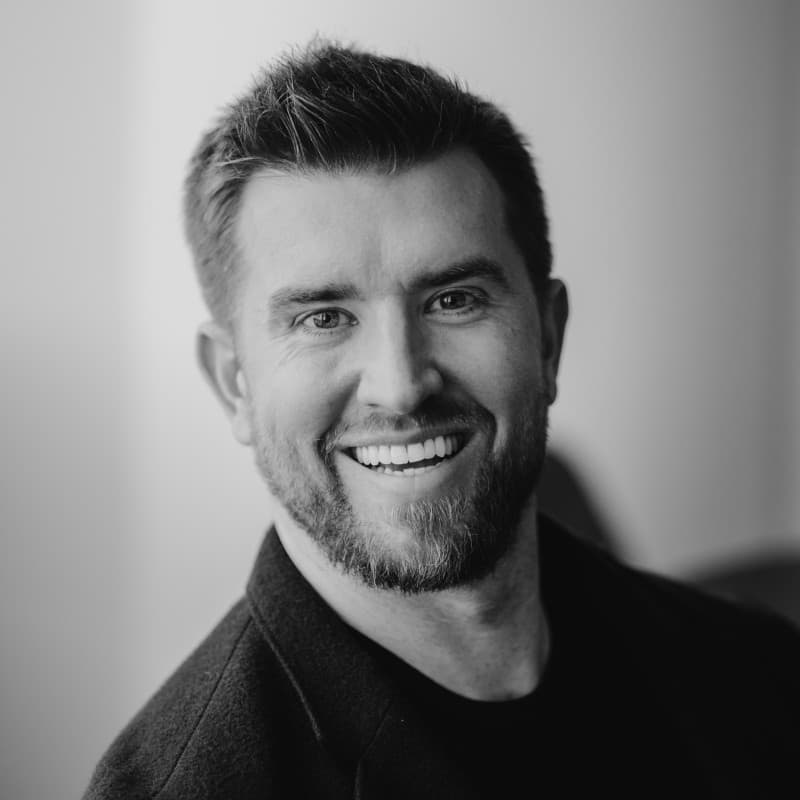
What if the part of your business that’s hardest to build is the reason customers come back? On Startup Builders and Backers, I’m joined by Elia Wallen, founder and CEO of Engine. Elia started out finding housing for traveling nurses. When his corporate housing customers repeatedly asked him to book hotels, he told them they could already do it online. Their persistence made him look again, and Hotel Engine began as a side project.
The story helps explain why Engine put AI to work on changes to group bookings. An itinerary can tell you where to stay, but it doesn’t negotiate a rate, get a contract signed, or handle a deposit when plans change. Elia explains where his team spends its time and why the details of unusual bookings matter as much as what an agent can do in a demo.
We talk about the tradeoffs that come with moving quickly. Elia prefers checking progress in days and wants teams to show a return on their AI budgets. He also talks about using smaller teams as productivity rises, which raises a question about how much capacity a company should keep in reserve. Automation can help when demand spikes, but if the systems go down, travelers may still need someone to answer the phone.
For founders, there’s a useful thread connecting the origins of Engine to how Elia runs the company now: listen for work customers still struggle to get done, then test your assumptions quickly. If an AI tool could reproduce the most visible part of your product tomorrow, what would customers still rely on your business to do? Share your thoughts with me.
Useful Links
Connect with Elia Wallen
[00:00:00] Your agentic AI might not be secure even with real-time data and proper guardrails. But Denodo makes sure your business has every avenue covered. By placing all your data platforms under one AI data layer, your business can reach semantic consistency safely and securely. So get your agents on the same page by visiting denodo.com
[00:00:26] and you can learn more about how to start trusting your agents to make business decisions. But now, back to today's guest. Welcome back to the Startup Builders & Backers podcast. My guest today is the founder and CEO of a company called Engine. His route into business travel began with finding housing for traveling nurses. When those customers kept asking him to book hotels too,
[00:00:55] his first thought was that they can already do that online. But their persistence was almost a nod from the universe telling him he was looking at the wrong problem. Finding a hotel is one thing. Managing changes for a group, getting a contract signed and making sure the money ends up in the right place. These are different jobs entirely. So today I want to learn more about that startup story, why Engine chose that kind of work to test AI
[00:01:25] and how my guests keeps teams moving without turning every decision into a meeting. And also why a fast-growing travel company that uses AI still needs people who can pick up the phone. So it's a great episode, this one, and a great guy. So please join me in welcoming my guests onto the show now. So thank you for joining me on the show today. Can you tell everyone listening a little about who you are and what you do?
[00:01:54] I'm the CEO and founder of a company called Engine, kind of a serial entrepreneur before that. Started several companies from selling rocks, running a little casino out of my parents' garage and corporate housing. And then we got into travel. Oh, man, I feel like there's got to be an origin story there, especially with your backdrop and the plane. And what was it that put you on this journey? Tell me about it. Yeah, I dropped out of college my first semester. I went to real estate.
[00:02:24] I grew up in Naples, Florida, which was a retirement community. But getting into real estate is what you did if you didn't know what you wanted to do with your life. So that's what I did. And I got pretty good at it. And I connected with a company that was housing a lot of traveling nurses in Naples. Because the snowbirds, the population really surges. And so you need a lot of health care providers. And so I started housing a lot of traveling nurses. And I started a company called Travelers Haven.
[00:02:54] And we grew to become the third largest corporate housing company in the country. And those customers of Travelers Haven said, book hotels for us. And for a while, I said, go online. What are you talking about? You know, this doesn't seem like something that needs solved. It's solved. But they were very persistent. And so we started Hotel Engine as a little side project.
[00:03:20] Booking hotels for travel nurse agencies, staffing agencies. And then that kind of carried us forward into now we're doing all the things. You know, travel infrastructure and AI travel and, you know, flights and cars and the whole nine yards. It's an incredibly cool story. And it reminds me of the Steve Jobs quote, you can't join up the dots looking forward. But I would imagine that when you look back, you can kind of see how everything happened for a reason that would lead you to this moment. Right.
[00:03:49] It's so funny. It's exactly right. We, you know, we're now in the infrastructure space, you know, which was interesting. And it's very akin to Amazon store. Like, you know, the marketplace and then they AWS was really to support their own operations. And then they realized they had this asset and they could sell compute. And that's very similar. You know, we didn't know what we were doing or we certainly didn't know what we were building at the time.
[00:04:15] But one day we woke up and we said, well, shit, well, there's a lot more people who could benefit from this. Why don't we why don't we sell compute? Right. Give them some of this infrastructure. And so now that's where we are. You know, today we we've got several different products now that are that are in an AI era. It couldn't be better. Right. The timing of of infrastructure and AI and AI agents need infrastructure to, you know, complete transactions.
[00:04:43] And so, yeah. Incredibly cool story. And of course, fast forward to present day engine. You chose complex group booking modifications as an early job. I don't know what led you to that path, but it was a good decision there. But why was that particular workflow such a good test of whether an agent could do useful work rather than just answer simple questions like it did in the beginning? Yeah. Well, you know, I think in for your listeners, I mean, I think it's so important to build the hard things.
[00:05:13] Yeah. We see these companies come and go and, you know, like, oh, we launched in this much time, this much time. And of course, there's a couple kind of outliers. But generally speaking, you literally have millions of companies that have built something, you know, very basic and it's hard to differentiate. And so I think you have to build the hard things. And so one of the things in group travel was not planning a trip. Anybody can do that. Go to AI and say, give me a trip.
[00:05:43] I want to go somewhere warm in the summer and that's done. And it spits out an itinerary and a plan. The hard thing is negotiating those with those particular hotels, getting a contract signed, flow of funds, forwarding deposits, receiving money, distributing money, collecting commissions, yada, yada, yada. So in building a network of hotels where you can have unique and proprietary, you know, inventory and rates and discounts and things.
[00:06:08] And so that's really where the hard part is for us. And that's where we're spending the majority of our time. So, yeah, I think it's just really, really important to focus on building the hard thing. If you can build it in a week or a month, so can everyone else. Obviously, I'm not saying anything people don't already know, but it's very important, I think,
[00:06:30] to try to find that thing that, you know, only you can do, you know, at least for a period of time to build some leverage and scale. Yeah, 100%. And your team or you and your team did build that first version in 12 days just to see what that would look like. And they will be found as listening wanting to follow in your footsteps or just looking for tips.
[00:06:54] So I'm curious, what kind of scope decisions made that speed possible and what still had to happen before you could even think about unleashing an agent that would be safe for real customers out there? Yeah. Hire the best people you can and frankly build. Like if you're a founder, build. And that's what so many are doing. That's what I love about AI. It's actually allowing people. I'm not a technical founder. I love products. I love to build things, but I'm not the most technical guy in the world.
[00:07:24] And so, but now I have the ability to actually build myself and I've got a, I'm on the leaderboard. I've got a scoreboard, you know, I'm trying to deliver as well. So I think get out of the way of great people and let them just work. Give them the mission, give them the guidance, give them the direction and challenge the hell out of them. And great people love that.
[00:07:46] And I think that's how you get outsized impact when you can get out of their way, but you also give them the direction, the focus of, of doing something big. 100%. And I was also reading that when dealing with AI, I was reading how you've said that context can make an agent so much more dramatically capable. So I'm curious from that side of things, what data knowledge permissions or workflow history matter most when we're talking about context in this situation? Yeah.
[00:08:13] But we say all the time, context is where the hundred IQ points and it's true. So you, you need, yeah, I think it goes back to doing anything. Like you get out what you put in and if you're willing to spend the time and build the hard things or do the hard things, you'll have an outsized impact. Um, and so with agents, it's the same way. Yeah. I mean, you can spin up something so quick, the amount of time you actually put into it to give it the context of all those edge cases.
[00:08:39] Um, that's really the difference of your agent versus someone else's agent or what a customer will experience. Um, whether it'd be good or bad is how much time you actually spend with those agents. And so just like people, you think about enablement, you think about training, you think about onboarding, you need to spend real time and have people that wake up every day and think about making your agents that much better. Um, the cool thing with them is they scale exponentially. Right.
[00:09:04] But you have to make sure you get the mold right out of the gate, or you're building a bunch of, you know, uh, scaled things that aren't very good. Yeah. Completely agree. And I would imagine it initially, it must've felt quite daunting when dealing with an agent that can go in there and change a travel booking with potentially financial and personal consequences there.
[00:09:26] So tell me a little bit more about the roles that governance, the Salesforce trust layer as well, and human escalation, how all these things work together with what you're doing here. Yeah. Well, I think if you approach it, you've got to have guardrails certainly, but I think if you approach it with the assumption that, um, things will go wrong, which we do, uh, you'll move a lot faster. And, and, you know, generally speaking, people make mistakes too. So to think that AI is making a mistake.
[00:09:56] Oh my gosh. Jimmy, you know what I mean? People make tons of mistakes as well. So it's, you've got to look at the hit rate. You've got to look at the sentiment analysis. You've got to have a lot of visibility into the experience that you're providing. Um, and obviously the data governance and security, those are, those are, you know, very, very important, big things. Um, but I also think you all, you know, you we're in a new frontier and the world is moving very fast. And I think if you wait for perfection, you'll just get laughed.
[00:10:25] Uh, when doing a little research on yours, reading how engine you reported that I think AI has reduced sales research time substantially. So how do you ensure that that time saved is reinvested into better customer work rather than absorbed by another efficiency target or a long afternoon in a coffee shop or even a cinema on a Wednesday afternoon? That's a great question. And I think it's one that we all have to, you know, try to figure out. Yeah.
[00:10:52] Um, when you basically have, you know, when you get that leverage back, what do you do with it? Um, or to your point, do people work just that much less and assume. Um, so I think it comes down to goals and productivity measures. Um, look at, you know, one thing that we're doing is where we're shrinking the size of our teams and the ratios because people can do more. So you expect the same output, but you have half as many people on a particular team.
[00:11:17] And so it just, it's a forcing function to ensure that the productivity of each person is still high. Um, and so the world, the ways of working are changing dramatically. Um, but it's productivity and AI is not cheap. You know, I tell the team all the time, like we've got all these bots, you know, running all the time. We've got thousands of them. Um, this is a lot of money. And, you know, if you're going to invest that, you need to be able to show return on that. So it's either productivity to your point, it's the sales.
[00:11:46] Like kind of a sales rep, just, you know, spending thousands of dollars a month per rep. And. You know, no productivity gains. So the ROI has to be there. And so I think when you share that with the leadership team and they understand that they now have an AI budget and point, and you've got to look at the outcomes and the productivity. I think it's pretty obvious that people know that, that the gains have to be there to justify the expense.
[00:12:11] And going back to your 12 day playbook there, again, for founders listening and what parts could another startup repeat and which depend on engines, data, culture, existing platform. Is it the playbook or is it the culture and everything that you've built here? Well, I mean, I think the culture has a big part to do with it. We're, um, I'm, I'm more comfortable with risk than probably a lot. Um, and so we try new things. People understand that taking risk is a part of the job here.
[00:12:40] And if you don't, you know, it's, that's going to be challenging because we are trying to push the envelope and move faster than our competition. Um, but I, I think more than anything, it's like, don't talk about it. You know, we talk about admiring the problem and people are always admiring the problem and talking about the problem, like get out of the way and just say, we're going to build this thing literally today. And we're going to regroup at the end of the day and see how far we got. And when you measure in days, the amount of work that gets done is, is tremendous.
[00:13:10] Don't say end of the week. Don't say end of next week. Don't say end of the month. This is crazy. The amount that can be done in a short amount of time is wild. If you measure at those gating stages, much shorter, a week is 2% of a year, right? You know, you don't give up 2% of a year to have another meeting on something so important. There's no way, you know? Yeah. And it's interesting, you're working in the travel industry, because anyone who has been
[00:13:35] trying to fly in the US last week, they will tell you travel disruptions can create moments when you least expect it and can leave you very stressed and with very limited options. So how should an agent communicate that kind of uncertainty in a situation like that and hand control to a person before efficiency could ultimately damage trust when people just want to speak to someone? You probably got a few stories out of this, but anything you can share? We did. Yeah. It's a double-edged sword. There's no doubt the tech side.
[00:14:05] So when something like that happens and you have agents, you can scale them up and the system responds beautifully. Yeah. And you can get more people taken care of faster. Whereas if that was all human agents, I mean, cues, just back up because you don't staff for an unexpected event that happens once a decade. Yeah. That said, on the flip side, if things are even normal and then you have something like Microsoft just happened and your systems are down for a day or two, you can only imagine what those implications would be as well.
[00:14:34] If you literally don't have the people to turn on those phones and start to help on a major tech outage. And so there's going to be some balance here for sure. We're going to have to figure out a redundancy rollover. I mean, think about Microsoft and how much redundancy they should have in their systems and things still happen. So redundancy is one thing. And the type of redundancy, I think, is probably key.
[00:15:00] It's not just agents, but it's also making sure that people have the ability to scale up at those surge moments when technology fails, because it will. It's tech. It's inevitable. So those are going to be really challenging. I mean, there's a lot of learnings that happen for every business after seeing Microsoft and the FAA here. And hopefully it will make us better. And if you did look back at everything that you've done here, what did the EVA project
[00:15:27] change about how engines, product and operations teams, how they chose the future of AI work, including the ideas that they might now reject? Have you noticed any big changes since you began? I think more people see the real time, real world implications of AI and how it's helping us. Yeah. You know, for a while there, it's like, yeah, but can it? And yeah, but hallucinations. And yes, those still exist. Man of the models getting good. And this is the worst we'll ever be. Right.
[00:15:57] And we're going to continue to say that until, you know, we who knows what the world looks like in 10 or 20 years. But I would just say, yeah, I think it's a good proof point. And when you can have a flagship thing like that launch, go well, people see it. You get a lot of excitement internally for the other things and applications that people can apply to. And what, for nearly a decade now, engine has built this proprietary technology and supply
[00:16:24] behind modern business travel serving, I think something like 40,000 customers and 2 million travelers. I've got to ask, what are you focusing on now? What excites you about life in 2027, which is now weeks away? What are you working on now? What's your focus? It's scale. I mean, even at that level, we're less than 1% of the market. You know, it's just such a big space. It's a lot of transformation too.
[00:16:53] I mean, what we did even six months ago is changing pretty dramatically. So how do you take, you know, there's about a thousand of us. How do you have a thousand people continue to adopt AI and leverage it more so that number maybe doesn't change? You know, can we triple, quadruple the business with the same number of headcount? Absolutely is my answer. And I think that we will. It's just a matter of making sure that the right people that understand that and adopt it and are willing to bring AI more into their life.
[00:17:23] You know, we have to continue to drive that message home and that narrative home and make sure that we move as fast as humanly possible. I mean, I think that speed is the only thing that we have, that true competitive advantage. And if we can go fast enough, we will continue to be in a leading position. And speed and scale, two things that startups have traditionally done so much better than larger enterprises, a real opportunity here.
[00:17:49] But for founders listening, any tips or advice on how you think about and manage and deal with speed and scale? Yes. Again, measure in days. Don't measure in weeks or months or quarters. I don't think most would talk about a quarter, but you'll see as your organization grows and get more people in, you will naturally, it's like weeds in a garden. Like these ideas and these things start to just pop up and you've got to remove them. You know, self-doubt will creep in as your company starts to scale and people try to give
[00:18:19] you advice. Just know everyone is full of shit, including me. Advice is just for people that want to sound smart. Just, just you have the best context. You understand your business better than anyone else. And yes, is there pattern recognition? Yes. Are there people that have seen things? And is there a lot to learn from other folks? Absolutely. But don't, don't diminish your own voice. Like you are in that seat for a reason and you've built what you've built so far. Seek advice, but don't let it go too far. Don't do things that feel wrong.
[00:18:50] And go fast. Even, even at the point of, of discomfort, you know, people daily, get your daily readouts, get your daily recaps, do daily all hands, meet with the team every single day. All of them. Uh, I travel or say, even the company used to four engine. When it was all in person, we would meet every single morning, the entire company, a hundred, 200 people get together every single morning. And we talk about what's working, what's not. And I think when you get that level of feedback and that connectivity, you can just solve problems so much faster.
[00:19:20] So don't let things wait. Don't admire problems. If you're talking about the same thing, call a timeout, get everyone together and say, is it enough's enough, right? Here's what we need to do. Um, and be very decisive. Wow. I think that is a powerful and thought provoking moment to end on. But of course, I'd just like to point out for everyone listening, you're not only serving 40,000 plus customers and 2 million travelers, but you're also working with leading travel and AI companies that build on your infrastructure at engine too.
[00:19:49] So for anybody listening, wanting to find out more about you, about engine, the work that you're doing, get in touch with, where should they go? Yeah. Uh, you can hit me up on LinkedIn. I just got my X account set up, uh, that is long overdue, but I'm not really, I've just been building. I'm not, I'm not super into social media, but, um, that, and then engine.com if you're interested, um, yeah, come check it out. It's a free platform. So if you travel, uh, you want to save some money and get some insight into your travel, um, come join us completely free.
[00:20:19] Well, I, for one, I just love everything that you've done here. I love hearing about your origin stories, carrying it through to speed and scale and what you're going to be building next year as well. So I'll be staying in touch with you. I'll also include links to everything that you mentioned. So for people listening, please go to techtalksnetwork.com. There'll be a blog post associated with this episode. There will be links to everything that we've talked about and a few other, uh, golden nuggets if I can find some too, but more than anything, just thank you for sharing your story with me today. Thank you, Neil. Really appreciate it.
[00:20:49] Have a good one. When reflecting on today's conversation, I keep thinking about when his customers asked him to book hotels. Surely they could do it themselves. They could, of course, but finding a room was only one step in the work that they needed done. And if you're building a company, I think it's worth asking which requests you've been brushing aside because the obvious part already has a solution.
[00:21:14] But the work behind it could be where customers are still spending time and money. So I appreciated hearing both sides of Engine's approach to speed and scale and his belief that you should be measuring progress in days, not weeks, months or quarters, and how he expects AI to earn its keep. But he also asks who will answer the phone if the tech is unavailable and travelers still desperately need help.
[00:21:44] So remember, you'll find ways of connecting with my guest and the website for Engine in the show notes. But over to you, what's the hardest part of your customer's job? And are you building for it yet? Share your thoughts with me. As always, techtalksnetwork.com. I'd love to hear from you. But that is it for this episode. I'll be back again real soon with another guest. But thanks for listening, as always. Bye for now.