
Have you ever tried to book a tennis, pickleball, padel, or squash court and wondered why the process still feels stuck in another decade?
In this episode of Startup Builders and Backers, I sit down with Daren Hornig, founder and CEO of CourtsApp, to discuss how he spotted a major gap in one of the world's fastest-growing sports sectors and decided to do something about it. Drawing on decades of experience in real estate development and sports infrastructure, Daren set out to build what he describes as the Expedia of racquet sports, a platform designed to make finding, booking, and enjoying courts as simple as booking a hotel room.
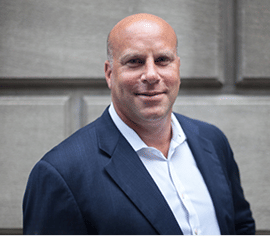
Daren shares the origin story behind CourtsApp, from acquiring and revitalizing the historic Port Washington Tennis Academy to helping expand pickleball facilities across the Northeast. Along the way, he discovered a fragmented industry filled with disconnected systems, unanswered phone calls, and missed opportunities for both players and operators.
We also explore how artificial intelligence is changing the experience for clubs and players alike. Daren explains the role of Courtney, CourtsApp's AI-powered assistant, and how AI can help facilities improve customer service, reduce operational costs, and create more seamless experiences without requiring expensive technology teams or infrastructure investments.
Beyond the technology, this conversation is packed with lessons for founders. Daren talks openly about building globally distributed teams, moving from physical real estate projects into software development, and why speed, adaptability, and a willingness to solve real-world problems continue to create opportunities in unexpected places.
Whether you're a startup founder, sports enthusiast, investor, or simply fascinated by how technology is modernizing traditional industries, this episode offers an insightful look at what happens when entrepreneurship meets a market ready for change.
Could racquet sports become the next industry transformed by digital platforms and AI? I'd love to hear your thoughts.
Useful Links
Learn more about CourtsApp
[00:00:00] Big thank you to Denodo for supporting the Tech Talks network and making these conversations possible. Because when your lake house stores the data, the real challenge is getting that data where it needs to go and faster. And your lake house stores the data, but Denodo helps deliver it faster.
[00:00:20] So with real-time access, built-in governance and a business-ready data marketplace, Denodo can help your teams unlock insights without costly duplication. And you can learn more by simply visiting denodo.com. Welcome back to the Startup Builders and Backers Podcast. Now most great startups begin with a simple question. Why is this so difficult?
[00:00:50] Well, my guest today is the founder and CEO of CourtsApp. And his journey started with a frustration that will be familiar to millions of racket sports players listening around the world. And it was something as simple as finding and booking a court. Something that should be simple. And instead, the industry remained fragmented, disconnected and largely untouched by the kind of tech transformation
[00:01:16] that we've seen everywhere in travel, transportation and hospitality. So rather than just rant about it online or complain to his buddy like I might, he decided to draw on decades of experience in real estate, sports infrastructure and entrepreneurship. And as those stars began to align, he set out to build what he described as the Expedia of racket sports. What followed is a fascinating story about spotting opportunity in a traditional industry,
[00:01:45] building technology that works with existing systems rather than replacing them, and then using AI to solve some of those real world problems for players, clubs and operators alike. But I've probably revealed too many spoilers already. So enough from me. Let me introduce you to my guest right now. So a massive warm welcome to the show. Can you tell everyone listening a little about who you are and what you do? Sure. So I'm Darren Tompkins. I'm based in New York.
[00:02:13] I'm a real estate professional and tech entrepreneur. And my latest venture is a courts app. And what we're building is a global platform for all racket sports enthusiasts to find and book courts, lessons, open play and other services. Think of the Expedia of racket sports. They go to one place and find a paddle court, find the tennis court, find the pickleball court,
[00:02:41] and make it really easy and seamless to book and play anywhere you want at any time. And when researching you, I've read that you spent what decades in real estate development and sports infrastructure before launching courts apps. So I'd love to take you way back to the beginning to that origin story. What was the problem that frustrated you enough to move from just observing the industry to building a tech company yourself? Sure. Great question.
[00:03:09] And a question that comes up all the time, like how and why am I here? Yeah. But it's really a good story and a story I think that makes a lot of sense and really resonates with people. My background is predominantly real estate. I own a bunch of properties around the US and I had the opportunity to buy the famed Port Washington Tennis Academy. It's where the McEnroes started playing, Tracy Austin, Vetus Gerolitis.
[00:03:36] It was actually the first tennis academy in the United States back in the early 70s. It went into disrepair and a friend told me about it. I went over, took a look at it. It's actually only about 15 minutes from where I live. And the bones are great. The infrastructure was great. It was 17 tennis courts. But you could tell it was tired, didn't have the infrastructure from a physical standpoint and operating standpoint.
[00:04:05] So I bought that as a real estate play and got fortunate enough to bring in my partners there then and today, Sport Time. Sport Time, ironically, has a relationship with John McEnroe. And we were able to structure a deal that is now Sport Time. It's a John McEnroe Tennis Academy. So we converted four of the tennis courts to 12 pickle.
[00:04:32] So now it's 13 tennis courts and 12 pickleball courts. It's a John McEnroe Tennis Academy. Thousands of people are playing their week. We have the top juniors literally in the New York area coming and competing very often. So that was the start. That was in 2021, 2022, right? Go back. COVID was a little tough for the real estate world to say the least. You know, I'm an athlete.
[00:05:01] I play a lot of pickleball and some tennis and some paddle. And so the opportunity to start opening up pickleball facilities. So with my real estate expertise, I partnered with Sport Time and we started Sport Time Pickleball. And in addition to the Port Washington facility, we opened another five locations, about another hundred pickleball courts in the New York region. So now we own and operate six facilities.
[00:05:29] They operate day to day and they're the best at what they do. So it really worked out well for me. But I have numerous friends in the area. And what was happening as I was getting texts and phone calls, could you find me a court? You're sold out here. Can you get me a court here? I'm like, just go online. And I go, I go, just go online and find a court. I know I'm booked, but just go online and book a court. They're like, where? And I said, I don't know. It's not a problem for me. I know I'm going to my own club.
[00:05:57] But I went on and there was nowhere. There was nowhere to go. Right? It just didn't exist. And I'm like, how does this make sense? Right? You have DoorDash for food delivery. You have Uber for car delivery. You have Expedia, Booking.com, Kayak and Hotels.com for travel. And there's nothing in the world that really aggregated racket time and racket infrastructure. And I said, you know what? I have free time. I have a lot of energy. Here we go again.
[00:06:27] And I started CourtsApp with a group of great professionals. And we're about 15 months later. I just had a call with my onboarding specialist. We have 247 clubs signed up. Over 2,500 courts. I think we'll easily be 10,000 courts just in the US by the end of this year. We have great API partnerships. And things are really, really going well.
[00:06:57] It's just getting the word out there and continuing to execute. But the beautiful thing is, and I say this often, I'm not colonizing Mars. All I'm doing is putting racket sport players on the courts and filling the courts with racket sport players. Right? It's just a fundamental, you know, opportunity to change the way the booking experience happens and make it easy and convenient and have discovery around the sports so many people love globally. It's such an amazing story.
[00:07:27] I absolutely love it. Because I think so often people such as myself will come across a problem like the one you mentioned. It might complain and have a little rant about it, but do nothing about it. And you've gone out there and built a solution. And right now here in 2026, it's almost like you're ahead of your time because racket sports like pickleball, paddle, tennis, and squash are all seeing massive growth right now. But many clubs still rely on fragmented booking systems and those manual processes from yesteryear.
[00:07:55] So I've got to ask, why has this industry been so slow to modernize, do you think? I mean, I'll tell you, and this goes to my knowledge of the business and being, you know, a businessman. It is the most fragmented business I've ever seen. There is no one, there is no company that controls more than 0.4% of the market in the US at least. Yeah, right. There's no Walmart. There's no Starbucks, right? There's no McDonald's.
[00:08:24] There's no AT&T. It is individually owned and operated by people who historically are smart and capable people, but they're in the game because they love the game and don't understand the nuances of technology, right? The advancements of technology with API integrations, SEO, SEM, now AI coming on with LLMs and MCPs. Like these people like, you know, 40 love, you know, set match.
[00:08:53] Then they're not worrying about how the word is getting out there and how people getting to the courts. You know, it really has been build it and they will come. But, you know, those times have changed. Like digital marketing and know-how and infrastructure needs to be connected. And it's very, very slow in this industry. I mean, there are many times, you know, like I said, we've made 29,000 calls to clubs around the country. 19,000 of those calls have gone unanswered. Unanswered.
[00:09:23] Now, they don't know that we're prospecting to sell courts app. It could be someone who's looking to book a court, but they go unanswered. Yeah. Why? Because they're on the court or why? Because they're helping someone at the front desk or they're helping someone string a racket. The infrastructure hasn't evolved. So we're helping these clubs take this service to the next level and giving them the tools right in the package that they could easily integrate courts app and say, wow, now I'm global. Now I have AI. Now I'm on Google.
[00:09:53] Now I'm on Meta. So we're really building this as a tool accelerant to help these clubs get to the next level. And with courts app, you've positioned it as an AI powered platform that works without forcing facilities to comply, completely replace that existing systems. How important was it that you just work with what already exists? That kind of mindset when, when trying to win over some of those traditional operators?
[00:10:20] Um, I think it was the biggest strategic advantage and an opportunity for us. Right. When I looked at the industry and I saw companies like court reserve, play by point, um, pod play, great infrastructure companies that do the court management, but those companies make their money as a SAS fee. They make their money on a monthly fee, but they're not being paid to market.
[00:10:50] Right. So very similarly, if you look at square and toast in the industry restaurant industry, they're the infrastructure for a restaurant to book tables, take orders and manage inventory and do their accounting and payroll. But they're not made to market to the outside world. So that's where DoorDash comes in. Uber Eats comes in. Grubhub comes in. So I took the same philosophical standpoint and said, you guys do a great job. I don't want to compete with you.
[00:11:20] Right. But I want to help you because we're not only helping the clubs, we're helping them. Because once you interconnect with us from an API, like we're doing with, you know, the core reserves and play by points of the world, it makes them a better product. Because now they have the infrastructure that now has the marketing advancements that we're building. Right. You can't do everything. Right. I can't do that. I can't, I can't be a court cleaner and a court booking company at the same time.
[00:11:50] I don't want to be stringing rackets. There's companies for that. I don't want to build sneakers. So we found our niche that we're focusing on the marketing side, but we're making one plus one us in court reserve is a better product together because we're helping the facilities brought market broader to the marketplace and get more players in, create more revenue and more greater profitability.
[00:12:14] And you're someone that's built businesses in both physical infrastructure and digital technology. I'm curious what differences surprise you most when scaling a software platform compared to developing real world sports and real estate projects. Um, speed. Yeah. And, and, and lack thereof, right? Like real estate is like the tortoise, right? It takes forever.
[00:12:40] You got to deal with so much bureaucracy on a local and state level to get permits and approvals, right? A building to get built could take 18 months to two and a half years. Um, architectural plans, integrations. Um, so I'm used, if I buy a piece of land by the time I'm seeing money come out of that is usually three years, right?
[00:13:05] And today in tech, especially with the advancements of AI, like speed to market is under 12 months. Like you, you can really get going. I mean, don't get me wrong. It takes a while to build a business and build a robust business and have the infrastructure, but the speed and the capability of change and the rapid enhancement of change on top of change is extraordinary.
[00:13:30] Um, I mean, we're really focused on AI and another big component we built with AI is we built an AI agent called Hey Courtney, hence the court in Courtney. Um, and she will be the racket sports agent for the world, right? She's going to help you find a court. She's going to help you book a court. She's going to help you find a player to play with on that court.
[00:13:54] And then when you go there, if you need your racket to be restrung, she'll arrange for you to leave your racket there and get restrung for your next match on Friday night. So we're taking the technology, right? No facility, right? I spoke to a guy today. He has six courts in, um, just outside of Chicago. He can't build this, right? He's right. He's running his club. He can't build AI. He can't deal with anthropic and open AI and live kit and 11 labs.
[00:14:24] Um, but we can, because we have this scale. So we're building this for them that it's a plug and play. We could onboard a club in less than 30 minutes and they have all these tools to go to market and feel like a big player. They could feel like they are the Starbucks in the world who has the R and D and infrastructure. We're doing that for them and with them.
[00:14:44] And I think everyone from a startup founder to a fortune 500 leader, everyone's talking about AI, but I think people are often increasingly asking, well, where's the real business value actually coming from here? And in practical terms, how are you seeing AI helping him improve the experience of everyone there from players, clubs and operators inside the courts? And what kind of feedback have you had? Uh, the feedback has been astounded, right? So, so we, we've been working on Courtney for a little bit over a year.
[00:15:14] She just went live. If you go on courts app.com, you'll see, um, a little AI bot. It's Courtney. She's a very, you know, pretty young lady that I modeled after my 25 year old daughter, but she has, you know, the look and feel of, you know, AI, but she's able to communicate. So she could do it both on the web, but on the phone. So going back to what I mentioned earlier, the 29,000 phone calls and 19,000 went unanswered.
[00:15:43] That's 65% of calls gone unanswered, right? Courtney will be the new front desk. Courtney will cost $20 a day, as opposed to $20 an hour for us person. She works 24 hours a day, seven days a week, doesn't have bathroom breaks, doesn't call in sick and can handle 1800 calls a minute. Right? Astounding scale. So it's going to save you money and not frustrate a player.
[00:16:11] When a player calls, they could book a court right on the fly. Right? So it's truly a win-win. We're making the club more efficient. We're saving the club money and making the player booking experience seamless and 100% reliable. So that's just like one element that we built. No club could build this. Right? And not only that, it could ask the hours. It could send you directions. It could cancel a reservation if there's rain for the day.
[00:16:38] So she's enabling this happening, but this is like real world practicality that every racket sport player is going to be enabled, you know, to function. I love what you've created here. And on behalf of every startup founder and business leader listening, and you're someone that's built and managed globally distributed teams.
[00:16:57] I'm curious, what have you learned about leadership, communication, and company culture when your people, partners, and developers could be spread or distributed across different countries and time zones? Any big lessons that you've learned as a leader and founder? Yes. Time zones matter a lot. Yeah. That's first and foremost. But it's interesting. So my real estate business had always been local, right? I'm a New York real estate developer. So everything was here.
[00:17:26] My team was here. We had offices in New York City and Long Island. And, you know, we went between, we went to our projects. We always had meetings, always had meetings. Starting Quartz app, right, with the reliability of Zoom technology like we're doing now right across the Atlantic, and it's crystal clear and we hear each other. You could find talent across the globe, right? And not only finding it across the globe. So one, you could find great talent.
[00:17:56] But two, the expense is a lot less to hire people across the globe than it is in the New York City market. So New York is obviously a high standard of living. The expenses and salary is a lot higher. So right now, we have people working in Africa, Europe, all throughout the eastern seaboard, central time zone, and western time zone, right? So we cover multiple time zones.
[00:18:26] And, you know, it's something I say all the time. We're able to multiplex time. That there's only 24 hours in a day, but there's actually 47 hours in a workday globally because of how the time zones shift. So we're able to hand off projects from time zone to time zone to get something completed in a given workday in the U.S. market, right?
[00:18:51] So my team in Africa and Europe are working, you know, they're waking up at 7 a.m., and I'm sound asleep because it's 1 a.m. in the U.S., right? But by the time they're going to bed, they've handed off all the project and workload to us in the U.S. for us to finish off. So we're able to multiplex time, and I think it's pretty interesting. You know, I mean, we have right now about 20 people.
[00:19:16] I haven't met five or six of the people yet because they're so far, and, you know, we just haven't spent the time or the money, frankly, to get everyone together. But the culture, you know, we get together sometimes. We have events. We were just at the U.S. Open in Naples, a half a dozen of us, and you have a great time. But I think, listen, culture starts from the top. You know, I'm very hands-on. I'm very friendly. I'm definitely intense, but I like to have a good time, right?
[00:19:45] With whatever I do, it's work and play, and I got to have fun when I'm working, right? If work is such a chore that you're waking up miserable, I'm just not doing it. Life's too short, right? You got to find your passion, and I am entirely passionate about QuartzApp and the other businesses I'm involved in. Love it. Love your ethos and everything you've created here.
[00:20:08] And if we were to look ahead, do you see platforms like QuartzApp becoming simple booking utilities? Or could sports venues evolve into more connected digital ecosystems, do you think, where AI influences scheduling memberships, coaching, community engagement, and real estate development decisions? It feels like there's a big scope here. It is a big scope. Listen, I think we will be the primary source of people booking Quartz globally.
[00:20:38] Not going to happen overnight, but foundationally, it's there, right? Yeah. And you still book directly, right? So let's take Expedia, for example. Expedia and the other OTAs, online travel agencies, are about 50% to 60% of the market. Why? Because it's better from a consumer experience to go and see what hotels are available in London, right? I'm going to Wimbledon in a few weeks. I don't know all the hotels in London, right?
[00:21:07] I happen to be a Marriott Bonvoy member, so I like Marriott around the world. But there's so much alternative that if I just went to Marriott, I'm in that one silo ecosystem. But I wanted to look at Expedia and see what else is there for me. Maybe there's a better deal. Maybe there's something closer to Wimbledon or closer to the underground for me to get there. And that's what I did, right?
[00:21:33] I found a hotel outside my norm, and I think that's going to happen in racket sports. You may play at your club, but you know what? Your club may be booked on that given day, and you want to expand where to go. And then you'll look where to go, right? Based on price, based on other ratings, and maybe you become a member of that new club. So listen, people like change. People don't go to the same place all the time, right? I play my racket sports.
[00:21:59] Yes, I play predominantly in the clubs I own, because that's obviously a given. But down in Florida, where I spend a lot of time in the winters, I don't have a club there. I counted. I played at 14 different pickleball facilities in five months, right? Because that's where my friends were, or because I wanted to try it out or check it out. I played at three different paddle facilities, right? I mean, people want to see things differently.
[00:22:27] And the beauty of racket sports is you don't play it alone, right? It's not like going for a run that you're going for a run in a park or on the streets alone. It's about playing. It's about community. And communities move from location to location. So I think we're building all of that into this ecosystem and thinking about it in a big humanistic way, that it's not just about where I want to be today or I'm only going to that one club.
[00:22:55] So I think we'll be there. It's not easy. Definitely not easy. It's a lot easier me explaining it and having big wishes and aspirations. But day to day, you know, we're in the trenches, making it work and fixing the bugs and talking to the partners and getting the integrations done. Well, I've loved hearing your story today. And I, for one, I'm going to be following Courts Up very closely and see how it evolves, how it grows over the months. It'd be great to get you back on next year and see where you're at.
[00:23:25] But for every pickleball, paddle, tennis, squash player or a founder or a leader inspired by your story today, found you incredibly engaging, where would you like me to point everyone listening? CourtsApp.com. In the U.S., you can go on the Google Store or Apple Store and download the apps. But CourtsUp.com, you know, pretty much anywhere. And start talking to Courtney. I mean, Courtney's going to make your life easier. Right now, you could buy a Yola pickleball paddle through her.
[00:23:54] And we're doing integrations with others to definitely partner from that standpoint, that you could buy all sporting goods or book a court or find a partner to play with. So she's going to be the agent. You know, the same way you'll have an assistant at work, she's going to be an assistant to get you on and off the courts. Awesome. Well, I'll include links there. And encourage everyone listening to check that out. As I said, I'll be following your story. It'd be great to stay in touch and speak with you again. But just thank you for sharing your origin story today. Really appreciate it. Thank you.
[00:24:24] Really appreciate your time and your insight and great questions. But we're here and I'm welcome to come back at any time. Thank you very much. What I loved about this conversation was my guest never set out to build tech for the sake of technology. He's merely someone that heard about a genuine problem from a friend. Then he experienced that same problem for himself and realized that an entire industry was missing the digital infrastructure that consumers now take for granted in almost every other part of their lives.
[00:24:54] And that insight became the foundation for courts app. I think we also talked today about something every founder can relate to. The difference between having a great idea and actually building a business around it. And my guest shared lessons from scaling teams across continents, balancing speed with execution, and then bringing modern technology into an industry that has been very slow to evolve.
[00:25:20] So whether you are building a startup, backing founders, or simply curious about how AI and digital platforms are transforming traditional markets, I hope that today's episode was a reminder that some of the biggest opportunities still come from solving everyday frustrations that everyone else has just learned to live with. But as always, you can get a hold of me, techtalksnetwork.com. There's 4,000 interviews over there spread across eight different podcasts, all hosted by myself.
[00:25:49] But if you've still not had enough of hearing my voice or seeing me, you can meet me at an event, send me a DM, or even work with me. But I've taken up far too much time already, so I'm going to go now. But I'll be back again real soon with another startup story like this one. Bye for now.