

What if the real weakness in enterprise cybersecurity isn't the cloud or the network, but the endpoint sitting on every desk? In this episode, Klaus Oestermann, CEO of IGEL Technology, joins me at the Now and Next event in Frankfurt to discuss why he calls the endpoint the forgotten link in digital transformation.
Klaus explains how decades of detect and mitigate thinking have left enterprises vulnerable, and why it is time to move toward a prevention-first security model that stops attacks before they start. He shares how IGEL's dual boot architecture allows organizations to recover thousands of devices in minutes, and why prevention-first design can deliver measurable ROI with an average 62 percent reduction in endpoint IT costs and more than 900,000 dollars in annual savings.
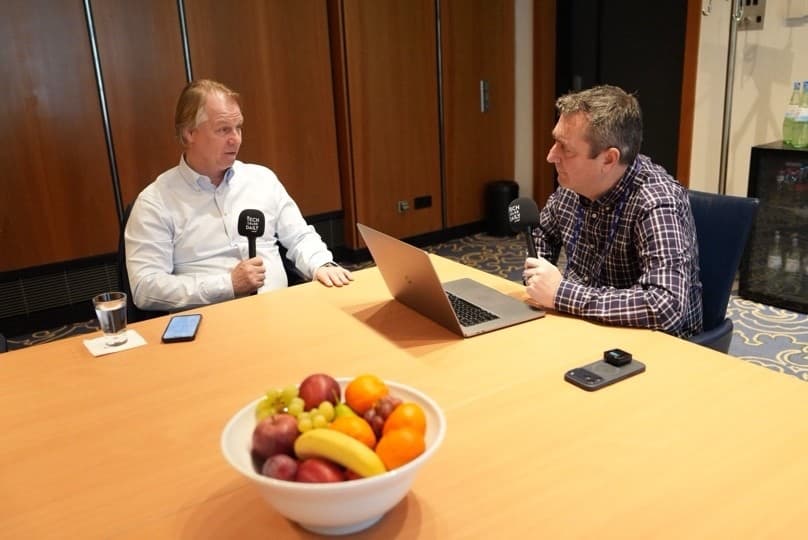
During our conversation, Klaus also reflects on the surge in ransomware across critical sectors and why governments and enterprises alike are rethinking their endpoint strategies. He talks about how IGEL has become an essential part of modern Zero Trust frameworks, protecting sectors like healthcare, manufacturing, and public services, while partnering with leading technology providers to build stronger, integrated defenses.
We also explore how those savings can be reinvested into Zero Trust, AI innovation, and new layers of defense, as well as how IGEL is helping secure critical national sectors from healthcare to manufacturing. From Audi's factory floors to government agencies, Klaus outlines a future where resilience begins at the endpoint, not the data center.
Do you think enterprises are ready to make that shift? I would love to hear your thoughts after the episode.
Useful Links
Tech Talks Daily is Sponsored by NordLayer:
Get the exclusive Black Friday offer: 28% off NordLayer yearly plans with the coupon code: techdaily-28. Valid until December 10th, 2025. Try it risk-free with a 14-day money-back guarantee.
[00:00:03] What if the real weak link in digital transformation isn't the cloud, isn't the network, but the endpoint sitting on your desk? Yeah, where do you work? Is it on a laptop? How many people are in your organization? Five, ten thousand, that's ten thousand laptops. What happens when all of those devices get compromised?
[00:00:25] This is something I want to explore today with the CEO of IGEL. I'm quite excited to get him back on the podcast. His name's Klaus. He describes the endpoint as the forgotten link in most enterprise continuity plans. Yeah, everyone thinks about the data and the network, cloud, applications. But nobody thinks about what happens when all those devices get compromised and you can't simply nip down to Best Buy and order ten thousand laptops.
[00:00:54] So Klaus is going to join me on the podcast today and unpack why so many organizations are still overlooking endpoint resilience. And I think this discussion comes at a critical time, especially as ransomware attacks and operational disruptions are continuing to rise. And we've seen many businesses this year go offline for weeks, some even months.
[00:01:18] So I want to discuss why prevention first security is replacing reactive defense and how dual boot recovery is actually changing the game when it comes to business continuity. And also, I want to get to the real ROI behind IGEL's latest research that shows 62% reduction in IT costs and $900,000 in annual savings.
[00:01:45] So from zero trust architecture to the convergence of innovation, strategy and ecosystem partnerships. Klaus is going to join me today to explain how IGEL is shaping the next phase of secure endpoint computing. And why this year's 38 announcements in just six months feels like a company hitting its perfect moment in the market. He's a great guy. He's going to offer a lot of value here today.
[00:02:13] And the question I would ask to you before we go any further is, can you afford to miss a conversation like that? But before we jump into today's conversation, I just want to take a moment to thank our sponsor for helping make this show possible. Because it's their support that allows me to keep producing and sharing over 60 conversations every month across the Tech Talks network right now. Producing conversations with the people that are shaping the future of technology and business.
[00:02:43] And it's partnerships like this that help me keep these stories coming to you. If your business operates in a regulated industry, you already know how important compliance is and how painful it can be to maintain. Now, NordLayer, they're making it a little bit easier because they're providing audit trails, encryption and access controls that help you stay compliant without building everything from scratch.
[00:03:09] And you can monitor device posture, enforce policies and prove that your data is protected in transit. And for industries where privacy and trust are everything, this can be a huge relief. And because it's a cloud solution, you can roll it out in minutes. So if compliance has been keeping you up at night, let NordLayer take the weight off your shoulders.
[00:03:32] Visit nordlayer.com slash techtalksdaily and save 28% using the code techdaily-28. But now, let's get today's guest on. So a massive warm welcome back to the show, Klaus. For anyone that missed our previous conversation, can you just remind everyone listening with a little about who you are and what you do? Well, I'm Klaus Osterman. I'm the CEO of iGel.
[00:03:58] And we are a global software company securing endpoints or delivering secure endpoints with a very unique enterprise style platform for operating system. And on stage yesterday, you described the endpoint as the forgotten link in digital transformation. Why do you think so many enterprises overlook this layer? And one of the reasons I asked that as well, I was talking with James Millington a few moments ago.
[00:04:26] He was talking about what happens when 5,000 endpoints are suddenly no longer there. And it's almost like the forgotten link, as you said. Yeah, it's really interesting because if you look at a lot of time and money spent on, you know, disaster recovery, business continuity planning, a lot of time goes into, you know, data center outages. How do I move from one data center to another? What about my data?
[00:04:52] Yeah, but when it comes down to the end users and the endpoints they're on, very few companies actually, you know, spend a lot of money and time on that. And when you talk to enterprise customers, what's your strategy and how fast can you get back? Many of them actually don't really have an answer. And if you get one, it's typically, well, we have PCs in the closet or we have PCs we can configure. And, you know, it takes two and a half hours to configure a PC.
[00:05:17] So if you have 5,000 or 10,000 employees, you either have a lot of people configuring those or it takes you a long time to get it done, right? So we found that there's just a big gap in the market on, and again, if the endpoints don't work, it doesn't matter if your data center works because nobody can get to the data, right? And that's why we've really come up with this new concept, IGEL for business continuity disaster recovery.
[00:05:43] So what do you think needs to change in how CIOs and CISOs and how they view the role of endpoint strategy and in driving overall business resilience? What needs to change here? It's just merely understanding that most of the attacks happen on the endpoints. Yeah, yeah. And how do you protect the endpoints, right?
[00:06:06] So really a whole rethink of the security model, which is basically back to the discussion we had last time around, is why did IGEL come up with the preventative security model? Well, it's because the old model doesn't work anymore, right? It's the old model is we know it's going to go wrong. So we monitor, detect, you know, mitigate, remediate, right? That's the plan that everybody's on right now.
[00:06:30] And, you know, instead of saying, why don't we spend more time on preventing this from happening, building what's needed to ensure that. And that's basically what we put in place with our preventative security model. And now saying, okay, so if you run an IGEL in your daily production, well, then, you know, you're in a good spot. Now, if you choose not to and you choose to continue on half of your endpoints to run Windows, well, how can we help there?
[00:06:56] And that's where we say, well, you can install IGEL in a dual boot mode. And then basically you just keep running Windows when you get ransomware attacked or, you know, have an outage software-based outage something. Then you can boot to IGEL. And then you're back in production, your customers have access to things in 60 seconds, right?
[00:07:19] And that's, we think, a very good plan for, you know, your permanent setup, you know, half of your environment, the other half that's running Windows. That's how we can save that part as well. And not only is it a great tech solution that's solving a real problem, which is refreshing to hear in an age of AI where we have a lot of technology looking for a problem. I think every tech project now is under closer inspection for ROI and measurable impact.
[00:07:45] And one of the things that stood out in your presentation yesterday was your recent study shows that prevention-first endpoints can actually unlock over $900,000 in annual savings and a 62% reduction in IT costs. So there's the ROI. But how are you seeing organizations reinvesting these savings to invest things like zero trust and innovation strategies in real practical and measurable ways? Yes.
[00:08:12] So I think what faces most organizations now is that they don't get a big IT budget. The last time I met a CEO, they said, oh, I just got a budget increase. It was a long time ago, right? So basically what we do by implementing our technology is we free up a lot of budget for you to go to other things. And so let's say you got a 15% budget cut overall. Well, how much is your endpoint budget out of that?
[00:08:41] If endpoint budget is a third of that and we can help you save two-thirds of that budget, which clearly our study shows, you've just solved your overall problem, right? So basically that's how you save 15% of the overall is by saving two-thirds on the endpoint budget. So that's one way of doing it, right?
[00:08:59] If you have a flat budget situation, well, then all of a sudden you just got 10%, 15% more to spend on what are the new things you've got to put in from next-gen defense standpoint and so forth beyond IGEL. And, of course, zero-trust network access is a key growth driver for IGEL at the moment. And one of the things that I think you said as well is you've become an essential component for secure infrastructure.
[00:09:28] So tell me more about how you're helping set the standard for what is effective zero-trust protection, especially in regulated industries and governments and organizations. Yeah, I think if you look at any Western country, right, there are 16 sectors operating a country, right? So if any of these are taken out by adversaries, you might not be able to operate.
[00:09:53] So our mission is really to help protect each one of those 16 sectors, including the overall government. So that's how you've got to look at it. You've got to put a holistic strategy in place. A country has to put a holistic strategy in place for all those critical elements. And as you do that, you've got to have some standards around that. You've got to figure out how to do it.
[00:10:16] And I think the current zero-trust architecture standard in the U.S. is probably the best blueprint in the world for how to do this. And it's a good blueprint for how to do it in government sector. It's a good blueprint for how to do it in these different 16 critical sectors. So I think starting there and saying, you know, we have a seven-pillar model. These are the, you know, criterias you've got to solve and live up to and so forth is a path forward, right?
[00:10:43] That seems to be, you know, on a very good trajectory in the U.S. And we're starting to see, or starting to see, but seeing like other European countries like Germany, like France, some of the Scandinavian countries, UK. I actually now putting very similar framework in place. In some markets it's called different things, but everybody kind of refers back to zero-trust architecture.
[00:11:12] So that's kind of a common framework now being put in place and really help driving common understanding of what needs to be protected, how to protect it, and so forth. And I believe IGEL plays a major role in solving that on the endpoint. So if you look at one of the pillars is endpoint and users, right? And then when you take those two, we can help tremendously.
[00:11:38] And through our PSM model with integration with all of the partners we have in secure service at SASE, in identity, in security overall, that's how we basically shore up all those across the different pillars. So this is not about one vendor solving all of this. It's about a set of partners working together with maybe three, four, five, six technology components solving the overall problem in this context.
[00:12:05] Now, we first met in March at IGEL now and next in Miami, where I think there were 20 announcements. We're only months further on in, obviously, we're in Frankfurt now, and there was 18 announcements. So the question I've got to ask on behalf of business leaders listening is, what is your secret to keeping this relentless pace going of innovation? Yeah, so you're right. It's 38 announcements in literally six months, right?
[00:12:35] Because it's six months since the last event. So we operate with this now and next cadence, right? So now is when customers and partners come to our conference, that's what they can take home. So that's available now or, you know, in the next month or something, right? And then next is looking around the corner saying, what are we working on? What are the next big problems that we need to solve so that we can kind of prepare our customers and partners for what's coming next so they can start thinking about it.
[00:13:03] They can give us input in that process. So it's a very, very important part of our innovation process in the company. And we just have a world-class development organization that's just moving very, very fast. And that's why we can keep carrying out all this innovation. And it's not just IGEL. It's IGEL with partners, right? So oftentimes, we build that technology foundation and API. So IGEL Insights is a great example of that, right?
[00:13:31] So we give certain information about, you know, the user experience, what situations device in and all that. And then we have an API integration with all of our Dex, Seam, Soar, Chasm vendors or partners. And they then, through our API, integrate and then pick up all that data as well, correlated with what are the data points they have. And now, all of a sudden, it becomes not just IGEL.
[00:13:58] It's IGEL with all the partners can leverage this. But this is basically us making an API integration available that, you know, 20 other companies can then integrate with, or probably 50 other companies can integrate to. So that's an example of how we innovate and how we make that available to our broader IGEL-ready partner community that has, you know, more than 120 members.
[00:14:24] And from the outside looking in, it feels like you're going through a real period of rapid growth. What's driving that growth, do you think? Yeah, you know, so I think each technology finds its perfect time, right? And the perfect time in the market. And I think we found our perfect time in the market, right? Where there's a desperate need for the technology like IGEL. There's a desperate need for securing up endpoints against ransomware attacks.
[00:14:54] Ransomware attacks are rampant, right? So you look at healthcare sector. You look even state and local getting ransom. You saw, you know, in the UK, you had Land Rover Jaguar. You know, so we look at that and say, well, that's probably not going to happen to Audi because you just saw Audi on our stage, how they've secured their whole manufacturing flow with IGEL.
[00:15:18] So we are seeing right now that ransomware plays a major role in people re-evaluating what operating systems should they be on, on their endpoints. And I think that's driving a lot of growth, has been driving a lot of growth for us. And then there's just, I think, we were probably a well-kept secret up until a couple of years ago. And now, you know, word spreads, right? One CIO talked to another one, you know.
[00:15:43] And so there's a lot of word of mouth that we're finding that also then starts generating interest and pull from the market. And you mentioned the Land Rover thing there. And I think that is a great example of the kind of difference that you're making because I think we've all seen in our news feed it cost over a billion pounds. And they were down for quite a while, right? The production is down. And that's what's costing money, right? And you saw Toyota, like, was it two summers ago? We're down for several months.
[00:16:12] Exact same problem. So you do pattern recognition. You say, okay, how do we avoid that? And there's a good solution. It's called IGEL. And for people listening that obviously didn't see Audi on stage, could you just tell everyone listening what Audi have done, how they've done it, and how they're protected because of this? Yeah. So they basically, at all the endpoints in their production, they basically IGEL that. And that means they can make changes very rapidly.
[00:16:40] They have a lockdown security model with, you know, immutable OS on every single endpoint. So people trying to tech, they can't get in. They can't write to the OS. They can't do anything. And it's also given them a lot of flexibility and actually cost savings in taking a classic environment and simply just digeling that.
[00:17:00] And you've described now and next as the ultimate convergence of innovation, strategy, and ecosystem partnerships, redefining the future of endpoint computing and secure work, of course. So as CEO, what is the key message you want everyone to walk away with from this event?
[00:17:18] I think we want people to walk away that this is an event where you come if you are focused on end user compute, endpoint security, if you're worried about disaster recovery, business continuity. And this is not just about IGEL. It's an industry event, right? Where you have all the key players in secure service at SASE. You have the key players in, you know, DEX, observability, and so forth.
[00:17:47] You have the key hardware players. You have, you know, even you're now starting to see the application. So contact center vendors are now starting to be so we're seeing that a lot of contact centers are now moving on to IGEL as a base technology. So this is, you can say, we're kind of widening the tent, right? And inviting more people inside and inviting different areas of how do you build out an overall Zero Trust architecture strategy.
[00:18:17] And I don't think there's a conference like IGEL's out there that's combining all these things, right? And there's an old saying that the last best experience we have anywhere becomes the standard expectation for what we expect everywhere. So this year I've seen 18 announcements, 20 announcements. March next year, I'm going to expect another 18 to 20 announcements. So with one eye on next year, what excites you about the road ahead and any teasers you can leave me with about what we can expect?
[00:18:45] Yeah, so, I mean, I think you showed a little leg this time around when it comes to containerization, right? So you look at kind of how customers are modernizing their application infrastructure, how they're bringing in browser-based apps and basing more of that. A lot of these application structures will be based on a containerized concept, right? So how do you manage and secure that?
[00:19:09] So that's one of the next – so first, like in Miami, we launched our IGEL-managed hypervisor. So how do we, you know, manage individual workloads, new or older Windows workloads and so forth. With containerization, we're really attacking the whole new frontier, how you develop apps, how do you deploy them and secure them.
[00:19:32] So really, if you look at IGEL and let's take a look at the IGEL adaptive secure desktop, that's really your modern desktop where you have, you know, whatever you're using VDI desk for, you have those apps there. Whatever you're using browser for, whether you're, you know, Ireland or Palo Alto or something else. And then you have apps that are now being delivered in what's called a progressive web app mode.
[00:20:00] And you can literally run those on the IGEL desktop. So you get the best of breath of where you are in your development cycle of new apps and so on and app deployment technologies. And at the same time, you have it all in one umbrella in one desktop. And you can put on like specific workloads you're managing or hypervisors and so forth. This is a very unique concept.
[00:20:27] And what's even more unique is how we basically isolate each one of those from one another. So it's secure to begin with. But then you then isolate each of these elements from one another. And that makes it truly secure, truly unique. And, you know, just kind of when you think about what should desktop be tomorrow and you say, well, I have 20 different profiles or personas. I have 50 different ones. Well, you just define that through the IGEL app portal.
[00:20:53] And then you have those 20 or 50 different desktops you can publish. And we've demonstrated that here. The next thing is you can then say, well, what condition or context are we under? So what comes on your desktop is actually dictated by where you are. And I'll assure you and so forth.
[00:21:18] So this is why you see, you know, foreign ministries and stuff deploying IGEL technology. You see intelligence services because they have an extreme need for granularity in confidence level access controls and so forth. And IGEL is the best way to basically run and control all this. And since I've been here, I've seen you rushing around.
[00:21:40] You've been on stage doing the presentations, back-to-back interviews, including this one, and even had time for a drink at the bar last night. So you've been so busy. But when you look back at the year that you've had here and what, I don't know, 38 announcements and two events, when you take that journey home and we get into that magical part of the year where you reflect on everything you've done this year, what are you going to do next year? What are you going to be thinking about? Do you think when you do find a moment just to sit in your favorite chair? Yeah.
[00:22:09] So, I mean, I love these weeks where we have the conferences, right? Because it is so efficient, right? Because I get to meet, you know, 500 customers, 250 partners, our strategic technology partners as well, and get a ton of input. Kind of see how do people react to the new things. What do they want for Christmas this year? What do they want for Christmas next year, right? So those are very interesting discussions for customers.
[00:22:33] So I take all that home and, you know, I decompress like a day after like this. And then, you know, it's just back on the horse. And then you discuss with the team and everybody's on a high after an event like this because you've gotten so much input. We've gotten validation on this. We thought something was a good idea and we asked 10 people and I don't think it's a good idea. So, you know, we kind of, you know, rein back on these things and just talk about it.
[00:23:03] And so that's kind of how we take this and then move forward and say, okay, next month, next time around, six months from now, you know. So we have a constant rolling two-year roadmap on where are we going, what are we doing. And a lot of these things are building on top of one another. So that's, it's a process and it's a constantly evolving process, right? You saw us talk a lot about AI.
[00:23:29] You saw us launch IGEL AI armor, right? People are, what is that, right? Everybody's talking about, well, we're actually making it very concrete, right? It's not a, you know, it's basically starts with you put your desktop, your AI desktop on IGEL OS. Because then the shield goes up and you're protected by all the greatness of the IGEL OS.
[00:23:55] Then we start working on what apps are you running, what data are you correlating, what's your large language models and how do we protect those elements. Then we bring in all the other technology elements, including what our partner. So we're doing a lot of work with our hardware partners and how we can leverage certain things in chipsets. We are working with our software partners on what AI elements are they bringing to bar and how can we help overall protect that.
[00:24:21] So this is a unique concept in the industry that, you know, will continue. Just like you saw, we showed insights a year ago in Munich. And that's evolved a lot, right? And then we, you know, now we're talking about the AI armor concept and what it's going to be. And that's going to evolve as we then work with our partners. So you'll see probably in Miami some interesting AI announcement that you combine our technology with this partner's technology.
[00:24:50] And then we can do the following and secure the following. So always new areas. You saw a lot of OT, IoT this time around. So how do you get that? So that's oftentimes a very non-protected area, right? That's just why it's on the network. It's wide open. So how do you protect that? Wow. So much food for thought there. Exciting times ahead. I will link to everything that's been announced this week.
[00:25:18] But more than anything, just thank you for talking with me again. And I look forward to carrying on this conversation next year. Thanks for taking the time to come here. And I hope you've gotten a lot of great input, not just from IGEL, but also from customers and partners. And I look forward to seeing you in Miami soon. As Klaus pointed out today, every digital transformation initiative eventually comes down to one thing. The end point.
[00:25:44] Without it, all the cloud investments, all the data centers, all those AI-driven strategies in the world, they mean very little. And I think Klaus's vision of a prevention-first resilience, integrated zero trust and containerized applications, I think all these things collectively offer a clear glimpse into where enterprise computing is heading next.
[00:26:09] And from my time here in Frankfurt, I think one of the things that struck me most is not just the technology and the solutions and the announcements, but the energy around it, the collaboration, the community vibe here. Because IGEL's Now and Next felt less like a product showcase and more like a collaborative blueprint. A blueprint for a future of secure work.
[00:26:33] And with another event already on the horizon in Miami in March, I think this pace of innovation is showing no signs of slowing down. And one of the many reasons I find both Klaus and the company incredibly inspiring right now. So if you'd like to learn more, I'll include links to all the announcements, IGEL studies and Klaus's LinkedIn profile in the show notes. But over to you. What do you think? Are endpoints still the most underestimated part of enterprise security?
[00:27:03] Or if you're honest, have you not even thought about it? Was it something that you thought, oh, it's just one of those things that we can't actually do anything about? Because if that is the case, you're going to need to change your mindset. And is your mindset going to change after listening to the conversation today? Please let me know your thoughts. Join the conversation online, techtalksnetwork.com.
[00:27:25] We have thousands of interviews over there with business leaders like Klaus, all sharing how they're making a real impact with their technology and solving real world problems. So please pop over there. Let me know your thoughts. And I'll be back again tomorrow with another guest. But more than anything, thank you for tuning in. Big thank you to Klaus for inviting me to IGEL's now and next. And I'll meet you all again. Same time, same place tomorrow. Bye for now.
[00:27:53] Bye for now. Bye for now.