

In this episode of Tech Talks Daily, I welcome back Dennis Woodside, CEO of Freshworks, to unpack the growing conversation around the so-called SaaS-pocalypse and what it really means for the future of software businesses.
There is no shortage of dramatic headlines suggesting SaaS is under threat, but Dennis offers a far more practical perspective. He explains that this is less about the collapse of software and more about a major reset in how software is judged, bought, and valued. As AI changes customer expectations, businesses are no longer willing to pay for incremental features or vague AI claims.
They want clear outcomes, measurable ROI, and platforms that can prove they belong inside an AI-augmented tech stack. We discuss how the traditional seat-based pricing model is shifting toward consumption, outcomes, and usage-based models.
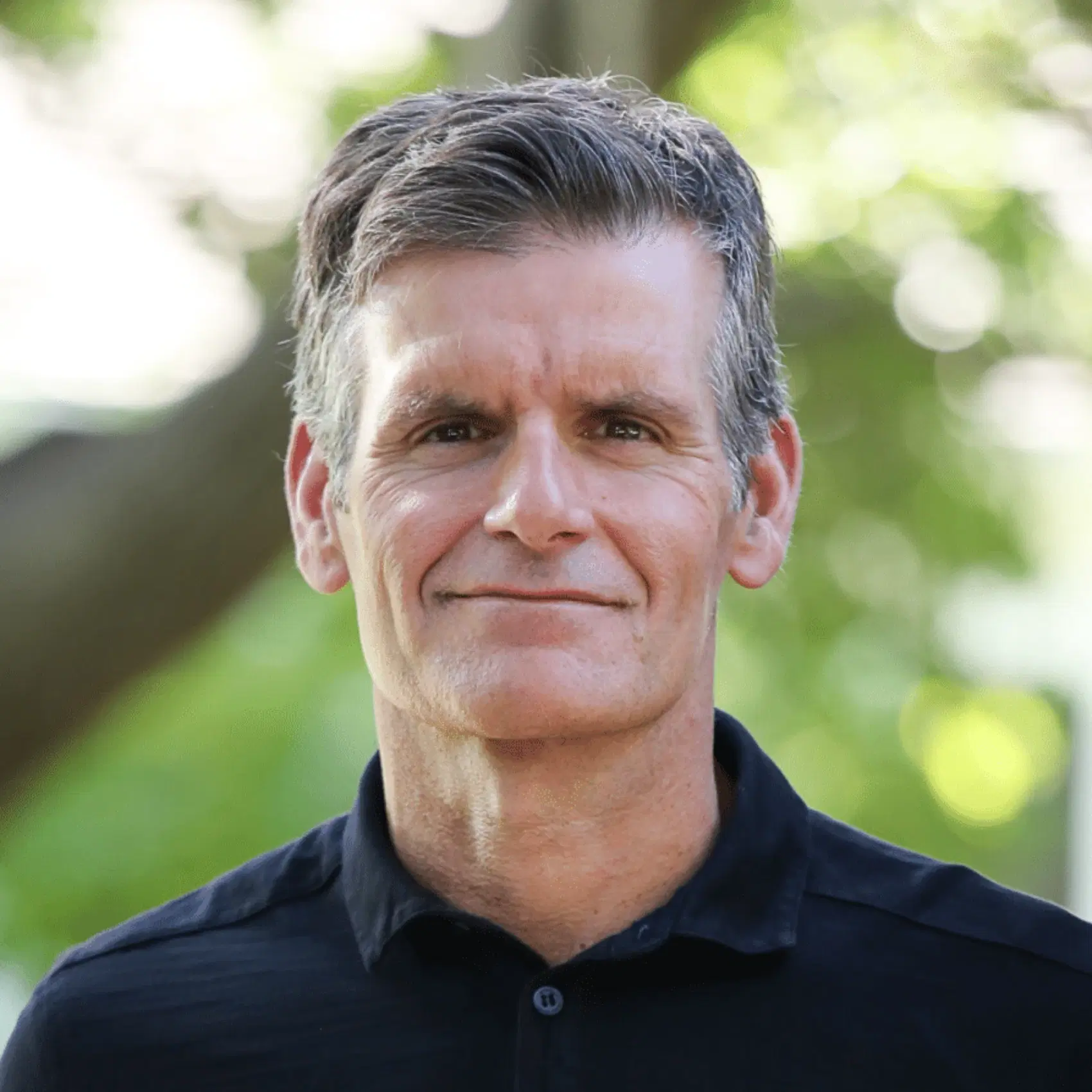
Dennis shares why software companies without a strong AI strategy risk being squeezed out. At the same time, those with mission-critical systems of record and deep workflow intelligence are better positioned to thrive. He explains why deterministic software still matters in a world obsessed with generative AI and why the future belongs to platforms that combine trusted operational data with secure, embedded AI experiences.
Dennis also shares how customers are changing the way they evaluate software, with many now using tools like ChatGPT and Google Gemini to compare vendors, analyze RFPs, and arrive at buying decisions far earlier in the sales process. This shift is forcing software vendors to rethink marketing, product design, and customer engagement from the ground up.
We also explore the balance between governance and experimentation, why AI adoption must happen from both the top down and bottom up, and why speed, not just cost reduction, is becoming the real business driver.
Dennis shares examples of how organizations are redesigning workflows, accelerating engineering output, and freeing up high-value talent from repetitive work. As he puts it, most companies are no longer asking if they need AI; they are asking how fast they can make it part of everything they do.
If you have been wondering whether the SaaS model is broken or simply evolving into something smarter, this conversation offers a sharp and realistic look at what comes next.
How is your business thinking about durability in an AI-first world, and are you building to last or simply building to grow?
Useful Links
Visit the Sponsors of Tech Talks Network and learn more about the NordLayer Browser.
[00:00:00] - [Speaker 0]
This month, I'm partnering with NordLayer, and it's support like this that allows me to keep bringing you conversations from across the global tech community. And if you are running a business right now, you may have noticed there's a quiet shift happening, one that most people are still underestimating, and that is your company doesn't live inside your network anymore. It lives inside the browser. That's where your SaaS apps sit. That's where your data moves.
[00:00:30] - [Speaker 0]
And increasingly, that's where attackers are focusing their attention. So NordLayer has just launched its new business browser, and it's designed specifically for small and medium sized companies that need visibility and control without the overhead of enterprise security tools. What I like here is the balance. You get advanced protection, better compliance, and full visibility into how your team is working online, but without slowing anyone down or forcing them to learn anything new. Feels like a practical step forward rather than another security layer that adds friction.
[00:01:08] - [Speaker 0]
So if you wanna see more about how it works, please head over to nordlayer.com/browser and check it out, and let me know your thoughts. But now, on with today's show. If you've been doom scrolling down your phone recently, you may be forgiven for asking, is SaaS heading for collapse, or are we simply watching the industry grow up? Well, today, I'm welcoming back Dennis Woodside, CEO of Freshworks onto the podcast for a conversation that feels incredibly timely. Because as AI continues to reshape how businesses buy, evaluate, and justify software, over the last few years, we've heard endless talk about the so called SaaSpocalypse, The idea that traditional SaaS models are under threat as AI changes everything from pricing to customer expectations.
[00:02:04] - [Speaker 0]
But Danny sees something slightly different. Rather than a collapse, he believes we're witnessing a reset, a move away from growth at all costs, vague AI promises, incremental features. Instead, we're heading towards something far more demanding, durability, measurable AI, and software that genuinely earns its place inside an AI augmented tech stack. And as CEO of Freshworks, Dennis has a front row seat to how organizations are transforming from media companies using AI to completely reshape production, marketing, and budget workflows to IT leaders rethinking how they measure value across their tech investments. Ultimately, the focus is no longer experimentation for its own sake.
[00:02:52] - [Speaker 0]
It's much more about speed, business outcomes, and proving real value. We'll so we'll unpack what this next phase means for SaaS, who is likely to emerge stronger, and how leaders can tell whether they're building something built to last or simply adding just another feature to an already crowded market. And we'll also talk about the changing buying behavior, why AI first thinking is now the baseline, and how software companies must evolve if they're gonna continue to stay relevant over the next decade. So if you've been wondering whether AI is rewriting the rules of software entirely or simply exposing which companies were built on solid foundations in the first place, this episode is for you. But enough from me.
[00:03:38] - [Speaker 0]
Let's get Dennis onto the podcast now. Can you tell everyone listening a little about who you are and what you do?
[00:03:47] - [Speaker 1]
Sure. I'm Dennis Woodside. I'm the chief executive officer of Freshworks. I've spent my career in The Valley. I spent over a decade at Google.
[00:03:56] - [Speaker 1]
I spent about five years at Dropbox, and I've been with Freshworks for about four years. And, at Freshworks, we provide AI driven software that enables IT departments and customer support teams to do their jobs better. We have about 75,000 customers around the world, including companies like New Balance, ITV, about a third of the NFL teams in The US, a third of the Major League Baseball teams, a third of the f one teams, just to give you a little bit of a census as to our customer base.
[00:04:29] - [Speaker 0]
Oh, I love it. And it's, what, nearly a year ago since we last spoke. And in technological terms, that is almost a lifetime now, isn't it? So so much has changed, I I gather, since we last spoke.
[00:04:39] - [Speaker 1]
I think so. I mean, for me, one of the things that's exciting is to see how customers of ours who have gone on this digital AI transformation change are are really seeing massive, results and massive change in their businesses. And I'm not just talking about using our products. I'm talking about using all kinds of products. I I was with a major media company today.
[00:05:04] - [Speaker 1]
CIO for the company was explaining their journey over just the last twelve months. And they they're in the business of producing and distributing content that is seen around the world. And he was explaining that everything from budgeting, to production, to marketing has completely been transformed in the last twelve months because of AI. They're using AI. For example, if you want to shoot a show in Hyde Park, they have a model that will allow you to estimate the cost per day of a of a shoot.
[00:05:40] - [Speaker 1]
And if you wanna compare that to shooting it actually up in Birmingham at a different location, you can do that in the AI. That that's the kind of work that used to take people with spreadsheets weeks to to perform. Now you don't really even need a financial expert running the model. The creative person who's trying to conceive of the show can run that analysis and then make decisions much faster. Their entire production process has been automated with AI so that when they're trying to figure out how to create promotional material out of a show's assets, the AI does that for them.
[00:06:18] - [Speaker 1]
Again, increasing speed. That could take someone an entire day to do. Now it's literally minutes with AI. Marketing also completely transformed because of AI. So I think it's exciting to see these organizations that have been around, you know, in this case, I think probably seventy years, transform their operations just in a very short period of time, and they're not looking to take costs out for the most part.
[00:06:39] - [Speaker 1]
They're looking to move a lot faster, and they're looking to be more effective with the talent that they have. So it's exciting to be a part of that. Obviously, Freshservice and Freshworks plays a part there, but it's exciting to see the bigger picture start to unfold in the last twelve months.
[00:06:53] - [Speaker 0]
It really is. And, of course, on the flip side of everything that we're talking about here, there's also a lot of talk about a SaaS apocalypse or SaaSpocalypse. But from your perspective, is there really a collapse of the model, or or is it more of a reset in how software companies are valued and judged? What are you seeing here?
[00:07:12] - [Speaker 1]
Well, I think, you know, the example that I just shared, there's first of all, there's a lot of different tools that are coming into these larger enterprises that didn't exist just a couple of years ago. So that's creating the need to demonstrate value very quickly among every piece of software that they're currently, providing. And so if you're a software player and you don't have a strong AI story, a strong AI product in game, you're gonna get squeezed out. The expectation is that you're gonna be AI first just to stay in the game. I think the the but the interesting thing is that the value that software as a whole is providing is actually going up.
[00:07:50] - [Speaker 1]
So in the example that I shared, think about what kind of value that company gets out of freeing up three hours of a producer's time. Right? That's hugely valuable for the organization. Or reducing the time, to produce a series from seven days to five days. That's hugely valuable for the organization.
[00:08:10] - [Speaker 1]
And so the overall value of the software to the organization is going up, which means there's a huge business opportunity. But it's not gonna be in the same business model that we had before. Most software for the last decade plus has been sold on a seat based model. And so when people say SaaSpocalypse, what they're really talking about is that model is changing rapidly. Even within our business, you know, we have products that are priced based on consumption.
[00:08:34] - [Speaker 1]
We have products that are priced based on the number of assets that we're actually managing. We still have seat licenses, of course, but we're also looking at things like tokens and and and charging based on on on other consumption or outcome metrics. And I think you're gonna see that kind of evolution in software, but software itself is still hugely relevant and powerful for the enterprise, and and that's why we're seeing so much interest in in what we're doing, and customers are looking to us to help them make that transition.
[00:09:06] - [Speaker 0]
Yeah. I completely agree with you on that. And I was also reading that you've suggested that AI is changing how customers evaluate and buy software. So what are you seeing in real buying behavior that that signals that shift is already underway? What are you seeing there?
[00:09:22] - [Speaker 1]
Well, if you think about how customers used to identify and bought and decide on major software decisions, they may, and they still do, go to a Gartner or a Forrester and look at those reports. They may go to a trusted source like a partner, and, again, they still do. But increasingly, they're also taking their RFP and putting it into ChatGPT or Gemini and prompting their way to identifying the strengths and weaknesses of various software vendors, and ultimately winnowing that list down and and creating that shortlist. And then and then trying to understand things well in advance of making a purchase decision about, well, how will that piece of software play in my enterprise given everything that you know, ChatGPT or Gemini, about how my systems already work, how we're already set up, what are the things that Freshservice is going to do very well, what are the things that we're gonna need to build on top of Freshservice. So they're coming to us much better educated than I've ever seen, and I think that that's a really good thing.
[00:10:24] - [Speaker 1]
It means that the way that we need to reach them is different because we need to understand how are the LLMs learning. We need to make sure our content is in the kind of structure and places that the LLMs actually can understand, and that is very different than how marketing worked years ago. And there's a whole new set of tools that are out there that are designed to do just like that. Help us understand where does Freshworks show up in Gemini, in ChatGPT, in Anthropic. And and that's really interesting for us because it means marketing is completely changing as well.
[00:10:59] - [Speaker 0]
And I think what makes this especially interesting is over the years, we've seen SaaS companies leaning heavily on growth at all costs. That was the strategy. So what changes when that focus moves towards durability and long term value instead?
[00:11:14] - [Speaker 1]
Well, I think that I think that the investor community in software is just looking for a bit more maturity out of the industry as a whole, and that means thinking it a little bit differently than we have in the past about how we manage costs overall, about profitability and and durability of the of business model itself, about stock based compensation, all things that are just natural in the maturation of an industry or of a business. I don't think that changes, though, the fundamental need to innovate and to invest in innovation. And that's ultimately what our investors are looking for us to do, is how do we ensure that we can continue to innovate that in a way that has real relevance and value to our customers where they can see demonstrable returns from the investment that they're making in our products, in our AI, in our systems. And and I think that that's you know, that to a to a large degree, that's actually quite healthy for us, especially with we have a very solid business that's doing quite well. But the industry as a whole, I think, is just seeing more more focus on driving durable, sustainable profitability, not necessarily growth at all costs.
[00:12:21] - [Speaker 0]
And I was also reading you've drawn a line between companies that are unique, stand out from the crowd, offer something different, and those are just built on incremental features. So how can leaders honestly assess which side of that divide that they're on?
[00:12:37] - [Speaker 1]
Well, I think that there's I would look at the systems that are absolutely essential for every company to run. If you think about what we do, we provide the software that allows an IT department, for example, to understand all of its assets, physical assets, software assets, hardware assets, how those assets relate to one another. That's essential for security. That's essential for compliance. That's essential for incident response and management.
[00:13:05] - [Speaker 1]
We provide the service layer that allows that IT department to, to manage any kind of request from employees for service for you know, I've got a problem with my laptop. I need a new piece of software. How do I do this with a new, a new tool that we provision? All of those, questions, all that service can be delivered in an AI enabled way at scale, predictably, reliably, twenty four seven in any language. So what we provide is mission critical for every company in the world.
[00:13:35] - [Speaker 1]
So every company of any size that has an IT department needs that software, that system of record and system of action in order to manage their IT infrastructure, their people, and deliver service. So I think I would separate that from other systems that are much more point solutions that potentially can be disrupted or replicated by AI quite easily. Think about note taking or project management solutions and software. Those are things that AI actually does quite well. But complex systems of record where there's a lot of rich information about the history of how that company delivers service, the history of the assets that it has, and how those assets work and operate, that's very hard to replicate, if not impossible to replicate in AI.
[00:14:20] - [Speaker 1]
So our view is the systems that have that kind of insight into workflow, into data, into the history of a specific customer, they're gonna have an advantage when it comes to AI because you can build AI on top of that. That's way more relevant for that specific industry or that specific customer. And that's where the value is really created. You know, a a customer of ours like Nucor Steel wants to manage its, you know, IT infrastructure and its relationship with its employees in a very different way than New Balance does. And every company has their own way of operating and working.
[00:14:55] - [Speaker 1]
Unless you understand that, you understand the workflows within those organizations, the permissions, and so forth, you're not gonna be able to deliver value on top of it. So I think there's a distinction in the market between these really mission critical important systems, which we are one of them, and other solutions that might be nice to have or might be very narrow in what they provide, which are gonna have a harder time.
[00:15:16] - [Speaker 0]
And I also think return on investment is becoming central to every conversation, especially around tech projects. But proving value is often easier said than done, and there's the old IT mantra of you can only improve what you measure. So what does clear ROI actually look like in a modern SaaS environment? Because it come in atoriously tricky to balance and and demonstrate that value. But what do you see here?
[00:15:45] - [Speaker 1]
Yeah. I'll give you I'll I'll go back to that example of the media company because it's just off the top of my mind. They they they were undergoing a multiyear, a £100,000,000 plus transformation project where the goal was a mix of ensuring operating efficiency and reducing overall cost, that's software and hardware people, but also delivering much faster results, faster time to value, and and improving the speed of the organization overall. Okay? So so in that environment, they they they're gonna have to invest in new capabilities, new tools.
[00:16:17] - [Speaker 1]
They're gonna have to invest in in generative AI, in in and that's gonna require consumption and purchase of tokens. So they have to spend, invest in that side. They're gonna need to find that money somewhere. And and I think what you're seeing is IT departments who are now under mandates to drive AI, AI efficiency, AI speed across their organization, they are absolutely focused on, okay. How do I if I know I'm gonna have to spend 5,000,000 over here, how am I gonna find 5,000,000 somewhere else to fund it?
[00:16:49] - [Speaker 1]
Because the budget in aggregate isn't gonna go up by much. So every project that we are engaged in, that that ROI discussion is super important. You know, either we're replacing a system that someone else has has provided, and we need to prove to the customer that, okay. By making this switch, you're gonna get a order of magnitude improvement in performance and return. Or maybe there's a fragmented environment where there's five or six different systems, and we we have to show that consolidating to us actually drives incremental value as well.
[00:17:20] - [Speaker 1]
So that that value story, it's always been precedent software. It's always been super important. But I think with with the AI imperative, where you have to spend on new technology, you'd it's not a it's not an option. That makes the the discussion around ROI and budgets and business cases all the more important in any piece of any other discussion you're having with the IT team or with leadership.
[00:17:46] - [Speaker 0]
And there is, of course, a lot of noise around AI positioning right now. Every tech conference I go to seems to mention not just AI, but it's agentic AI. It's agents, and there's so much information. It can feel overwhelming. So for business leaders listening, how can they separate meaningful AI integration from surface level features that don't truly add value?
[00:18:08] - [Speaker 0]
We've seen a lot of businesses burn over the last few years. I think it's getting so much better now, and there is a a real focus on business outcomes. But anything that you would add to that?
[00:18:18] - [Speaker 1]
Well, I think I you know, a couple lessons from what we've done internally. There needs to be some level of of central governance, but you also need to let the the innovation happen in the businesses, in the functions. So for us, that means that our central IT organization drives certain standards, ensures that security protocols are met, ensures that any new AI coming into, Freshworks that we are using internally has been vetted for security, and we can trust it. That's super important. But then we want those ideas to come up from the functional experts.
[00:18:56] - [Speaker 1]
It might be in design where they have, you know, they wanna use a product like Figma Make, and and that transforms how they think about design. There's a ton of new tools in marketing for content creation and distribution that are AI enabled. We have transformed our sales teams, and in particular, our business development teams, to use AI in out the outreach process, how they actually spend you know, find new customers and inter interact with them. Our engineering teams have used AI, including clog code and cursor, to dramatically accelerate the time it takes to go from concept to production code. And that's super important for us because the list of projects for engineering is never engine never ending.
[00:19:41] - [Speaker 1]
If we can move faster, we can deliver faster value for our customers, and that's critical for us. Our recruiting team is using AI to speed the time from a job posting to a job you know, filling a job, and that also delivers direct value to the business. Imagine you get a salesperson in seat faster. You realize revenue faster. It's an engineer.
[00:20:01] - [Speaker 1]
You ship product faster. So all these things have to be enabled centrally, but, typically, the innovation is coming more from people who actually understand that part of the business. And that's what I'm seeing at our customers as well, this balance between central governance and then functional or lower level innovation is meaning that AI is is getting rapidly adopted across the business.
[00:20:24] - [Speaker 0]
And as we look to the future, I think it's fairly safe to predict that organizations will continue to build AI augmented tech stacks. So I'm curious. Where where do you see SaaS platforms needing to evolve to remain relevant and defensible over the next five to ten years? And we've just talked at at the very beginning of this conversation how much has changed in one year. So five to ten years is probably unrealistic, but, over the next few years, how do you see that evolving?
[00:20:51] - [Speaker 1]
So for us, what the customers need to have that system of record that is the canonical repository for verifiable, auditable, hard data about their business, about their business performance, about how work gets done. Right? And that's that is what software does very well. Software is deterministic. You can ask it the same thing a thousand times, and you're gonna get a thousand times the same answer.
[00:21:19] - [Speaker 1]
There's going to be a role for that kind of, those kinds of systems forever. Now what do software companies have to do to be, relevant and make more create more value for their customers in an AI world? Well, they have to build AI that takes advantage of that inherited knowledge, that inherited data, and what they understand about permissions in the company, security in that company, you know, compliance in that company, and ensure that that the AI experience that an employee might have who's trying to use AI to understand that underlying data better adheres to those those norms and those standards and that compliance posture. So that's what we're doing. We've built our AI in a way that a customer can can integrate it into their environment very quickly, very rapidly using kind of a prompt based method.
[00:22:11] - [Speaker 1]
The AI understands role based access controls and all of the security and permissioning that already exists in the organization, in the customer. And they can get value from the AI very quickly because it's already been trained on the corpus of information that's relevant for that specific company, as well as, many other companies in that industry. And I think that's what you're gonna see software companies having to do. Take advantage of that deep and rich knowledge of the enterprise's security posture, of the data and workflow that enterprise specifically has. Apply AI to it in a way that's digestible, usable, easy for the practitioner to actually take advantage of and drive business outcomes, but also secure, and also done in a way that's trusted, and rely ultimately returns an answer based on specific information for that specific environment.
[00:23:07] - [Speaker 1]
And that's that's that's really what we're doing, is building on top of the decade plus of innovation that we've already we already have under our belt.
[00:23:15] - [Speaker 0]
And I always try and give everybody listening some valuable takeaways. So for those founders and executives listening to our conversation today, who could be worried about where they're going to stand in that next phase, any practical steps that you'd advise they take now to ensure their company is built to last rather than just built to grow? There's a big difference there.
[00:23:37] - [Speaker 1]
I think if you're if I would I would start with the the the company customer side. So I think if you are a business in any industry and, you know, an enterprise in any industry, you have to be embracing AI right now from the top down and the bottom up, and that requires cultural change. That requires real encouragement of of teams to to to embrace AI in everything that they do. It's gonna require experimentation. It's gonna require some risk taking.
[00:24:02] - [Speaker 1]
But at the same time, you have an obligation to preserve the sanctity of your IP, of the information that you have, to continue to drive compliance and and all the things that you've needed to do for for time eternal. That doesn't change. So it's important to have balance that need to innovate, that need for speed with the need to do it in a way that's responsible. And I just I see companies across the spectrum at different stages of innovation and of embracing AI. But I would just encourage everybody to to any leader to really lean in, to make sure it's a part of your personal workflow, that you have a handful of AI tools that you're personally relying on every single day because that will make you more familiar with the technology and what it can do and its capabilities.
[00:24:49] - [Speaker 1]
And then driving those technologies into the business systematically, redesigning workflow, and how work actually gets done to take advantage of these the the capabilities that AI has. I think that's a huge, huge imperative for all of our customers, any enterprise. I think for the software players like us, it's all about also embracing AI in your internal operations, but then figuring out ways to embed AI in every aspect of the product so that your products are truly taking advantage of the state of the art and delivering business outcomes for for your customers.
[00:25:25] - [Speaker 0]
And before you let before I let you go, you've been in Europe for three days this week. It's where we're talking to you from today. I'm I'm curious. All the conversations that you've been looking to have this week, and compare that to the kind of conversation you're having in The US and and beyond. Is it the same conversations you're having everywhere, or is there slightly different nuances, or is it largely the same?
[00:25:49] - [Speaker 0]
Are we all talking about the same thing?
[00:25:50] - [Speaker 1]
I mean, I think there's I think it's fairly yeah. I'm I'm in London this week, and I'm heading to India next week. I think it's consistent in that all you have companies that are cert clearly at the forefront, and then you have companies that are a bit behind. But everybody's doing something with AI to revolutionize their business. Not the all the talk in the press is of cost.
[00:26:13] - [Speaker 1]
It's not all about cost. In fact, most of the people I've spoken with this week, they're primarily focused on speed, on how do we move faster with AI, how do we drive better business outcomes way beyond cost. Cost is definitely a part of it. A lot of times, it's about repurposing talent. High talent people don't wanna do rote stuff that AI can take care of.
[00:26:33] - [Speaker 1]
So, so I think that's interesting. We I hear very consistently the need for cultural change and business redesign. We have to re I've heard this, you know, many, many times in the last couple days. We have to rethink the way we do work from the beginning, from first principles, because the AI allows us to do things completely differently than what we did just a year or two ago. I think that's common.
[00:26:56] - [Speaker 1]
I think where you do hear some nuances are around data sovereignty and data security. That's definitely more a part of the conversation here in The UK than it than I've heard in The US, for sure. And just the nuances around that, the nuances around the regulation regulatory environment in The UK, obviously, being different than in The US. But the bigger themes, I think, are fairly consistent from what I've what I've heard in in the conversations that I've had. And it's and I would say I would go back to, like, where we were a year ago.
[00:27:25] - [Speaker 1]
A year ago, I think most customers were in the piloting phase and just trying to understand what can this technology do. I don't think there's any doubt now that every company needs to have an AI strategy. They need to have, you know, real clarity on how they're gonna transform the business in AI. I think you are seeing gaps in, like, who's ahead, who's behind, but everybody is now saying, yeah, I'm gonna use AI. We're gonna have to do things differently going forward.
[00:27:50] - [Speaker 0]
Love it. And I think that's a great moment to finish on today. But before I do, you've delivered so much gold in your answers today. For anyone listening wanting to find out more information about Freshworks and everything we talked about, anywhere in particular you'd like me to point everyone, and I'll add a few links.
[00:28:06] - [Speaker 1]
Yeah. Just come to freshworks.com, and you can you can find everything there. There's we have a customer center there if you're interested in learning more about some of the customer case studies that I may have touched on. And then we have an event coming up, actually, in a couple weeks called Refresh in New York City. This is where we're gonna announce a number of exciting, of course, AI and non AI launches, product launches.
[00:28:28] - [Speaker 1]
We're gonna have several 100 customers together. You're gonna hear a lot from customers. So there'll be a virtual version of that event that we'll put on, and we'll make sure that you have the link to that so anybody can participate if you can't make it to New York.
[00:28:40] - [Speaker 0]
Awesome. I'll have links to everything that you mentioned, including those event details, and I would encourage anybody listening. If you can't attend, maybe tune in online and see what's coming out of that. I know there's gonna be some pretty big announcements, and I just thank you for coming on again, sharing your thoughts this time on the so called SaaSpocalypse, what the next phase means for SaaS, who's likely to come out stronger and what companies need to do to survive for decades to come. So many big takeaways for me, but just thank you for starting this conversation again.
[00:29:10] - [Speaker 0]
Really appreciate your time.
[00:29:11] - [Speaker 1]
Thank you, Neil. Take care.
[00:29:13] - [Speaker 0]
There is so much noise right now, isn't there, around all things AI, but what Dennis brought to today's conversation was perspective. The so called SaaSpocalypse may sound dramatic, but the real story is much simpler. Customers are being sharper, expectations are getting higher, and software companies now have to prove their place every single day. So AI is not killing SaaS, it's just forcing it to mature and grow up. And the companies that come out at least stronger are the ones that will be focused on mission critical systems, trusted data, measurable outcomes, and products that help customers move faster and work smarter.
[00:29:53] - [Speaker 0]
And surface level AI features and vague promises, these things won't survive for long. But durability, transparency, and clear business value, these things always will. I also think Dennis made a critical point today around AI adoption inside organizations. This is not just about reducing costs. In many cases, it's about speed, giving people time back, helping teams make better decisions faster, and redesigning work from first principles rather than simply automating old habits.
[00:30:26] - [Speaker 0]
So if you're interested in learning more about Freshworks, the customer stories we discussed today, or the upcoming refresh event in New York, head over to freshworks.com where you'll find everything there. As always, I'd love to hear your view. Are we heading towards a true SaaSpocalypse, or is this exactly the reset the software industry actually needed? And which companies do you think are genuinely built for the next decade? Let me know your thoughts as always.
[00:30:52] - [Speaker 0]
Techtalksnetwork.com. I'll be back again tomorrow with another conversation that will try and make sense of business technology that is shaping our world. Until then, stay curious, and I'll speak with you again tomorrow. Bye for now.