

What if the smartest climate technology strategy isn’t about inventing something new, but rethinking the buildings we already spend 90% of our lives in?
In this episode of Tech Talks Daily, I sit down with Ben Stapleton, Chief Executive Officer of US Green Building Council California, or USGBC California, to discuss why buildings sit at the center of sustainability, resilience, and community well-being. From energy use and air quality to wildfire resilience and climate justice, Ben makes a compelling case that the built environment may be one of the most practical places to create real change.
Ben and his team launched the California Building Performance Hub, a platform designed to help building owners, operators, and policymakers understand how to improve building performance through policy guidance, technical resources, rebates, and even an AI-powered assistant trained on building codes and compliance pathways. We discuss how this platform is helping accelerate California’s move toward healthier, lower-energy, high-performance buildings and why AI is becoming a useful sidekick rather than a replacement for human expertise.
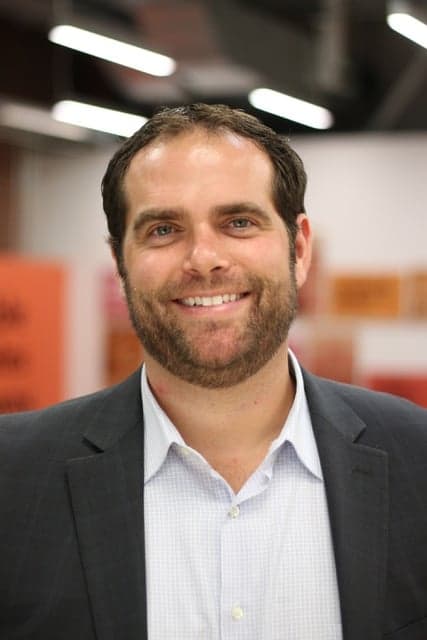
Our conversation also moves beyond technology and into something far more human: community. Ben shares how sustainability only works when people feel they have both awareness and agency. From helping low-income communities understand electrification and indoor air quality, to taking a "BuildSMART Trailer” filled with real building materials into neighborhoods so people can touch and understand the future of their homes, this episode is a reminder that climate progress starts with education and trust.
We also talk about wildfire resilience in California, where simple low-cost building decisions can dramatically reduce fire risk while also improving energy efficiency and health outcomes. Ben explains why many of the solutions already exist, and why the challenge is often less about invention and more about implementation, policy, and long-term thinking.
For business leaders, public sector teams, and anyone thinking about the future of cities, this episode offers a fresh perspective on sustainability as both a financial and human opportunity. Healthier buildings create healthier people, and healthier people create stronger businesses.
Is the future of climate action already built around us, and are we finally ready to look up and see it? I’d love to hear your thoughts.
Useful Links
Visit the Sponsors of Tech Talks Network and learn more about the NordLayer Browser.
[00:00:00] - [Speaker 0]
Regular listeners will know I always say that I only partner with companies that align with my values and what I'm trying to build here at Tech Talks Network. And NordLayer fits that perfectly by helping businesses stay secure without adding unnecessary complexity. And every company today relies on SaaS tools, whether it's collaboration platforms, CRMs, or finance systems. The common denominator here is everything now happens in the browser. But here's the problem.
[00:00:29] - [Speaker 0]
Most browsers were never designed with business security in mind. This is one of the many reasons why NordLayer has introduced a new business browser that puts security, visibility, and control directly where work happens. And it helps protect against things like phishing malicious sites and unauthorized access while also giving your teams a safer and more controlled way to work online. And the best part is it doesn't change how people work. It just makes what they're already doing more secure.
[00:01:03] - [Speaker 0]
So if you wanna learn more, please head over to nordlayer.com/browser and see how it fits into your workflow. But now, it's time to get today's guest on. What if some of the most important technology stories are not about the next app, the next gadget, or even AI model or AI agent. What if it's actually about technology bringing people together, helping people work together and build healthier, safer, and more resilient communities? This is something I wanna shine a light on.
[00:01:38] - [Speaker 0]
There are so many stories of polarization and echo chambers, but I'm an optimist by nature. And I honestly feel that people are starting to look up from their phones now. Want to get that community back, and people wanna make a difference. And in today's episode, I'm gonna be joined by Ben Stapleton of the USGBC California, and we're gonna have a conversation about tech for good in the truest sense. And that means using data, digital tools, AI, and a shared purpose to improve the buildings that we live and work every single day.
[00:02:16] - [Speaker 0]
And one of the things that I really enjoyed about this conversation before I bring him on is that is it goes well beyond sustainability buzzwords. This is about bringing together policy experts, building owners, communities, local leaders, tradespeople, and using technology to turn those good intentions that we all have into practical action and ensure everybody is involved. So if you're interested in how innovation and technology can connect people, strengthen communities, and make a real world difference, you're gonna enjoy this one. But enough from me. Let's get Ben onto the podcast now.
[00:02:57] - [Speaker 0]
So thank you for joining me on the podcast today. Can you tell everyone listening a little about who you are and what you do?
[00:03:04] - [Speaker 1]
So my name is Ben Stapleton, and I'm the CEO of the US Green Building Council of California. We're an independent nonprofit here in California. I like to say for California, by California. And our mission is pretty simple. It's just to make, California a more sustainable, resilient, and equitable place for all.
[00:03:22] - [Speaker 1]
And, we really hope that the folks can get behind that, especially those that that live here.
[00:03:27] - [Speaker 0]
Well, thank you for sitting down with me today. One of the things I always try and do on the podcast is get people thinking differently about the real difference that technology can make, not just in the workplace, but in our lives and indeed world. And for people listening outside of California and outside of the sustainability space, How would you explain the role of the US Green Building Council in California and the kind of impact it's having on how buildings are ultimately designed, operated, experienced?
[00:03:58] - [Speaker 1]
Yeah. It's a it's a great question. And, you know, it's it's it's funny because I feel like I have so many friends in in my life who are like, so what what the hell is it you do again anyway? What what is that? And, essentially, I like to say, you know, we have basically helped coordinate an ecosystem that really uses buildings as a central place to create positive impacts on things like energy, water, health, air quality, waste, nature, you name it.
[00:04:25] - [Speaker 1]
And one of the things that that I love and why I work in the space is everything comes home in a building somewhere. Even even even you will hopefully come home in a building somewhere. And so if we can really create these tangible impacts on the places that we spend over 90% of our time that we we live, work, worship, learn, we can create really positive ripple impacts across all of society. And so I found that for me to be able to focus on on buildings is my place that I wanted to really create those positive impacts. It would allow me to create more impacts over the course of of my career.
[00:04:58] - [Speaker 1]
And so we basically we we have a a few different sides to to the organization. We have a really robust member community of, really experts in in in kind of everything, as well as people who are novices and don't know anything about everything, but who care about this space. And and what I love is I can be at a at a a meet up or in a meeting somewhere and I've got somebody who's an expert on like waste and material reuse. And then I got someone who's a solar and storage developer. And I've got someone who's, you know, out there doing landscape work.
[00:05:27] - [Speaker 1]
And they're all in the same place, and sometimes they work on the same project. And I'm always amazed because I ask people, I'm like, why do why are you here? And they're like, well, this is the only place I can go where I can meet people who care about same things I do, but come at it from a completely different perspective. And it really helps them learn something. And so, we coordinate that ecosystem.
[00:05:45] - [Speaker 1]
And then we do a lot of of direct programmatic work, which I'm sure we'll talk about today where we're directly engaging communities. We're doing education. We we train over 5,000 people a year, so we can chat about that a little bit more as well.
[00:05:57] - [Speaker 0]
Wow. Absolutely love this. This community of people that genuinely care, want to make a difference. And I think on both sides of the pond, we've seen a lack of community in recent years, and it's great to see it come full circle because it is it is everything. And right now, you're leading the California Building Performance Hub.
[00:06:16] - [Speaker 0]
So what problem is is that platform solving, and how is it helping accelerate that shift towards more high performance buildings there right across the state?
[00:06:26] - [Speaker 1]
Yeah. I appreciate that question. And and just to to hit on your point about community, look, we're in such a a crazy time right now. I think people are really hungry for something that provides some positivity. And they go into a space where people are really interested in just working with each other to do tangible things that make the world a slightly better place.
[00:06:47] - [Speaker 1]
You know, we have so much divisiveness out there. We have so many things pulling apart. And so to be able to share space with others who are actually like generally trying to take whatever their their skill set is, whatever, you know, energy, passion, work they have, and be able to put that into something really means a lot. And I I really try to to channel that energy for for us as an organization. What is the California Building Performance Hub?
[00:07:10] - [Speaker 1]
You know, it's a it's a long name is what it is to start. But the, you know, buildings are kind of a wonky thing. Right? Like I feel like it's it's tough for people to kinda understand unless they, know, have really kinda gotten into a little bit of the the science behind the building or they've cared about architecture, construction at some point in their lives. But the performance hub that we built was really a reaction to we were getting a lot of questions from people who own and manage buildings from cities and others.
[00:07:40] - [Speaker 1]
There's this thing called building performance policy. I'm putting this in air quotes. So if people are listening, they won't be able to see my air quotes. But the and and essentially all it is is like, we're gonna create policy that's gonna drive buildings to be better to increase their performance. What does that mean?
[00:07:56] - [Speaker 1]
That means that they're using less energy. And if they're using less energy, they're typically gonna be much healthier buildings. They're gonna have a higher value long term. They're gonna take better care of the people inside them. And so we wanna have policy and regulation that drives that.
[00:08:13] - [Speaker 1]
Buildings account for over 40% of our greenhouse gas emissions. And and Mhmm. They don't get that much attention a lot of the time. And they have all those ripple impacts that I mentioned earlier. And so we were getting a lot of questions from folks who are trying to figure out like, okay, there's this policy, you know, what does that really mean?
[00:08:28] - [Speaker 1]
How do I comply with that? What how do I actually make my building better? And so what we did is we built a what we really see is kind of like a tip of the spear landing page where folks can go when they're they're trying to figure out how do I get my building to comply with focal policy. How do I actually make my building better? What things do that?
[00:08:47] - [Speaker 1]
And then how do I could get connected with people who can do that? Money that can help me, rebates, incentives, resources that can help guide me on the way. And as part of that, we built an AI agent that we trained on all of the building code, all the latest kinda like development guides, all the kind of things and and we train on its output so that you can tell it, you know, I'm a policy person at a city. Or I work in building and safety. Or I'm managing this building, I'm trying to figure this out.
[00:09:13] - [Speaker 1]
And it'll actually give you outputs based on your role that you can cut and paste that tell you, this is a process to follow to to benchmark your building. This is a process to follow to look at your energy use. Based on your building's age and its address, you should probably be doing these things to improve it. And really kinda helps be a little bit of a a sidekick to to really get you on your way and then connect you with human beings who who can actually do the work, and take it to the next step.
[00:09:37] - [Speaker 0]
Love it. And there is a growing conversation around buildings as part of a climate strategy right now. People are starting to see this differently, and it's refreshing to see as well. So I'm curious, though, from what you're seeing, what what is the biggest opportunity for the the built environment to to make a measurable difference right now? Because it's one thing saying we're gonna do this, but seeing that measurable impact, that measurable difference, that's when it all comes to life.
[00:10:02] - [Speaker 0]
But what are you seeing here?
[00:10:04] - [Speaker 1]
Yeah. I mean, look, I I think, you know, we're at a place right now where we're all seeing the impacts of climate change in different ways in our communities, whether that's increased heat, whether that's wildfires which lead to poor air quality and and other issues, whether that's drought, right, and water scarcity. I think buildings in very in many ways are key to adapt into a less certain future. And I'll use wildfires as example. I I live here in Pasadena.
[00:10:34] - [Speaker 1]
The the wildfires that maybe some of the listeners saw hit LA last January got within about a little bit more than a mile of of my house and I should probably be able to convert that into to to kilometers. But you know, it's it's not too far. And you know, I've been on a journey for probably five six years now around wildfire in particular where we had fires here which we have all the time. Five six years ago, we started working with people to help them figure out how to improve their buildings when they rebuilt. We learned a lot about how little we're prepared we were for trauma and how long this takes.
[00:11:06] - [Speaker 1]
But what I learned going through that process was like, there's so many things we can do that are no cost, low cost decisions that dramatically reduce our fire risk. The problem is there's no cultural change or adaption of those adoption, I should say. And so when we have these huge fires here in in LA this past January, we've been very involved in the rebuilding efforts. And I sit on the commission for the county, and we've done a rebuilding guide and a bunch of stuff. You know, what I've come through this process and learned is that, like, we can actually build buildings right now that have very low fire risk.
[00:11:38] - [Speaker 1]
They won't catch embers when they're blown. They're built with materials that are are fire resistant. Those buildings by the way tend to have much less energy use, have healthier air, all the other things that we would think. And then we can surround them with native landscapes that are adapted to fire that a fire could come and sure, maybe we'll evacuate for a few days, but we'll come back. Our homes will be fine.
[00:11:58] - [Speaker 1]
Our landscape will regrow in six to twelve months, and we'll move on. There probably won't be a fire for another twenty years or so because the fuel's been gone. And so that sounds like some sort of pipe dream, but it's not. Like, we have all that now and that that comes back to why I think buildings are key is because we have the know how. We have the technology in how to do that.
[00:12:17] - [Speaker 1]
And some of that's, you know, living in in harmony with nature and bringing that into our environment. And that's the key to how do we adapt in in a less certain future from climate. Same thing with heat. We have strategies, passive cooling and others to reduce heat impacts in our buildings. A lot of our buildings were designed, you know, the last fifty or hundred years in conditions for conditions that aren't what exists now.
[00:12:37] - [Speaker 1]
You know, we're I'll have cities that are gonna have ten, twenty, thirty more days a year over a 100 degrees or an extreme heat. And their systems weren't designed for those buildings weren't designed for that. And so we need to adapt to that and that includes in producing water use and all these things. So I can go down a deep road here, but to me, buildings are part of how we preserve, you know, basically that quality of life that we've had in many ways, to enable us to exist in the future.
[00:13:01] - [Speaker 0]
And when doing a little research on you, one of the things that immediately stood out is you're also deeply involved in climate justice and community engagement, which is so important. So how do you ensure that sustainability initiatives benefit everyone rather than just becoming something for that's accessible to certain communities, well off communities, or organizations with deep pockets, etcetera? How do you ensure that everyone's involved here?
[00:13:27] - [Speaker 1]
Yeah. I I really appreciate that question. I mean, one of the the first things to me is education and awareness. What we have found is that when you give people information and access and take the time to give them the context over, you know, whether it's issues around their energy bills or the materials that their apartment building or home are built with that could be negatively impacting them. People understand and they get it.
[00:13:50] - [Speaker 1]
And they wanna create the change. Having the know how and then having the agency and the resources to make the change, those are different things. I'll use we do a lot of work around electrification where we're, helping homeowners, helping apartment buildings convert from natural gas to all electric appliances, heating, cooking, you know, dryers, that kind of thing, hot water. And what we found is that over 70% of the folks in low income communities that we surveyed were well aware of the impacts of gas on, you know, asthma rates on a bunch of health impacts. And they were concerned about it.
[00:14:29] - [Speaker 1]
But they didn't feel like they had any agency. They they can't they they can't change out their stove tops. Right? They don't they they're not allowed to do that by their landlord. There's mismatch incentives from a policy and structural standpoint between how the billing is done for those those landlords and for their tenants where there's little incentive for them to improve those systems.
[00:14:46] - [Speaker 1]
And so those are things that we gotta address and and create the systems. And and I think we dance around the issue often as a society that like, the reality is doing things cost money. Like, there's no like, just you know, if you're gonna install something new, yeah, it takes money to do that. And so how do we create the systems and the structure that that provide the incentives to those that don't have access, and help support those that do have access in doing the work to demonstrate what's possible and bridge the gap. And so much of that starts with education.
[00:15:13] - [Speaker 1]
And so, you know, we get out there in the community. We have a a trailer we take out. It's called the Build Smart Trailer, which has over 80 different building materials in it. We've got, you know, smart things around water use. We've got a lot of heat pumps and stuff like that in it.
[00:15:26] - [Speaker 1]
And we take that out to communities so they can touch and feel things and play with it. And then once they've seen that, like, they've learned it already. And and it's kind of the same thing with, you know, I come back to nature for a moment. I've worked had the the benefit of working on a variety of urban garden projects. And here in LA, we have one of the the biggest disparities of, low income communities with a lack of tree cover, a lack of shade.
[00:15:49] - [Speaker 1]
And that's because of historical low investments of, in those communities of simple things like trees. We see increase in temperatures of over 10 degrees in a lot of these neighborhoods or more, but they don't have trees. And they don't have access to plants. There's people who live half hour from the beach never seen the ocean here. But you go into those communities and you show you know, we built a garden in Watts years ago.
[00:16:12] - [Speaker 1]
And you see these kids plant something, see that that grow in that process, you see an immediate change in them. And they realize their connection to the world around them and what what's possible. And so that all comes back to me again to that awareness.
[00:16:25] - [Speaker 0]
Yeah. Beautiful, man. And also technology, of course, is playing a massive role in how buildings are managed and optimized. So if we look underneath the hood of or under the roofs of many of these buildings, how are data, digital tools, and platforms like performance? How are they they changing decision making for building owners and indeed operators alike?
[00:16:48] - [Speaker 1]
It's a it's a dramatic change, you know, that for so many years in the real estate industry, it was like this March and mantra of, well, we need to figure out how we get data. I need to Yeah. Get data to understand, you know, how energy is being used in every floor of my building or in every unit of my building. I need to get data to understand how much water we're using. I need to get data to to to understand how that relates back to what the, you know, outside climate was that day.
[00:17:12] - [Speaker 1]
And so that was the mission for all these years. Then we hit a place where it's like, okay. Now we're getting data. Now we got all the data. And then it's like, well, what the hell do I do with all this data?
[00:17:19] - [Speaker 1]
How do I actually make decisions out of it? And and I feel like we're in this second part of that curve where, yes, it's AI, and it's also, like, the increasing reduction of the cost of a lot of these sensors. And it's like, okay. How do I how do I take all this data and actually create action out of it? And for so many years in the sustainability space, and I'm kinda hoping to actually I'm starting to see that maybe we're getting a little bit to the end of this.
[00:17:43] - [Speaker 1]
You know, we would see, you know, companies bringing a chief sustainability officer. Right? Or someone's gonna lead that stuff. And all their time, they get sucked up by doing reporting. They gotta do reporting on x and reporting on y.
[00:17:53] - [Speaker 1]
And, you know, if if you really wanted to to find a a great way to take a lot of brilliant sustainability leaders and get them busy doing things that weren't actually creating more sustainability, you would just pay them a lot of money to go work at big companies and have them write reports all the time. Right? Then they're not actually doing the work. But I think AI is, actually enabling that reporting process to take a lot less time. So people make sense of that data.
[00:18:16] - [Speaker 1]
I'm actually hoping we're about to see a little bit of a revolution in this space where people are spending a lot more of their time on doing the actual work, doing the projects, doing the things that are actually creating the impact and less on the reporting, less on the data collection, less less on the analysis because of the tools. And so, that's a trend I think I'm seeing. I I think that relates back to buildings also and, you know, a lot of the building systems are in place. More and more of those are getting automated. Those skill sets are changing.
[00:18:40] - [Speaker 1]
You might in the past, you might have had like three facilities engineers or something in a bigger office building. You could probably have, one engineer now cover three buildings, right? Because they've got the tools and things like that as long as they can get out there. And so that also enables opportunities for folks who maybe like or have been janitors historically to to be able to take more of an active role maybe in managing a building because they can get into the technology. And so the skill sets are changing and I think evolving, and we need to be mindful of that.
[00:19:04] - [Speaker 1]
But, you know, it's changes are constant. We're kind of mid mid current on it.
[00:19:09] - [Speaker 0]
And from the outside looking in, California is often seen as a a leader in sustainability policy. And we do we do have people listening all around the world. So are there any lessons that other regions or countries could take from what's happening over there? And and what kind of challenges are you seeing that are still holding progress back? And and and any positive tech stories as well that you can share?
[00:19:33] - [Speaker 0]
What would you say to people listening around the world that wanna almost follow your lead here?
[00:19:38] - [Speaker 1]
Yeah. You know, California, we actually are the fourth largest economy in the world now just by ourselves. We passed Germany last year. No offense, Germany. But, you know, it's it's such an odd time in The US, you know, and and, you know, our federal government obviously is completely pulled back from all these things.
[00:19:56] - [Speaker 1]
And really, you know, I think we got sort of in the work that I do, it's like we got used to for four years that somebody actually cared about what we were doing on the federal level. And then all that got pulled, and you think about all the time and effort that went into, like, setting up those those projects and contracts, the federal government and changing policy and all that got pulled. And this is a time where it's all about relationships and local government. And California has the policy that's leading The US on sustainability. It actually is one of the few states that has policy around, for companies around climate risk disclosure and around them disclosing their emissions from their scope one and two and three of their supply chain.
[00:20:35] - [Speaker 1]
And so that policy, because it's the fourth largest economy in the world, if a company has to do it for California, well, they kinda have to do it now for the rest of The US because it doesn't really make sense for them to just do it for California. Right? And so Yeah. And one of things that took me a while to learn in California also is that we're we have so many bills proposed every year. I think last year, we had over 2,000 bills proposed by our state legislature.
[00:20:57] - [Speaker 1]
And that yeah. It sounds crazy. You it probably is crazy. But the reality is is what happens is a lot of the policy sausage for the entire country is made in California. People see what gets approved, what doesn't, what language works, what language doesn't.
[00:21:10] - [Speaker 1]
The way our our system works because things can be voted on in that way and we have that that sort of diverse ecosystem of policy work. We can work through those 2,000 bills and sure, maybe 70 of them get passed. Maybe 30 of them get passed. But all that work then spreads across the country. And so California, I think, is is leading the way in in that way.
[00:21:28] - [Speaker 1]
And we've done it by growing our economy. You know, people look at sustainability, look at green and they say, oh, that's a that's an additive. That's gonna cost extra money. I'm in this work because I actually think there's a high return on sustainability. I think our financial models have been flawed.
[00:21:44] - [Speaker 1]
We're not looking at the return on having healthier, more productive people. There's a reason Google and these other companies invest in having, you know, lead platinum buildings and super healthy buildings. You know why? Because their people are 10 to 15% more productive. That is worth far more than the money they're paying per square foot for the real estate for them.
[00:22:01] - [Speaker 1]
And so they're investing that money. They're doing it because it's a smart thing to do. Our models for buildings and and financial return haven't been taken into account these factors on human health, these factors on impacts in the environment. And you reduce your utility cost, guess what? That goes to revenue and income long term.
[00:22:18] - [Speaker 1]
And, you know, all these things actually make financial sense and drive investment. Right? So as we're electrifying, as we're putting EV infrastructure in, as we're electrifying our buildings and taking out gas, we're lowering our utility bills, we're creating more community health, that's reducing societal cost. And so our economy will continue to grow as we do these investments that reduce energy use, create healthier people. That's a reaffirming cycle that frees up more capital.
[00:22:41] - [Speaker 1]
And so I think people need to take a step back and take a look at the models we're using, realize they're flawed and realize that anything we do that's actually, again, creating a healthier society where we're gonna have less climate risk exposure. We're gonna improve the health of our people and reduce our our our energy costs or water costs, and we're all gonna make more money and be able to live in a better place.
[00:23:02] - [Speaker 0]
100%. And if we look ahead, I think it's easy to predict that pressure will increase around resilience, around energy use, and occupant health, example. So what what should businesses and public sector leaders, what should they be prioritizing now to create buildings that that are fit for the future? Is there anything that frustrates you or that you're working towards that you wanna see happening that you wanna change here?
[00:23:28] - [Speaker 1]
I think we're at a moment where, as I was saying earlier, we're getting data clarity in ways we haven't before. And I really don't think there's any like, if you're building a building now, you need to be looking at what's the hundred year lifespan of that building impacts from increased heat. If you're in an area where it there's gonna be sea level rise potential. And this is now in the models as people are building buildings in a lot of cities. They're now thinking, oh, I gotta build this building to account for a sea level rise of ten, twenty feet potentially.
[00:23:57] - [Speaker 1]
Yeah. Yeah. Or I don't know exactly the numbers, but in fifty or a hundred years, whatever that looks like. And so you need to be taking those things into account. We have the technology that can help you make sure you position your building right, taking advantage of of the sunlight the right way.
[00:24:11] - [Speaker 1]
Solar is the lowest cost of energy production in the world, you know, integrating solar into that building on-site. So, you know, if you take an approach to this building that I wanna build an asset that's gonna have value for the next fifteen hundred years, that's gonna be able to resell or or be something that's better gonna support my company. You're gonna invest in these things to make that building more sustainable because it makes financial sense and reduces your climate risk in the future. And and I think that's how people should be approaching the process, right now. And we have the tools and know how to do that.
[00:24:42] - [Speaker 1]
And it doesn't need to be a price premium. And and even if it was a little bit, you're getting a higher value asset. You're getting a return on that.
[00:24:49] - [Speaker 0]
If we have anybody listening anywhere in the world, they could be in California wanting to be a part of the movement that you've created here or maybe somewhere anywhere in the world, maybe even Germany that wanna follow in your lead and
[00:25:02] - [Speaker 1]
and work with you. We we work a lot with the German American Chamber of Commerce here, everyone. We're friends. I was just I was just saying, you know, a little friendly competition.
[00:25:10] - [Speaker 0]
So anyone that's interested in, contacting, working with you or your team or your community, where where should they go? Where would you like me to point everyone?
[00:25:18] - [Speaker 1]
Yeah. So, our website's pretty simple. It's, you know, www.usgbc. So usgbc-ca.org. I guess that's not that simple.
[00:25:27] - [Speaker 1]
Usgbc-ca.org. And, you know, you can also go to to to californiagreenbuildingcouncil.org. But we're the you know, we're we're one of the leading groups in the world doing this work. And, actually, the the work we do extends far beyond California. We've been doing work on a, with a global consortium on reducing water use for four years.
[00:25:48] - [Speaker 1]
We just reduced water use by over 70% in single family homes in a pilot project we've been doing, which is pretty amazing. And that's been companies from all around the world. So that's where folks can find, information on us.
[00:26:00] - [Speaker 0]
Absolutely. Love it. And so much I've loved about talking with you today. I mean, we take a look around. It's easy to see everyone face down in smartphones, lost in algorithms, echo chambers, being spoon fed more polarization.
[00:26:14] - [Speaker 0]
But what I I love about or what I've taken away from you as well is people are starting to look up from their phones now. AI is providing data clarity, allowing people to work together, and allowing people to focus on on making a difference. And it's those although we're talking about technology on a tech podcast, it's about those relationships, the communities and local governments all coming together, and that's the kind of good news story we wanna hear right now. So thank you for sharing that with me today.
[00:26:41] - [Speaker 1]
Yeah. I mean, look, there's no there's no technology without people, and we forget the human element of what we do far far too often.
[00:26:48] - [Speaker 0]
One of the things that will stay with me long after this conversation is the reminder that the best use of technology is often the most human. Yeah. We talked about buildings, data, AI tools, and performance platforms. But if you look underneath all of that, there was something so much bigger. It was people coming together, sharing knowledge, using technology to solve problems that really matter in our everyday lives.
[00:27:16] - [Speaker 0]
And a big thank you to Ben for bringing a refreshing perspective to this conversation. This is tech as a connector, tech as an enabler, tech as a way of helping communities becoming healthier, more resilient and better prepared for the future. And you might say I'm a dreamer here, but hey, I'm not the only one. But honestly, in a time when so much of the conversation around tech feels noisy and divisive, This was a much needed feel good story worth shining a light on. And wherever you are in the world, if you want to follow in their footsteps, please reach out to Ben.
[00:27:53] - [Speaker 0]
I know that this is something that he is genuinely passionate about, And let's try and make a difference. Let's be the change we wanna see in the world one day at a time. And on that note, it's time for me to walk off into the sunset. My work here is done, but thank you so much for listening, and I'll be back again tomorrow with another guest. Bye for now.