
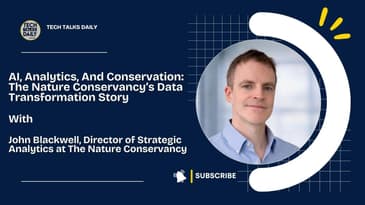
At SAS Innovate, I sat down with John Blackwell, Director of Strategic Analytics at The Nature Conservancy, to explore how data, AI, and marketing intelligence are helping one of the world’s largest conservation organizations raise more money, operate more efficiently, and ultimately direct more resources toward protecting land, water, and ecosystems across more than 80 countries.
In this episode, John explains how analytics has become a critical part of modern conservation strategy. With fundraising supporting everything from habitat protection to climate resilience projects, improving donor retention and increasing fundraising efficiency directly impacts how much work The Nature Conservancy can do around the world. John shares how the organization improved donor retention by 10 percent and increased year-over-year giving by 30 percent by moving away from siloed systems and toward a more connected, data-driven approach.
We discuss how analytics helps identify long-term donor potential, personalize supporter journeys, optimize fundraising asks, and create a clearer 360-degree view of donor engagement across email, direct mail, telemarketing, and digital channels. John also explains why personalization in the nonprofit world requires a very different balance than in commercial marketing. Trust and authenticity matter just as much as performance metrics.
The conversation also explores how AI is quietly changing the way nonprofit analytics teams operate. From speeding up model development to improving feature selection and identifying rare high-value donor opportunities through synthetic data generation, John shares where he sees AI creating immediate practical value without compromising the human voice of the organization.
What stood out most to me is how this is ultimately a story about efficiency creating impact. The more effective The Nature Conservancy becomes at fundraising and donor engagement, the more money can go directly toward conservation rather than operational overhead.
And in a world where every nonprofit is competing for attention, funding, and trust, analytics may quietly become one of the most important tools available for protecting the future of our planet.
So, as organizations continue investing in AI and analytics, are they focusing enough on the real-world outcomes those technologies can help create?