

What if the most valuable business intelligence in your organisation has been hiding inside your contracts all along?
Recorded live at Docusign Momentum in London, this episode explores why enterprise AI is at an inflection point. After years of focusing on what AI can create, the conversation is shifting towards how AI can help organisations understand the information they already have, remove friction from everyday work, and make better business decisions.
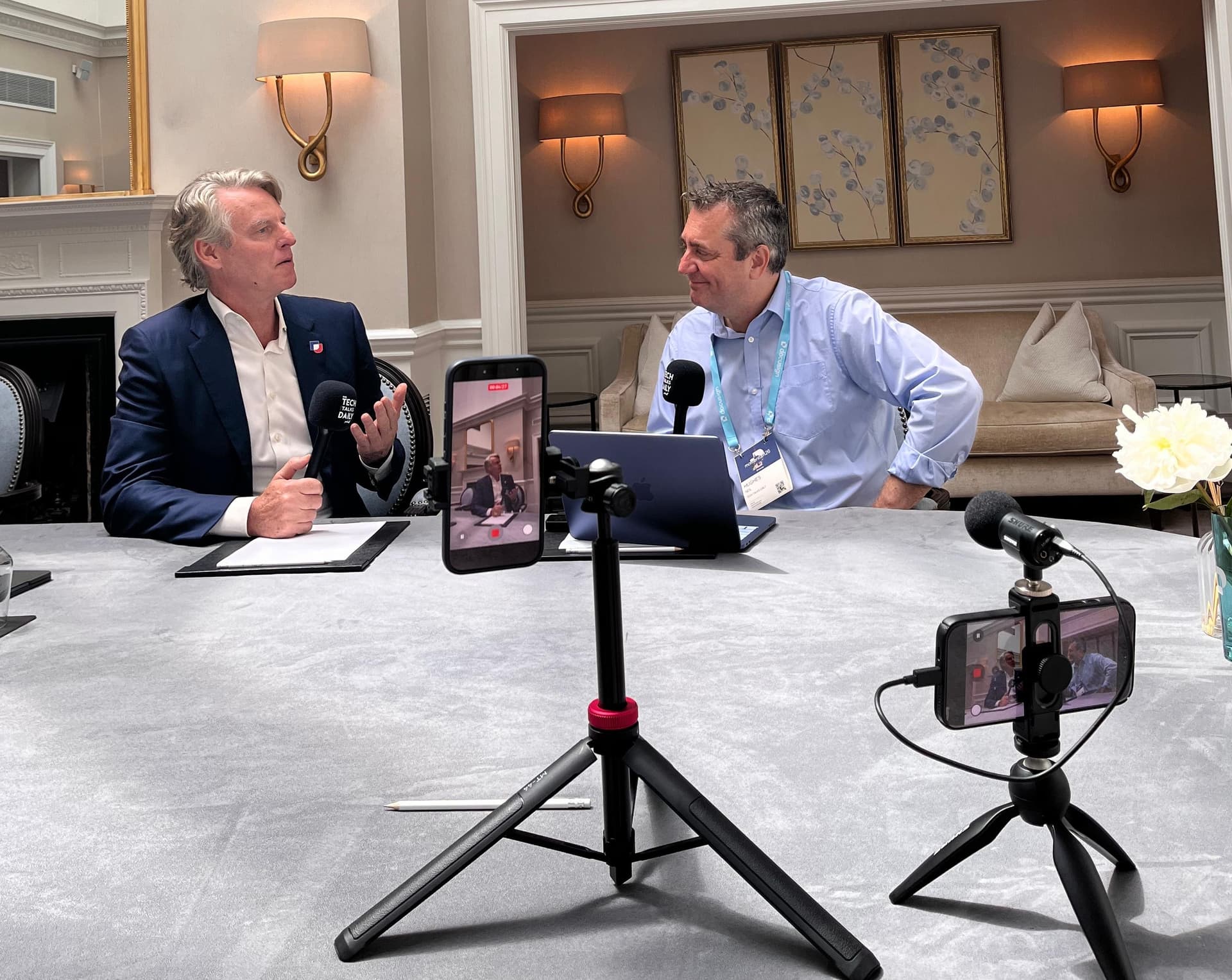
Joining me is Allan Thygesen, CEO of Docusign. While many people still associate Docusign with electronic signatures, Allan explains why the company's vision has expanded far beyond that single moment in the agreement process.
Every business runs on agreements, from customer contracts and supplier relationships to employee onboarding and partnerships. The real opportunity, he argues, is transforming those agreements from static documents into business intelligence that helps organisations improve performance, reduce risk and uncover value that has often remained hidden for years.
We discuss why decades of historical agreements are becoming increasingly valuable in the age of AI, how organisations are using agreement intelligence to shorten sales cycles from days to hours, and why understanding the context behind agreements can be just as important as the agreements themselves.
Allan also shares his perspective on the rise of agentic AI, explaining why trust, governance and compliance will ultimately determine how quickly organisations allow AI to take on greater responsibility. Rather than viewing AI as another standalone tool, he explains why the future lies in connecting trusted data and workflows across the systems businesses already use every day.
Throughout our conversation, we also explore why Docusign continues to build an open ecosystem through partnerships with companies including Anthropic, Harvey, Legora, OpenAI, Google, Salesforce, SAP and Thomson Reuters, enabling organisations to work with agreement intelligence wherever work already happens.
After spending the day at Momentum hearing from customers like Harvey, Legora, Experian and AON, executives and attendees, one theme kept emerging. The organisations creating the greatest value from AI are not necessarily adopting the most AI. They're using it to remove friction, improve decisions and help people focus on work that genuinely benefits the business.
Does your organisation still think of contracts as administrative files, or are they becoming a strategic source of business intelligence? I'd love to hear your thoughts after listening and continue the conversation.
Useful Links
Interview Transcript
[00:00:37] - [Speaker 0]
What can AI create? But after spending the day at DocuSign Momentum in London, I came away thinking we've possibly been asking the wrong question because the most interesting opportunity isn't creating more content. It's actually helping organizations understand the information that they already have, improve the decisions that they already make, and remove friction from the work that their people do every single day. Now throughout the day, I've heard remarkably consistent themes from customers, partners, industry leaders, and attendees alike. And they weren't asking for more AI tools.
[00:01:20] - [Speaker 0]
They were asking how AI could become part of their everyday workflows, workflows that run sales, procurement, HR, legal, and customer operations. So for me, this made my conversation today with the CEO of DocuSign particularly interesting Because when we sat down today, we weren't talking about AI for AI's sake. We discussed why the next chapter is actually about turning agreements from static documents into business intelligence. Business intelligence that helps organizations ultimately make better decisions, reduce risk, and unlock value. Value that has been hidden inside contracts for years.
[00:02:03] - [Speaker 0]
But enough scene setting for me. Buckle up and hold on tight because I'm gonna beam your ears directly onto the show floor here at DocuSign Momentum. Well, thank you for joining me here at DocuSign Momentum in London. For everybody listening, can you tell them a little about who you are and what you do?
[00:02:23] - [Speaker 1]
Yes. So my name is Alan Tigersen. I'm the CEO of DocuSign. Grew up in Denmark. I came to The US when I was 24 and settled there.
[00:02:30] - [Speaker 1]
Been in tech my whole career. Joined DocuSign as CEO three and a half years ago, and been trying to bring the company forward into the AI age, and I think as today's event illustrated, I think we're making great progress.
[00:02:43] - [Speaker 0]
You really are. And one of the things I wanted to bring up is DocuSign became synonymous with electronic signatures, and that's what people immediately think when they hear DocuSign. But why is that no longer enough? And what convinced you that the company needed to maybe reinvent itself around intelligent agreement management? It feels like there's so
[00:03:00] - [Speaker 1]
much more scope and opportunity. Well, so on the the signature piece, there's still a lot of headroom. There's still plenty of PDFs, let alone paper out there to to automate. With that said, I felt, I think the team agreed, we had a broader opportunity to reimagine the entire agreement journey. If you think about it, DocuSign zeroed in on that moment of executing an agreement.
[00:03:24] - [Speaker 1]
And that was a fantastic idea, and and obviously took off, we're very fortunate to have thought of it and and developed it, but there's so many other steps in the agreement process that have not been reimagined, that have not taken advantage of modern technology, let alone of AI. And that's our mission is to bring the same delight that we brought to the signature moment to the entire agreement process.
[00:03:47] - [Speaker 0]
And you often describe contracts as business assets rather than just documents. I absolutely love that. But what does that shift actually or what does that shift in actually mean for a CEO or a CIO that's trying to run a modern enterprise? What's that mean? When you when you say agreement management or contract management, a lot
[00:04:06] - [Speaker 1]
of people think about saving time in processing agreements, and that is very, very important. We can save time not just for the lawyers, but for everyone who touches agreements, salespeople, procurement people, HR people. But the even bigger opportunity is to unlock the value in the agreements. Companies negotiate for all kinds of things that they then forget about. They're not getting what they negotiated for, let alone, of course, negotiating smarter the next time around.
[00:04:29] - [Speaker 1]
That is the ultimate value, and that's what it means what I mean by unlocking the value in the agreements.
[00:04:36] - [Speaker 0]
And every company has decades of contracts sitting in repositories that were written long before AI existed, at least mainstream AI as we know it now. But how valuable is that historical data becoming and how are organizations maybe beginning to see it as an almost untapped source of business intelligence rather than just a pile of legal paperwork?
[00:04:56] - [Speaker 1]
Yes. Well, I I think you're you're right. In many companies, vendor and customer relationships go back decades, and and some of the prevailing terms that govern the relationship today are embedded in agreements that are ten or twenty years old. And so we often find that in order to get a full picture of of your agreement library, in order to position you to have the, you know, the best possible value from the relationship, we need to go back and make sure we have a complete collection. And there's, of course, enormous business intelligence value in what's in those agreements.
[00:05:29] - [Speaker 1]
And even more, what's the context of why they look the way they do? You know, why did we agree to those those payment terms with this vendor when everybody else is supposed to pay in thirty days or etcetera. And so that that's the underlying value is understanding the history and the context to then put you in the best position to get the most out the relationship. And when you need to renegotiate, you can do that on an informed basis.
[00:05:53] - [Speaker 0]
And if we both scroll down our LinkedIn LinkedIn feed, everyone claims to have an AI strategy today, but what have you learned about separating meaningful transformation from maybe simply adding AI features to existing software? Because there's a huge difference and and gap there, isn't there?
[00:06:08] - [Speaker 1]
Yeah. There is. You know, it's interesting. So we probably all remember when GPT three five came out. That was a seminal moment and a discontinuity.
[00:06:18] - [Speaker 1]
It's just such an incredible change in the capability of the model. And when when that when that was released, a lot of people say, well, we can write things. We can have AI write things for us, whether it's term papers or contracts. Right? And and people I think overly focused on that.
[00:06:34] - [Speaker 1]
And you can in fact do a very passable job of writing presentations and spreadsheets and documents with AI. But we focused elsewhere. We said, well, we're gonna start with the finished contracts. AI could do an unbelievable job of taking these what used to be unstructured files Yeah. In pictures in many cases, extract the information out of them, and figure out what did we agree to?
[00:06:56] - [Speaker 1]
Why did we agree to it? And how can we make sure we get what we negotiated for? That was the insight where we started there from the back, and now we're bringing AI to the negotiation process, to reviewing proposals that you're getting from your vendors or partners, and all of that same idea applies. How can we make it smarter, faster, better?
[00:07:16] - [Speaker 0]
And more than 40,000 organizations have currently adopted IAM. I mean, what what are customers discovering once they began treating Agreement Data as a more of a strategic business asset? What's the the ROI and the big value add there?
[00:07:31] - [Speaker 1]
Yeah. So we're we're we're sharing a number of customer stories here at the at the event today, and then many of them are speaking for themselves. So maybe just to cite a few examples. So one one customer that that presented today is Experian, you know, large global financial data provider operate, I think, in 32 countries, and they wanted to reimagine their entire sales process. You know, basically, there's contracting, of course, for many different products across, thousands of customers.
[00:07:59] - [Speaker 1]
And so they built that around DocuSign, and they have now collapsed their time to agreement from, I think, ten days on average to hours. And we see that across companies that sell to businesses like an Experian, and companies that sell to consumers that make those processes more more efficient. And you can do that not just for your sales processes, but for HR. Payworks is an example of a global HR software provider, and they have used our our software to, you know, again, dramatically collapse the time it takes to get to an agreement and get more insights, so you're entering into better agreements. I love it.
[00:08:35] - [Speaker 1]
Absolutely love it. And you're also working with big partners as well. Anthropic is a big name to throw in there as
[00:08:41] - [Speaker 0]
well as Harvey, Ligora, Thompson Reuters, rather than trying to build everything yourself. So why do you think AI ecosystems might maybe possibly outperform some platforms?
[00:08:53] - [Speaker 1]
You know, we've always had the view that we we want to enable you to use DocuSign in whatever tools you you you want to live in. We we offer of course, you can you can do a lot of things in the DocuSign product itself. But, you know, for over two decades now, we've been deeply integrated in Salesforce. We're integrated other CRM systems so the salespeople don't have to leave the environment they prefer. We do the same in HR with Workday and and SuccessFractors.
[00:09:19] - [Speaker 1]
We do the same in procurement with SAP and Ariba. And now, since there's so much innovation in the legal area, historically, that's been a very siloed, chopped up space. And now you have some partners who are really taking a more holistic view, and we could we provide quite a bit of legal functionality. But if you want to go deeper, we can hand off to, you should say, Allegora or Harvey or Thompson Reuters. And then, of course, there's new interfaces.
[00:09:44] - [Speaker 1]
So there's the traditional software vendors, but now the Anthropix and OpenAI's, goos of the world are providing chat interfaces. And we can we want to make sure if you want to look up agreements and get those extractions, or if you want to trigger the execution of a document with someone else, that you could do that from those agentic platforms. And so that's why we we've always maintained a very open stance to integrating with other platforms and giving our customers that choice, and and this is just a natural extension of that strategy.
[00:10:13] - [Speaker 0]
And so far this year, the first six months, I've been to 15 different tech conferences from Egypt to Vegas. Can you guess what the trending topic is? It's not just AI. It is agentic AI. That's all everybody's talking about.
[00:10:24] - [Speaker 0]
We you hear a lot about age AI agents negotiating and executing work. What do you think needs to happen before organizations are comfortable trusting software that that are making such big decisions like this on their own? Yeah. I I think it's
[00:10:38] - [Speaker 1]
it's not primarily a tech problem. Yeah. Right? I I think the technology to, let's say, execute the automate the execution of an NDA between two companies exists today. We can do that.
[00:10:50] - [Speaker 1]
In fact, we have templates for that. But I think it's more about the trust and the harnessing and the compliance and understanding that we've got this under control so that it doesn't go off and agree to something that you're not comfortable with. When that that's in fact a big part of our value proposition is that DocuSign understands agreements. We are already trusted with your agreements. We will work with you to help you create those that harnessing and compliance framework so that you can take advantage of the productivity benefits that agents provide while, you know, managing your risk.
[00:11:25] - [Speaker 0]
And when we're talking about the pace of technological changes, a lot of conversations at the moment around humans, workers, how they're being impacted, how we lead them through this period of change. And one of the reasons I wanted to bring that up was doing a little research on you before you joined me today. And one of the things that stood out to me about you as a CEO is you lead by curiosity, empathy, and communication. All these things shape your leadership, balancing performance and people, leading them through this change. It feels like this is something that's really important to you too, not just attack, it's bringing people along and
[00:11:53] - [Speaker 1]
Well, I I don't think we can be successful unless unless all the DocuSigners are on board with the plan and and look, people are naturally somewhat resistant to change. Yeah. Right? It's uncomfortable of change, and it's uncertain where where where are we going. And so getting the organization to really lean into change and experimentation, and then moving faster than than maybe we historically had, has been essential to to the ongoing transformation of DocuSign.
[00:12:23] - [Speaker 1]
And I'm just I'm incredibly proud of of the team. The the pace of innovation at DocuSign has never been higher. We're things from concept to production code in three months now, which it was unheard of in the enterprise software space. And so it's a very exciting time to be leading DocuSign, and I think future is very bright for us.
[00:12:46] - [Speaker 0]
And also at an event like this at Momentum, I think one of the best things is getting face to face with people. All the different conversations, those moments of serendipity where you talk to people you normally wouldn't have access to. When you take around everything that's been announced on the keynotes, all the conversation, what has excited you today from everything that you've seen in the past?
[00:13:04] - [Speaker 1]
Yeah. I'm gonna pick my favorite example of what we showed today is we can take any PDF form that exists in your company and, you know, while we have made progress on electronic signature, their most most contract elements still sits in PDF or paper. Right? Yes. Could take that and automatically can turn it turn it into an interactive web experience.
[00:13:25] - [Speaker 1]
I mean, that's magical. You go to any bank, government agency, health care institution, you name it. They'll on the top of their web page, there will be a list of PDFs that you're supposed to fill out to take a variety of relatively simple actions. We can now and why has that been converted into a more delightful experience? Well, because it's complicated.
[00:13:43] - [Speaker 1]
It's IT heavy. The resources are limited. There's too many forms. We can now take that entire library and, you know, with human review at the end, but essentially automate the make turning those into interactive web experiences. I think that's just gonna be magical.
[00:13:59] - [Speaker 0]
Yeah.
[00:13:59] - [Speaker 1]
And and of course, that's what we all expect, but don't consistently get. And right now, there's
[00:14:04] - [Speaker 0]
a lot of people that are crystal ball gazing, looking to the future, trying to predict the future. I think what we've seen over the last five years shows that that's impossible. But if we were to look five years from now, and if I was to ask you to look back at this period, what do you think people will say DocuSign actually changed about the way that organizations work? I think the ultimate goal is to turn contracts into a service, to have it
[00:14:28] - [Speaker 1]
be a iterative self improving loop where not only do we make the contract, entering into a contract simpler and faster, or the management of a contract, but we then loop back to what actually happened under that agreement, and how could we then improve it the next time around so this becomes a system that automatically improves itself over time. That is the goal. When we get
[00:14:50] - [Speaker 0]
to that, I think we've really transformed contracting forever. And finally, for any business leader listening, just to hammer home what we're talking about here in that message, what would you say to that person? What happens when agreements when people stop seeing them as just paperwork Mhmm. And start seeing those data? Yeah.
[00:15:05] - [Speaker 0]
I think
[00:15:06] - [Speaker 1]
from consumer perspective, I think it'll it'll probably still be paperwork, but you it'll just be less of a tax, more more delightful, you know, feed dramatic into things on so so it won't be viewed as as as this heavy scary thing. We can make it much easier and and simpler for folks. In companies, it can become business intelligence. Yeah. Instead of administrative burden.
[00:15:27] - [Speaker 1]
I think today, people focus a lot on let's just reduce the administrative burden, we are doing that. But there's so much data and value in agreements. We want to unlock it and help companies perform better.
[00:15:40] - [Speaker 0]
I think that is a powerful and thought provoking moment to end on. I thoroughly enjoyed myself here today. I really thank you for taking the time to sit down with me and have this conversation, but thanks for joining me today.
[00:15:50] - [Speaker 1]
Well, thank you and and thank you for making the time to come, and we're so appreciated.
[00:15:53] - [Speaker 0]
After listening to Alan today and reflecting on everything that I've seen and heard throughout Momentum, one thought has particularly stayed with me, and that is enterprise AI is becoming much less about impressive demos and instead much more about solving everyday business problems and improving business outcomes. And the organizations making the greatest progress aren't necessarily adopting the most AI. They're connecting trusted data, people, and workflows, and in doing so, are making better decisions. So better decisions become part of the way that a business operates. And throughout today, I heard legal teams talking about reducing routine work, sales teams wanting fewer bottlenecks, and procurement teams were looking for better visibility.
[00:16:45] - [Speaker 0]
And tech leaders, well, they kept returning to the same challenge. How do you introduce AI in a way that people can trust? And maybe that was the biggest lesson that I'm taking away from Momentum here, and that is the future of AI isn't gonna be defined by how much content that it generates. It will actually be defined by just how much better it helps organizations understand their business, act on trusted information, and improve the way that their work gets done. But over to you, I'd love to hear your thoughts on anything we talked about today.
[00:17:20] - [Speaker 0]
Please, techtalksnetwork.com. Let me know what you're let me know what you are seeing, hearing, opportunities, challenges. I wanna hear it all. And after everything you've seen over the past year, where do you think AI is creating the greatest value inside the enterprise? But I'm afraid that is it for today.
[00:17:40] - [Speaker 0]
It's time for me to leave the show floor now and head home. But let me know your thoughts, and I'll return again tomorrow with another guest. Thanks for listening. Bye for now.