
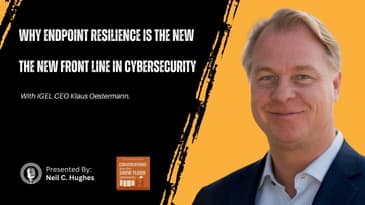
In our conversation, Klaus explains why the long-standing detect and respond mindset is no longer enough in an era of relentless ransomware and operational disruption. He shares how a prevention-first approach, combined with IGEL’s dual-boot recovery model, is enabling organizations to restore thousands of compromised devices in minutes rather than weeks. We also unpack the financial argument that is turning heads in the boardroom, including the research pointing to major reductions in endpoint costs and how those savings are being redirected into Zero Trust, AI initiatives, and wider cyber resilience strategies.
This discussion also captures the energy of the show floor itself. From Audi’s production environments to national critical infrastructure, Klaus outlines how ecosystem partnerships, containerized application delivery, and the emerging AI Armor concept are reshaping what a secure, adaptive desktop looks like. The result is a vision of modern work where resilience begins at the edge and innovation is driven by collaboration across the entire security stack.
So after hearing how quickly an organization can be taken offline when endpoints are ignored, the real question becomes this. Has the industry been protecting the wrong layer all along, and are we finally ready to rethink the role of the endpoint in the future of secure work?