
What happens when AI stops being another application running across the enterprise and becomes an active participant in how the organization operates? That was the question running through Cisco Live 2026.
Across the keynotes, product announcements and conversations taking place around the event, Cisco presented an increasingly connected view of enterprise AI. AI agents will work alongside employees, place new demands on networks, change the threat model and require a different approach to infrastructure management.
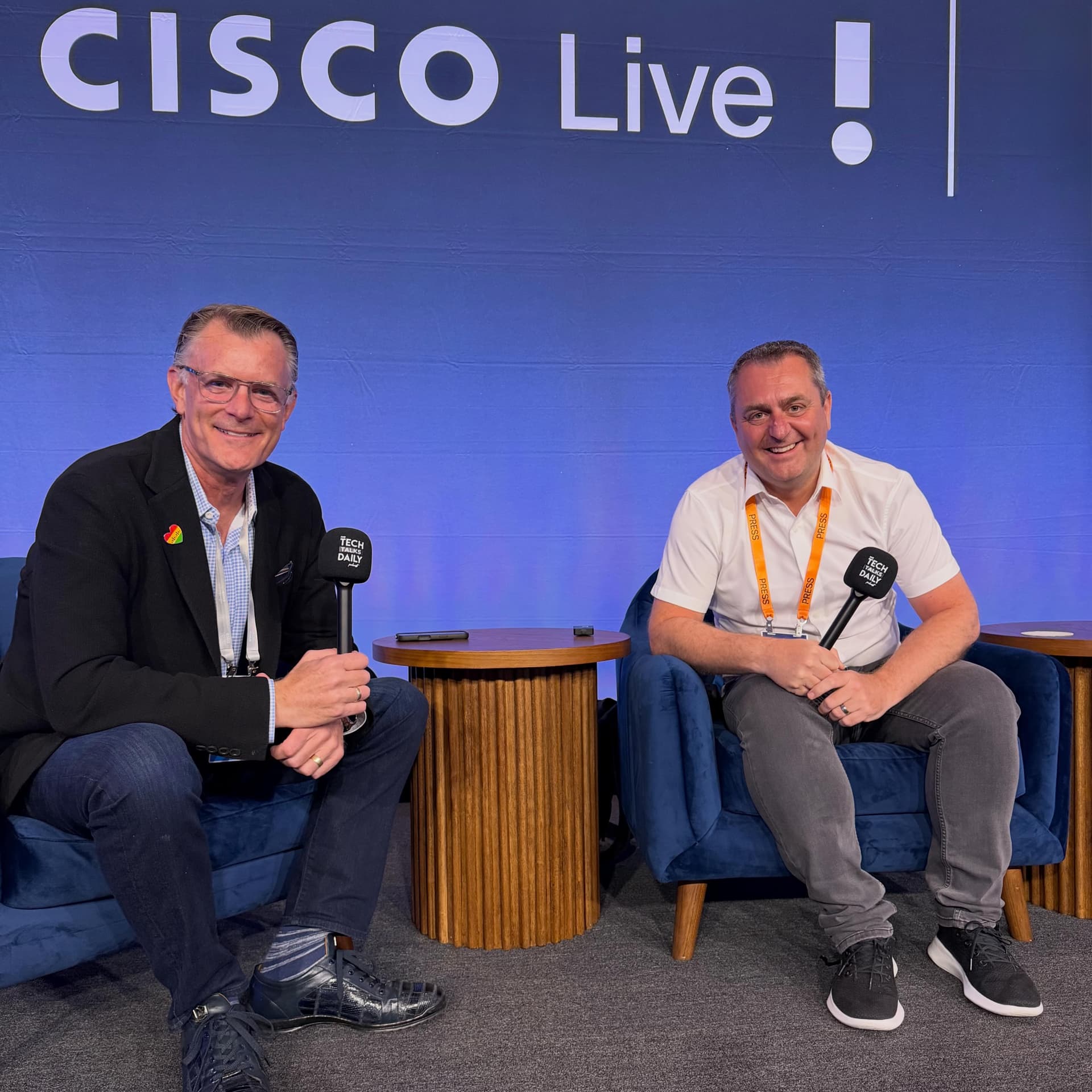
I recorded a series of interviews with Cisco executives and customers throughout the event to understand what these changes mean outside the keynote hall. The result was a much broader story about AI strategy, network operations, cybersecurity and the role of infrastructure across industries that people do not always associate with advanced technology.
From semiconductor factories and cruise ships to healthcare billing, furniture stores and professional tennis, the message was consistent. Technology has become inseparable from customer experience, operational continuity and business performance.
Cisco’s AI Strategy Goes Beyond Productivity
Many organizations still frame AI as a productivity tool. It can draft documents, summarize meetings, write code and reduce the time employees spend on repetitive tasks. Cisco Chief Strategy Officer Ammar Maraqa believes that framing is too narrow.
In our conversation, he argued that AI represents a structural change in how work gets done. Organizations that treat it mainly as a cost-reduction exercise may fail to redesign the workflows, infrastructure, and operating models required to gain broader business value.
His advice to CEOs was practical. Select one or two important workflows where AI could create a measurable advantage, support them from the top and learn what changes are required across data, security, infrastructure and people. That first deployment can then provide a repeatable model for other parts of the business.
Ammar also explained Cisco’s five options for accelerating growth: build, buy, partner, invest and incubate. The decision is not simply whether to develop technology internally or purchase it through an acquisition. An early market may call for an investment that helps Cisco learn. A technology with long-term potential may need room inside an incubation group. A customer outcome may be better served through a partnership, even when parts of the two companies’ portfolios overlap.
From the Internet of Computers to the Internet of Agents
The internet gave computers a common way to communicate. Cloud platforms created another layer for applications and services. Outshift is now asking whether AI agents will need similar common infrastructure.
I spoke with Papi Menon, Vice President of Product Management at Outshift by Cisco, about the Internet of Agents, the Internet of Cognition and AGNTCY.
The Internet of Agents addresses a growing interoperability problem. Organizations are creating agents using different models, platforms and development frameworks. Without shared methods for discovery, identity, communication and collaboration, those agents risk becoming trapped inside separate vendor environments.
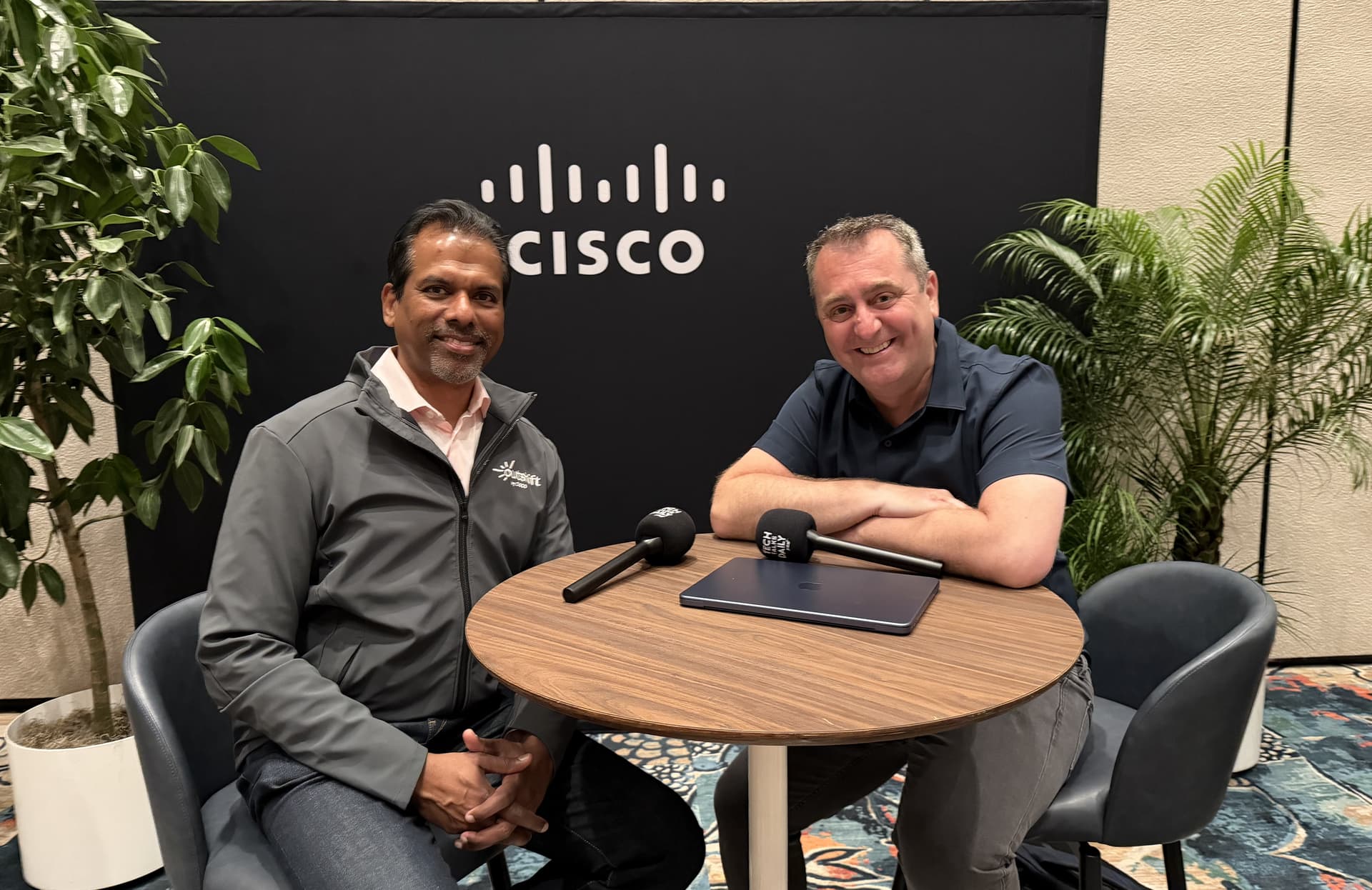
AGNTCY is an open-source framework and community initiative designed to give agents a common way to work across those boundaries. The project has moved from internal Cisco research to a wider industry effort involving major technology companies and the Linux Foundation.
The Internet of Cognition extends the idea further. Connecting agents allows them to exchange information. Shared cognition asks whether groups of agents and people could develop shared intent, shared context and collective knowledge.
An airline agent, hotel agent and travel agent might each complete an individual transaction. A more advanced system would understand the traveler’s broader goal and coordinate decisions across the whole experience.
The Enterprise Network Has a New User
For decades, enterprise networks have been designed around human behavior. Employees arrive in the morning, use applications throughout the working day and eventually log off. Weekends and overnight periods produce relatively predictable traffic patterns. AI agents do not follow that schedule.
Aruna Ravichandran, Senior Vice President and Chief Marketing Officer for AI, Networking and Collaboration at Cisco, described agents as digital teammates that can operate continuously. They can monitor infrastructure, investigate problems, and prepare recommendations while their human colleagues are asleep.
This creates both opportunity and pressure. AI agents can help technology teams handle workloads that would otherwise require far more people. At the same time, always-on machine activity could generate far more traffic, alerts and system interactions than traditional human workflows.
Aruna’s description of Cisco AgenticOps was one of the clearest explanations of the company’s direction. The goal is not to add another AI chat window to network management. Cisco wants intelligence inside the operating loop.
Agents can sense conditions across the network, reason through potential causes, propose a remedy, test that remedy against a digital model, and present the result to an operator. Organizations can then decide how much authority to give the system.
Some may require human approval for every action. Others may permit automated action within agreed limits once the system has earned sufficient trust.
Cisco Cloud Control and the Drive to Reduce Complexity
Cisco Cloud Control was one of the most discussed announcements among the customers and practitioners I interviewed. The reason was simple. Enterprise technology teams are dealing with more tools, more dashboards, and more alerts while budgets and staffing remain under pressure.
Cisco Cloud Control aims to provide a common operating environment across networking, security, observability and infrastructure. Rather than repeatedly changing between separate management systems, teams can access information and coordinate work from one place.
The value is not limited to convenience. Shared context could allow people and AI agents to examine the same dependencies, policies and telemetry. A network problem may have an application, identity, or security cause. Bringing those sources together gives operators a better chance of understanding the full issue.
Room & Board offers an early customer view of this approach. The modern furniture retailer supports approximately 32 retail, delivery and warehouse locations, along with employees delivering remote design services. Its network team consists of only three people, yet it is responsible for connectivity, wireless services, security, and collaboration across the company.
Mark Broderick, Senior Network Engineer at Room & Board, explained that his team does not have time to manage layers of management software. Its goal is to manage business outcomes.
During early work with Cisco Cloud Control, Room & Board connected production environments rather than relying only on demonstration data. Mark said the benefit became apparent when the team could move between operational areas without the cognitive burden created by repeated context switching.
Customers are making personal and often expensive decisions about products they may keep for many years. Design associates use iPads, floor-planning tools and collaboration platforms to help customers inside stores and through remote consultations.
When everything works correctly, neither the customer nor the employee needs to think about the network. Technology supports the relationship without becoming the center of it.
Closing the Defense Velocity Gap
Bhaskar Jayakrishnan, Senior Vice President of Engineering for Cisco Customer Experience, approached the same problem from the perspective of resilience and customer operations.
Cisco describes the gap between the pace of attack and the pace of defense as the defense velocity gap. Vulnerabilities can be analyzed and weaponized rapidly, while enterprise patching may still depend on testing, maintenance windows and complex approval procedures.
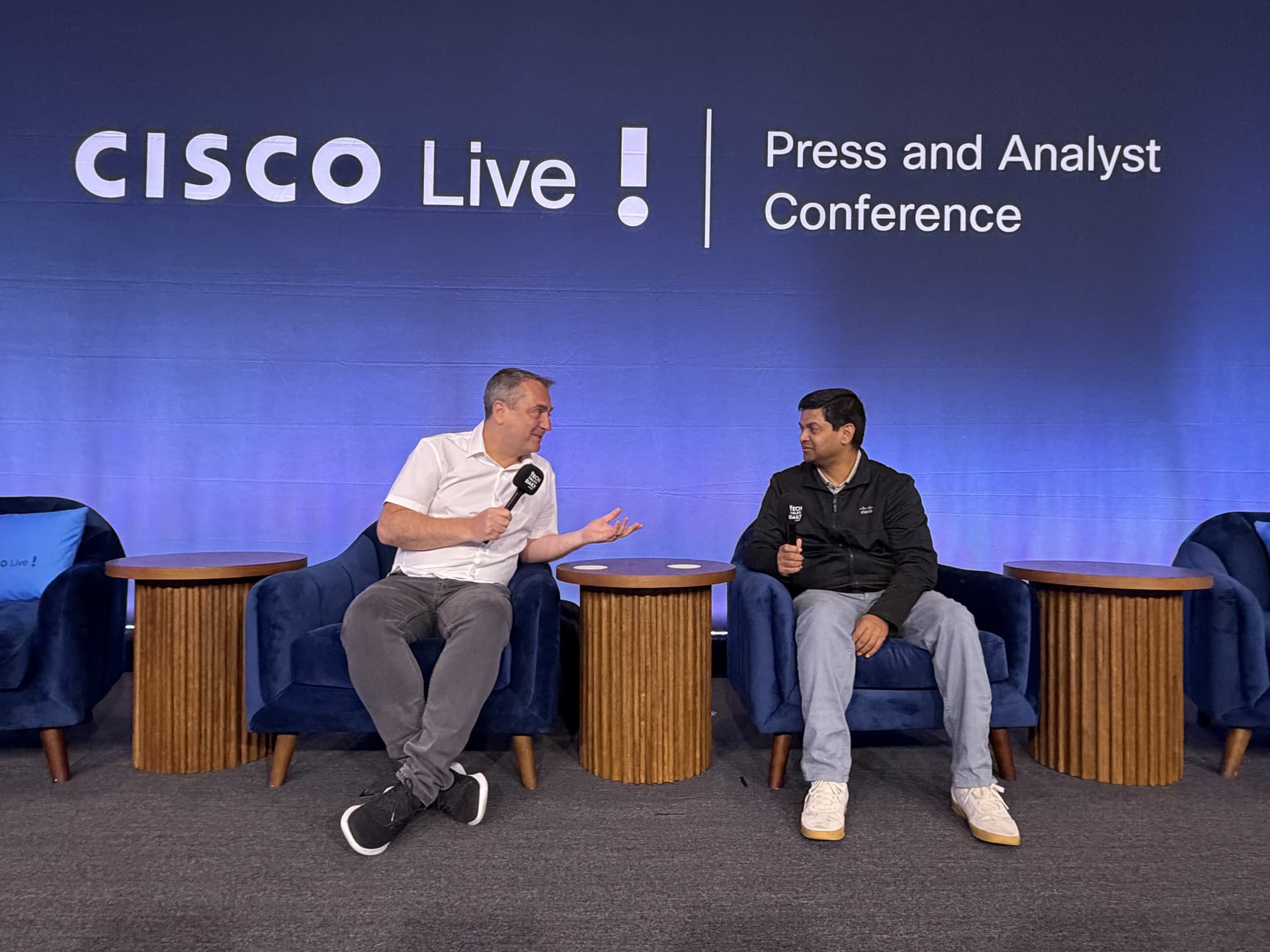
Bhaskar discussed a three-stage approach covering exposure assessment, infrastructure modernization and defense resilience. The purpose is to help organizations understand what they have, reduce the weaknesses created by outdated infrastructure and prepare for continuous defense rather than episodic patching.
We also discussed quantum readiness. The risk is not limited to the date when a sufficiently capable quantum computer becomes available. Adversaries may collect encrypted information today with the intention of decrypting it later. Organizations therefore need a clearer inventory of cryptographic assets and the ability to replace algorithms without rebuilding entire systems.
Bhaskar also shared lessons from Cisco Customer Experience’s use of AI across a workforce of around 20,000 people.
The lesson was not that deploying more AI tools automatically creates better outcomes. Data quality, workflow design and employee adoption all matter. Applying AI to a poor process can automate its weaknesses rather than solve them.
The Cincinnati Open Shows How Technology Can Disappear Into the Experience
The Cincinnati Open recently completed a $260 million redevelopment that doubled its campus from 20 to 40 acres.
Robert Nichols, Principal Technical Architect for Cincinnati Tennis, explained that the technology team had only a few months to deploy the infrastructure required to support the enlarged venue before the tournament calendar brought players and fans back.
The site now includes hundreds of wireless access points, switches, smart cameras and miles of new fibre cabling. These systems support mobile ticketing, hospitality access, point-of-sale systems, broadcasts, digital signage, public Wi-Fi and media operations.
The technology also helps organizers understand how many people are on the grounds, where queues are forming and how resources should be allocated across food, security, cleaning and transport.
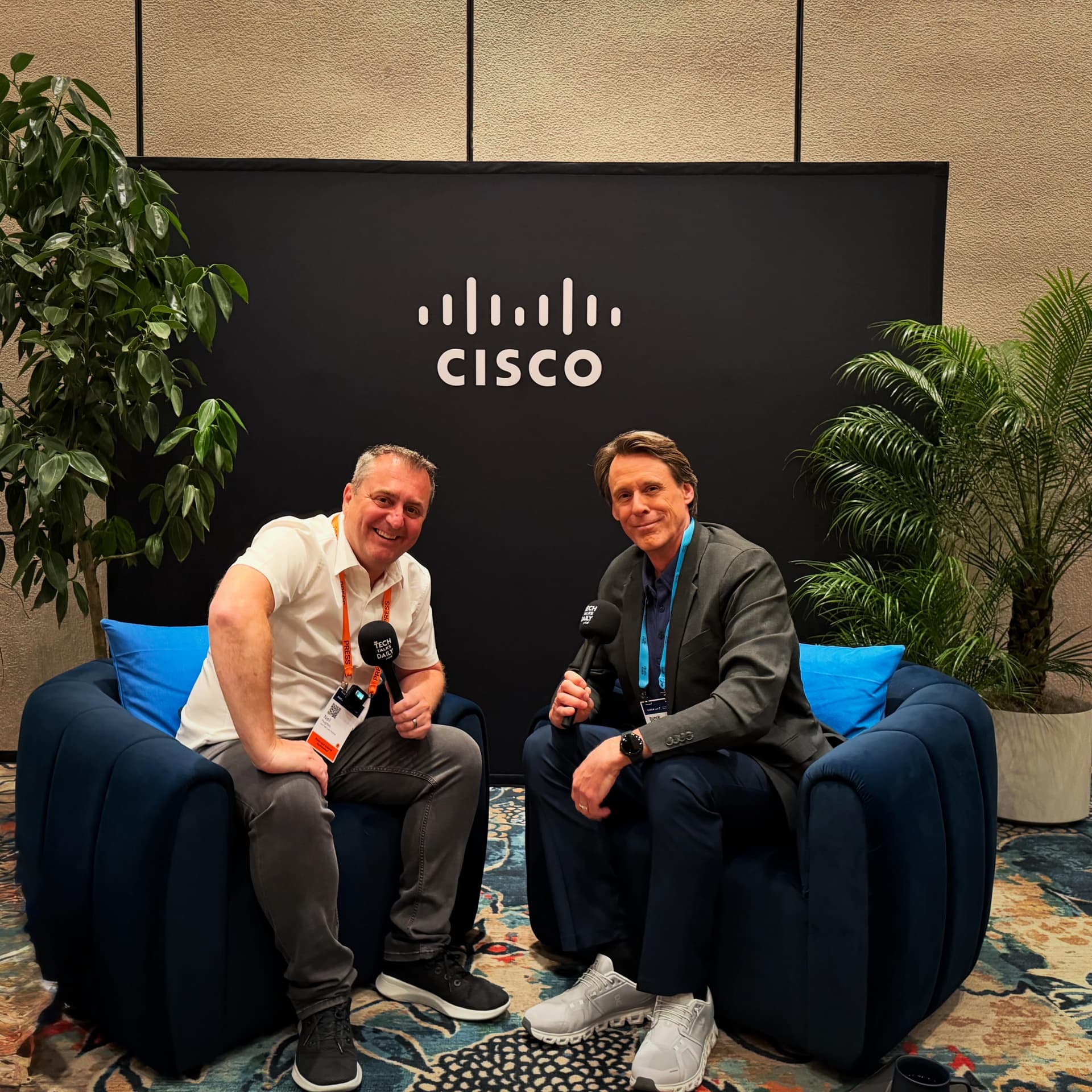
The tournament’s aim is not to make visitors admire the network. It is to make the experience easier. A fan wants to find a practice court, buy a drink, enter a hospitality area and share a photograph without thinking about the systems behind those actions. This could be one of the most useful lessons from Cisco Live. The highest-value technology often becomes invisible at the moment it works best.
The Workplace Should Be Measured by Outcomes
Christian Bigsby, Senior Vice President of Workplaces at Cisco, challenged another long-standing assumption: that office attendance is an adequate measure of workplace success. Cisco is examining what happens when people come together, rather than counting how many people enter a building.
The workplace experience spans three areas that have traditionally operated separately: people, place, and technology. Human resources may focus on employee needs, real estate teams manage buildings, and IT manages connectivity and collaboration. Employees experience all three at once.
Cisco’s approach is to bring those functions together around the work people are trying to accomplish.
What Is the Office Actually For?
AI can help workplace teams forecast occupancy, allocate services and reduce wasted energy or space. The purpose is not surveillance or forcing people back into offices. It is making buildings more responsive to the way employees actually use them.
Christian’s phrase “more wheels and fewer walls” captured the need for adaptable spaces. Workplaces designed for fixed routines struggle when attendance varies by team, day and task.
Neil's Big Takeaway
AI may be changing how businesses operate, but its success will depend on whether the infrastructure beneath it can connect, secure and support the work without adding another layer of complexity.
The next phase of enterprise AI will not be decided only by who builds the most capable model. It will also be decided by which organizations can put AI to work safely, reliably and with a clear understanding of the outcome they are trying to achieve.