
What happens when eighty percent of the global workforce receives less than one percent of technology investment, and why has this imbalance gone largely unchallenged for so long?
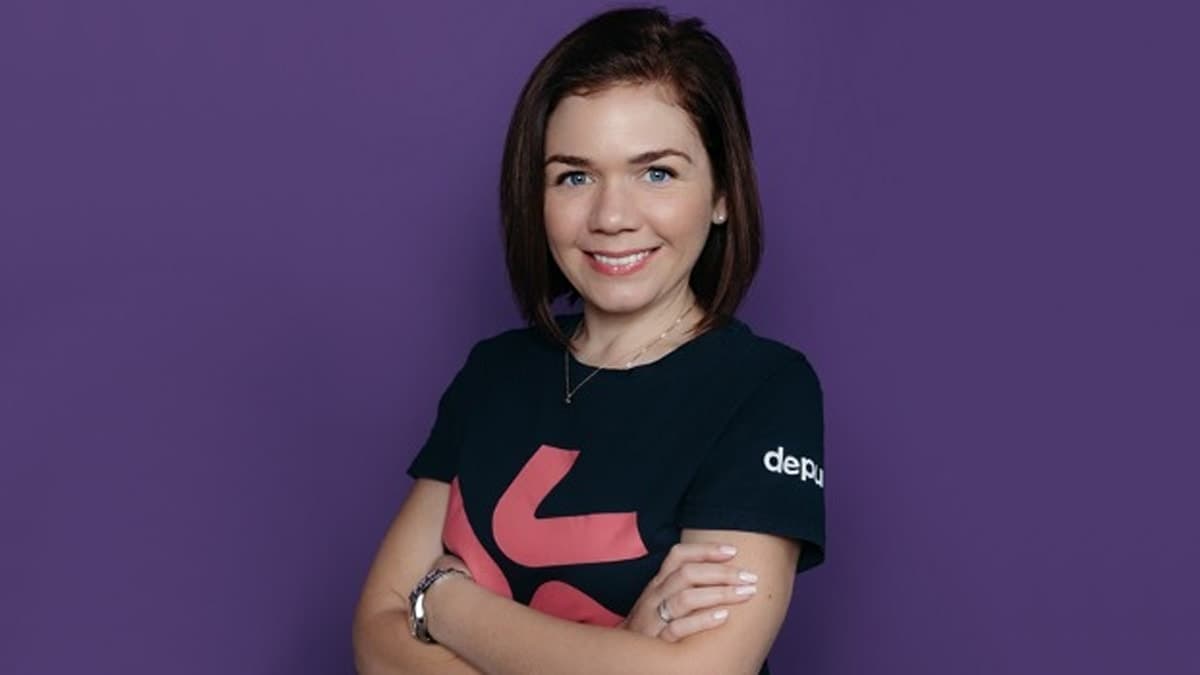
In this episode, I sat down with Emma Seymour, Chief Financial Officer of Deputy, to unpack the realities facing the world’s so-called invisible workforce. Deskless workers power healthcare, retail, hospitality, and frontline services, yet the tools built to support them have historically lagged far behind those designed for office-based teams. Emma brings a grounded, finance-led perspective on why this gap exists and why it is finally starting to close.
We explored how AI-driven workforce management is moving beyond hype and into practical, measurable outcomes. From optimizing staffing levels to reduce overstaffing and burnout, to giving workers more control over their schedules through self-service tools, Emma shared how Deputy is translating technology investment into real operational and human impact. We also discussed how AI is reshaping the finance function itself, automating admin-heavy tasks and freeing up teams' time to focus on higher-value work.
What also stood out in this conversation was leadership. Deputy’s predominantly female executive team offers a rare example of scaling a billion-dollar technology company while balancing high performance with high care. Emma shared how trust, accountability, and empathy shape decision-making inside the business, and why that culture matters just as much as product innovation when serving a workforce that has been overlooked for decades.
As AI continues to accelerate and workforce pressures intensify, what would it look like if more technology companies truly built for the people who keep the global economy running, and how differently might work feel if the invisible workforce finally became visible?
Useful Links
Thanks to our sponsors, Alcor, for supporting the show.
[00:00:03] Welcome to AI at Work, a podcast which is part of the Tech Talks Network. And in this podcast, we're going to venture into the transformative influence of artificial intelligence inside the workplace. And our discussions will focus on both the remarkable breakthroughs, but also the complex challenges of integrating AI into our everyday business functions and workflows.
[00:00:30] Today, I'm going to be joined by Emma Seymour. She's the Chief Financial Officer at Deputy. And they are a billion-dollar technology company. Yep, that's right, a unicorn that's transforming how businesses manage shift work. And Emma's career journey is fascinating in its own right. She moved from public practice into high-growth SaaS leadership and helping scale businesses globally
[00:00:55] and navigating everything from rapid expansion to the pressures of a COVID-era transformation. But at Deputy, she now sits at the centre of a platform that is supporting more than 1.5 million shift workers around the world. And also applying AI to real operational problems like scheduling, attendance, payroll, and workforce planning.
[00:01:19] So in today's conversation, we will explore why shift workers remain one of the most under-invested and overlooked parts of the global workforce, despite making up the vast majority of working people in the world. And we'll also unpack how AI is being used in a practical, grounded way to reduce admin, improve workforce planning, and give people more control over their time, rather than just adding another shiny tool or another layer of complexity.
[00:01:47] We will also talk about leadership, culture, and what it means to build a high-performing tech company with a leadership team that maybe looks different from the industry norm. And from a finance leader's perspective, Emma will share her refreshingly honest view on where AI is genuinely helping today, where expectations sometimes run ahead of reality, we've seen that, but how teams can start using these tools in ways that actually make work better.
[00:02:15] So whether you employ shift workers, work in finance, or are simply curious about how AI is moving from theory into everyday operations, I think you're going to get a lot from this conversation. Before we go into today's episode, I just want to give a quick shout-out to my good friends at Denodo. The data world is louder than ever. Yeah, AI hype, lake house complexity, and pressure to deliver more with less. But my friends at Denodo, they're helping enterprises make sense of it all.
[00:02:45] And you can learn more at denodo.com slash AWS. But enough from me. Let me get my guest onto the podcast now. So welcome to the show. Can you tell everyone listening a little about who you are and what you do? Sure. So thanks for having me, Neil. I'm the CFO at Deputy, which is the global platform for hourly work, headquartered in Australia, but we operate in the UK and the US as well.
[00:03:13] So when you think about Deputy, it's think everything in terms of time and attendance, scheduling, payroll, compliance, analytics, etc. It really is an all-in-one platform for hourly worker businesses. And I'm fortunate enough to have been with the company for about four years. And yeah, very excited to be here today and share a little bit more just about my history and however I can be helpful. Awesome. Well, I'm looking forward to digging a little bit deeper on all things, Deputy, how you're using technology, the problems you're solving.
[00:03:41] But before I do, one of the things I love doing on here is talking about the origin story of my guest. Because I think very often we celebrate the success, the person stood at the top of that mountain, but not that climb up there. And looking at your story, you became CFO of a billion-dollar tech company at a relatively young age. So tell me more about your origin story and looking back at your career so far, what experiences maybe prepared you for operating at the level of scale and responsibility that you are now?
[00:04:11] It's incredible the journey you've been on. Thank you. I appreciate that. And it's interesting when someone plays it back to you because for me, it's just one day at a time. And you don't always have those moments to pause and look back and sort of assess the steps that got there. But I started my career in public practice. So I was in advisory for and business services for about 13 years.
[00:04:33] And it was really in that space where I was advising a pretty broad portfolio of different clients in terms of their background, their size, their industry and so on, that I probably developed this passion for scaling businesses. It wasn't so much a transactional role for me as much as it was I loved the challenge of just what these businesses were facing.
[00:04:56] And because I was managing such a diverse mix of customers, I had a front row seat to just so many different challenges and so many different opportunities. And that was probably where I really discovered, like, yeah, that's the bit that gets me out of bed. That was the bit that energized me and I was always drawn to. And after about 13 years, I was looking at, okay, what's the next step? And, of course, you know, there were opportunities on the horizon around partnerships and things like that.
[00:05:26] But it was really just a crossroads for me to say, no, I think I want to amplify that part of the job. And that was when I made the move into a commercial role. And I went in-house and became CFO of another SaaS company headquartered in Australia, also in the HCM space. And I spent about three and a half years there and weathered the storm of COVID and helped that scale as well and was there as it was acquired. And there was a leadership transition before deputy came knocking.
[00:05:56] And that's been my home for almost four years now. And to your point, yes, it's been a wonderful success story and a wonderful journey to be a part of. We often say that, you know, we operate at deputy speed internally, which is to say that four years feels closer to 10 because we've just crammed so much in. But it has been an incredible ride. And we have been very fortunate to reach unicorn status, as you mentioned, with the billion-dollar valuation.
[00:06:25] And that was on the back of key partnerships and investments that were secured throughout my tenure there. But then all things that just go hand in hand as well with developing this wonderful multi-product platform for a very important population of people that are otherwise usually underserved in the tech industry. So it's been, yeah, it's been a ride. It's been good fun. Awesome.
[00:06:51] And I think you hit the nail on the head there when you say an area that has been unserved by the tech industry for so long. And despite what any of us might see on our LinkedIn news feeds, there's a stat that I learned recently from one of my other interviews. And that was 80% of the world's population, which is around 2.7 billion people, they're deskless workers. They're not in an office.
[00:07:14] That includes roles like healthcare, retail, and shift work as a whole support some of the most important parts of the economy. But as you said, it often feels overlooked. So from your perspective, why has this workforce remained so underrepresented in the technology investment and innovation kind of areas? Because they outnumber the average office worker, don't they? They absolutely do. And it is a perplexing notion. It really is.
[00:07:44] And it's something that I've reflected on quite a bit. And yes, you're absolutely right. 2.7 billion shift workers in the world, which equates to about 80% of our working population globally. But I think less than 1% of investment goes into tools that are designed for those workers. And it's a hard thing to put a finer point on in terms of what the driver is for that.
[00:08:07] But if I had to guess, I suspect it's because the people that are often building technology, they're building it for folks that work at their desks. You know, it's like that's where people are focused on solving their problems. There's plenty of things out there for you and I with Zoom and with Slack and with that, you know, all the different communication tools and things to help, you know, drive connectivity. But it's a lot of those solutions are coming from people that have been desk workers, you know.
[00:08:36] And so I think it's a space that obviously, you know, it's been familiar and it's attracted a lot of investment over time. But yeah, I can't, there should be more. I'd put it that way. It's hard to put a finer point on what's driven that gap. But I think people are certainly aware of it. I think it's getting more and more attention. And I think it's certainly attracting a lot of interest from investors and from folks all around the world.
[00:09:05] And I am seeing a shift just in terms of that sentiment and the desire to do a lot more for this incredible backbone of our economy. You know, I mean, everything runs with shift workers. And I, yeah, it's a privilege to be able to serve those that are maybe not as well represented. So. Yeah, 100% with you. And of course, that deputy, you work with millions of shift workers globally.
[00:09:28] So I've got to ask from all your work here, what are the biggest day-to-day frustrations you hear from businesses and indeed their shift worker employees when it comes to things like scheduling, attendance, payroll? And I suspect another long line of frustrations. But what do you see here? Yeah, it's a great question. I think, you know, when you think about some of these shift work businesses, they're so incredibly time poor, you know.
[00:09:52] And if you think about a cafe owner who's running a shop and they've got 10 people and someone calls in sick, like that really disrupts their day. So it's, I think one of the biggest frustrations is just, you know, very, very time poor, really on the tools. And they're so dependent on, you know, people turning up on time and deliveries being made and so many things going right for them to have a successful day or week or year.
[00:10:19] And just, I guess, the at times unpredictability of shift work is such, you know, that people can call in sick and leave them short. And that's really frustrating. Like, that's often one of the biggest grievances we hear. And obviously that's where, you know, Deputy plays a part in helping to forecast planning and making sure that you're maintaining a workforce that's adequate and meets demand. And you can, you know, swap shifts easily and try to solve problems like that simply and quickly.
[00:10:46] Because without technology to support challenges like that, it's, you know, people are on the phone and doing a ring around and it's just incredibly inefficient. And it sounds simple, but they are, it's very impactful to those companies where it's, that's really disrupting those business operations. I think the other thing that, that I certainly hear about, and certainly in industries like healthcare, is also just how stretched people are now too.
[00:11:11] There's, there's a huge, huge amount of data that suggests that, you know, people are working multiple shifts and really trying to stretch and cover where we've got too much absenteeism and people are burning out. They're stretching too much and they're, they're covering the gaps and they're doing what they can because they, they really care. But they're also, they're also probably stretching it a bit too thin at times. And then that's resulting in absenteeism and sick days and dah, dah, dah, dah.
[00:11:39] And it becomes a bit of a vicious cycle and around we go. So, yeah, I would say sort of making sure that staff, staff rosters are adequately and well maintained. And there's enough predictability and forecasting and planning because it's very hard for both employer and employee when those unforeseen changes happen. It disrupts both sides. And we are 10 minutes into a tech podcast without mentioning AI, which we may have broke a few laws there.
[00:12:09] So we better go in. So AI is being used to generate optimized schedules based on historical data. So we've got to mention this as well. So how do you think that the balance between efficiency for businesses and, and giving workers more control over their time and work life? How are you seeing that, that take shape? Is AI making a difference, a real measurable difference here? Absolutely. And it's, again, it's very interesting because you're right.
[00:12:35] We, we do use AI in the, in the deputy platform and it's absolutely front and center in terms of labor optimization and looking at, you know, looking at staffing schedules and looking at, you know, historical patterns and helping to adequately plan going forward. But the adoption and the embracing of AI, I think it's a really interesting, it's an interesting point. And it's interesting to see this play out because I think initially there was a lot of hesitation around this in terms of from the shift workers themselves. Like, what does this mean for me?
[00:13:05] And is AI going to displace me? And is it going to take away my job? And, you know, all that natural stuff, just when there's, there's new disruption and new innovation in any, in any sector. But what we found is that those that are adopting it and are embracing it are absolutely thriving. And what we're finding is, is that they're automating the, the slow admin compliance heavy tasks, and they are getting more capacity and more time back in their day to do the things that really matter.
[00:13:33] So in that same example I shared with you, where we have healthcare workers that are stretched too thin. I mean, it makes a big impact if we can give them some time back in the day that they can be spending with those patients. That, that sort of thing is playing out, playing out everywhere.
[00:13:48] So yes, I think there is natural hesitation when, whenever there is change, but for the most part, vast majority of those that are actually adopting it and using it are just reporting back that it's, it's unlocking my time and my capacity to focus on the things that matter most and where they're going to have the most value for their customers and for their teams. So, so far so good, you know, early days and early adopters, but yeah, when, when used in the right way, it's certainly been positive from what we've seen so far.
[00:14:18] A quick thank you to the sponsor that supports every podcast across the tech talks network and every episode because their help allows me to publish 60 interviews a month with founders and technologists who are keeping this industry moving. And this month I'm partnering with Alcor. And if you've ever tried to hire engineers in another country, you probably know just how painful it can be. Different laws, patchy support and partners who don't truly understand engineering roles.
[00:14:46] So Alcor approaches this from a different tech point of view. They specialize in Eastern Europe and Latin America, and they're able to combine EOR capabilities with recruiting. So you get one partner handling everything and they help you choose the best location for your stack, find developers with the right depth of experience and run proper assessments so they can onboard people quickly.
[00:15:12] And they also give you a model that respects both transparency and margin. Most of your spend goes directly to your engineers, and the fee will decrease as the team expands. And you can even transition everyone in-house at that time when you're ready without having to worry about a penalty. And that structure is why a mix of early stage and unicorn stage companies use them as they scale. So if you want to take a look, visit alcor.com slash podcast or tap on the link in the show notes.
[00:15:42] But now, on with today's show. And before you join me today, I was doing a little research on all things deputy. And one of the things that stood out to me is that your leadership team is predominantly female, which is fairly sadly still rare in tech at this scale. So I really want to shine a light on your success here. So how has that shaped decision-making culture and the way the company approaches growth and product development? It probably seems just completely normal and nothing out of the ordinary here.
[00:16:12] But I really want to shout about this for the rest of the world so they can maybe follow in your footsteps. But tell me more about this experience. Yeah, I appreciate you calling that out. It's true. Deputies' leadership team and our C-suite team is predominantly female. So we're led by our wonderful CEO, Sylvia Martinsiewicz, who's been with us for almost three years. And then we do have a very – we have a good mix. But we do have predominantly female leaders.
[00:16:39] And as you said, it's interesting because it just becomes the norm and you sort of don't think about it being different. But you're right in that it is an anomaly, I guess, if you look at the tech sector and also in traditionally what roles are male versus female and the mix that we have. You know, our CEO is female, myself, a CFO, our chief commercial officer as well. So we have a really good mix across different roles too. But how does it play out?
[00:17:04] I think I – I mean, we're a very, very strong team. I think at the heart of, you know, what drives us is a belief and an investment in that high-performing teams absolutely start with high trust. And I think we are empathetic leaders but we're also drivers of high performance too.
[00:17:24] So if I was to describe the culture and what we deliberately try to cultivate at deputy, it is equal parts, you know, high care for the individual but also, you know, driving high performance too. And over-rotating toward one or the other is – can be, you know, too much of any one thing can not always be great, right?
[00:17:48] So always trying to keep that front of mind, always trying to recalibrate to that because we all slip at different times and we all go up and down and, you know, we can all swing one way or the other. But we have a very strong culture of embracing that, I guess, as our MO. And with that, we have the ability to check each other too and hold each other accountable. So I would say equal parts, high performance, high care. And that's really what guides us. Kudos to you.
[00:18:16] So refreshing to hear a story like this. And just going back to AI again for a moment, from a finance leader's point of view, how are you seeing AI changing the finance function today? And do you see expectations running ahead of reality sometimes? How do you deal with that as a team? I think it's interesting that, you know, I mean, I think in the age of AI, three months now feels like five years.
[00:18:41] Like in terms of how fast things are progressing and changing and just how rapidly it's evolving, it feels like six months later, okay, this is redundant and obsolete again. So I think absolutely it's impacting a finance function. I mean, I think it should be impacting just about any function that's using a computer and has a digital footprint. And it changes things in, you know, in a number of ways.
[00:19:04] Like I talked to also a number of industry peers and it's like the way they're running reporting, the way they're running variance analysis, the way they're standing up their own little bots to automate tasks for them or to review things. I think it's being adopted in similar ways to many different functions. I think everybody's finding their way through it, but everybody knows that you just have to start somewhere and have the curiosity.
[00:19:30] And I think that's probably what we're leading with first and foremost is that it really has to start with just each individual taking that initiative. And we really embrace that self-learning. Like instead of trying to think across the whole company, what are all the different roles and what are the most specific, you know, specific things that each should be learning about AI and how do they embrace that specifically to their role? Well, we're really cultivating just an approach of everybody is embracing this. Everybody is expected to adopt this into their roles.
[00:20:00] Of course, we trust and know that this is where things are going and that we're, you know, going to be more efficient for all becoming proficient users. But it's really on each individual to explore that and take on a level of self-learning and find a way as to how to make their day-to-day easier. But the objective, of course, is efficiency.
[00:20:19] You know, internally, it's how can we automate and speed up the things that just like our shift workers, maybe admin heavy or slowing us down or taking us away from the high impact, high value work. Um, so it's, uh, yeah, we, we just start with an objective of, okay, every, everybody has to start to adopt this and we've all just got to take a first step. And I think that's really the best way forward because proficiency just comes with that practice and immersing yourself in it.
[00:20:46] Um, and we're all, we're all finding out different ways of, of how to make our day jobs better and easier. Love it. And one of the things I always try and do on this podcast is give people listening a real valuable takeaway. So if we, if we do have a business leader listening who employ shift workers, they feel stretched by costs, staffing gaps and compliance and, and all those long lists of concerns there.
[00:21:07] What does adopting AI driven workforce tools actually look like in practice rather than just theory or on a stage or a shiny keynote or a sales pitch? What does it look like in practice? What would you say to those people listening? It looks like a lot of time back in your day.
[00:21:23] That's the, that's better, but I'll, I'll, I'll, of course go deeper and elaborate, but it does because one, you know, one of the, the, the, the blockers that I always run into when I'm talking to shift folk businesses that haven't yet embraced these, these tools and these technologies is that I don't even have time to look at this. And it's just, oh, if we could, if we could get you to spend an hour or two to think about it or adopt it or, you know, really embrace the change and lean into it. Like you're going to get days and weeks back in your year from, from, from this kind of help.
[00:21:49] Um, and so what it means in practice is it means one, you know, tasks that used to take hours, uh, now take minutes, you know, in terms of developing a schedule, in terms of working through rostering. It means that a lot of the problems that are going through managers today, like managing staff and who's, who's change, who's needs to swap their shifts around and coordinating all of that, um, can just be done between staff. Like they can just shift swap and play with their own schedules and, and, and, uh, make things work for themselves without even having to go through that.
[00:22:19] And then of course the integration of AI is, um, you know, I mean, it will be leveraged where it's, uh, you know, AI first and, and, and easier, um, to use. And that deputy in itself is almost going to become like an agent to, uh, to our, to our customers and, and we've become far more interactive in terms of ease of use and just getting all the value out of it. But you touched on, um, demand gen planning and labor optimization.
[00:22:45] And that is also an incredibly valuable impact to businesses because it goes straight to the bottom line. It means that we can learn from the activity and the behavior and the peak seasons and the drivers of a business in terms of really making sure you're staffing to optimal levels. And that means not too much, not too little, because either one is impacting profitability. It means we're, we're carrying a staff base that's, that's too costly and that's impacting profit or we don't have enough and that's probably impacting productivity.
[00:23:14] And so being able to have that balance, um, really well optimized and have that change and fluctuate based on seasonality, based on things that are going on in your area, whatever it might be. Um, and then, you know, uh, also from that letting, uh, communication be easier and remove friction points amongst your team, um, allowing people to swap. Allowing people to have more autonomy and control and empowerment of how they structure their day and their work.
[00:23:41] That also leads, um, to, to stronger engagement and retention of staff. So when we talk about some of the biggest problems, you know, business owners have is, you know, somebody didn't turn up for work, like a happy, engaged workforce is key. So, you know, tools like this help drive all of, all of that in, in many different ways. We even have just at the end of each day, um, just a sentiment check-in, like how are you feeling after today's shift? And so managers can see in real time, how are their, how are their team doing and check in on morale?
[00:24:10] And, you know, what are the correlations with that? It's, we're empowering them to, to better manage and engage and retain their teams. And, um, not only does that give them a lot of time back, it translates into a very real, uh, dollar value in terms of ROI. And as we look ahead now, I've got to ask what excites you about the road ahead in 2026 and indeed beyond so many big tech trends, so many big talking points. You must be following all this very closely.
[00:24:38] Anything that particularly excites you about where we're heading and what you might be able to use moving forward? Yeah, absolutely. I mean, as I think I shared with you, Deputy Speed. So there's, there's no, no shortage, there's never been any shortage of opportunities as to what we can do and how we can help this very, very, uh, important, um, workforce, you know, globally. So I think in, in 2026, you're absolutely touching on it with AI.
[00:25:04] There's, there's a number of things that are coming down the pipeline for us, um, that are very excited just in terms of how quickly this is advancing, as I mentioned, and what we're going to be able to do with this. And just all the creative, wonderful minds at play and thinking through how to leverage that and how to weave more value in for our, for our customers. So I'm very excited about what's coming down the line in next year with that and how quickly and rapidly it's just advancing and taking leaps.
[00:25:28] I think Deputy is, uh, incredibly well positioned when I look at things that are happening in market and how we're thinking about it and what we're doing. Um, but also I think just, uh, just really continuing to, to drive value for not just the employer, but also the employee. Deputy really holds the relationship and the trust with both.
[00:25:51] And so we're in a unique position where we can, um, really bring these two sides together well, and we can drive benefits and value for, for both. Um, but I think for us personally as a business, I, you know, we have a very strong footprint in the, uh, in the Australian, uh, market and we're continuing to grow there. And we've got some wonderful new releases over the last 12 months as we now have payroll, we now have HR, we now have analytics.
[00:26:17] We, um, so it's a very, very exciting time in terms of just how our, our product has evolved and the value that it's providing for customers in Australia. But there's also some very exciting things happening, uh, and coming in us and in the UK as well. So I think just continuing to expand globally for us is probably the next big exciting thing, uh, into the next year or two.
[00:26:38] Uh, and that with everything that we're doing with AI, I, I think we all just need to just buckle our seatbelts because it's just getting faster and faster. Um, but it's, it's, you know, a wonderful, wonderful team and everybody is so passionate about what we're doing and who we're serving. So it's, um, just very exciting to, to really be a part of it. Exciting times ahead. And for anybody listening that we've inspired today, maybe they want to get in touch with you or your team or, or just keep up to speed with some of the latest announcements.
[00:27:08] Where would you like to point everyone listening? Yeah, absolutely. I mean, the best places are always just to deputy.com and also just to our LinkedIn as well. Uh, we try to keep that as up to date as we can in terms of, uh, new announcements, releases, all of our new promos, but also just what we do to celebrate, uh, shift workers. And, and other activities that we, that we run in the market. So website and, uh, and LinkedIn is always ideal. Awesome. Well, I'll add links to everything, make it easy for people to find you.
[00:27:33] And so much I've loved about our conversation today from the current challenges for shift workers, the need to invest, uh, with technology in the invisible workforce. I think we've really helped shine a light on that today. And also how AI is transforming the finance function, handling repetitive tasks, improving efficiency through automation, et cetera.
[00:27:53] But I think more than anything as well, I think your inspiring, uh, origin story and experience driving a $1 billion tech unicorn using AI to transform the way businesses manage shift work is incredibly inspiring. So thank you so much for sharing your story today. Thank you very much, Neil. Appreciate it. So much.
[00:28:13] I love from this conversation from shining a light on the invisible workforce that keeps so much of our economy running to explaining how AI can give time back to both managers and employees. And for me, this was one of those discussions that feels grounded in reality rather than hype.
[00:28:31] And I also think that her perspective as CFO is particularly valuable right now because yes, there is a lot of noise around AI, but her focus on automation, where it helps human judgment, where it matters and curiosity as a leadership trait. I think will resonate with so many people listening today. So a big thank you to Emma for taking the time to join me today, especially at the end of a long day.
[00:28:57] She was recording in the evening over in Australia and early morning for me, but for everyone listening, no matter what time it is where you are, I want to thank you for tuning into another episode of the AI at Work podcast. And if you found today's conversation useful, please share it with a colleague or friend and let me know what stood out for you. How do you see AI changing work in your organization? And where do you think we still have blind spots to address? Let me know as always.
[00:29:26] You can go over to techtalksnetwork.com, over 4,000 interviews with tech and business leaders and an easy way for you to hit record and send me an audio message or a text message, whichever is easiest for you. But that's it for today. So thank you for listening as always. And I will speak with you all again next time on the AI at Work podcast. Bye for now.