

What if the biggest transformation in hospitality isn't happening in the dining room, but in the kitchen you never see?
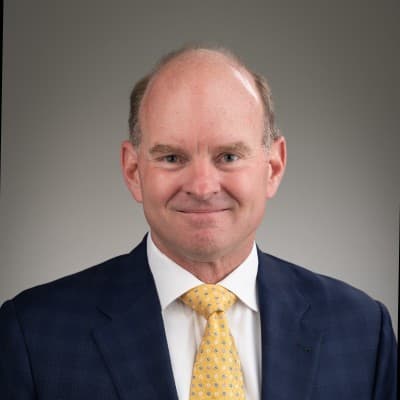
In this episode, I'm joined by James Pool, Chief Technology and Operations Officer at Middleby, a company quietly powering more than a hundred brands across commercial foodservice and food processing. With more than three decades spent accelerating how food is cooked, prepared, and delivered at scale, James offers a rare look inside the technology, automation, and connected platforms reshaping how some of the world's most recognizable restaurant and retail brands operate.
We explore what the connected, IoT-enabled kitchen actually looks like in practice, and why James prefers to think of it as digital automation for the entire restaurant. From front-of-house energy optimization to automated food safety reporting and real-time equipment intelligence in the back, the conversation reveals how data is being used to reduce waste, improve uptime, simplify training, and ultimately increase profitability at the store level. This isn't about adding more screens or more complexity, it's about removing friction from every step of the operation.
James also shares how Middleby is bringing together a vast portfolio of technologies, from rapid-cook ovens and ventless kitchens to robotics and AI-driven service insights, into a single harmonized experience. That integration is opening the door to new formats such as ghost kitchens and non-traditional locations, where food can be prepared almost anywhere without the constraints that once defined a commercial kitchen. Along the way, we discuss how brands like Yum! Brands, Dunkin', Domino's, and Kroger are balancing speed, consistency, cost control, and customer experience in an environment where every investment must prove its return.
The episode also takes us inside Middleby's Innovation Kitchens around the world, where operators can experiment with layouts, workflows, and equipment in real conditions before committing capital in the field. It's a powerful reminder that the future of hospitality is being prototyped long before it reaches the high street.
As automation, AI, and real-time analytics move from the factory floor into the heart of the restaurant, is the smart kitchen becoming the most important competitive advantage in foodservice, and are brands ready to rethink how their entire operation is designed around it?
Useful Links
Connect with James Pool
Learn More about Middleby
[00:00:04] Welcome back to another episode of the Tech Talks Daily Podcast. I've got a special culinary treat for you all today because I'm going to be taking you behind the scenes of a part of technology that most of you, including myself, never think about until it shows up on our plates or in a drive-through bag.
[00:00:24] Yeah, I'm talking about the connected kitchen. I want to give you all a sneak peek into the kitchens around the world in the biggest brands where we grab our food and learn more about how technology is transforming kitchens around the world. Now, my guest today is James Poole. He's the CTO and operations officer at the Middleby Corporation, and they are a company powering more of the food world than you possibly realize.
[00:00:52] Because across dozens of commercial and food processing brands, I want to learn more today about how IoT, automation and early AI are working to change kitchen operations, cutting waste, improving uptime and helping teams move faster without losing consistency. So if you've ever wondered what smart really looks like at the back of a restaurant or food production line, I think you'll like this one.
[00:01:21] So enough for me. Let's get James onto the podcast now. So thank you for joining me on the show today. Can you tell everyone listening a little about who you are and what you do? Neil, it's great to be on the show today. My name is James Poole, and I'm the chief technology and operations officer for the Middleby Corporation.
[00:01:44] A little bit about me. I've been in the industry for 30 plus years on the technical side of product innovation, mainly around accelerating and finding new and rapid ways for food to cook.
[00:02:01] And over the past, you know, five to six years, I've really been focused on also advancing, you know, control theories as well as, you know, the connected kitchen for the benefit of our customers. And you're one of the world's best kept secrets because Middleby spans more than 100 brands across commercial food service and food processing.
[00:02:28] But for people that are hearing about it for the first time, tell me a little bit more about it and the kind of problems you solve the work that you do there. Listen, so, yes. So, you know, right now, Middleby consists of about 28 different brands of food processing equipment.
[00:02:46] And as we look at our food processing portfolio, really divided into two, we have protein processing equipment and we also have, you know, high speed bakery equipment. So I look at the protein side of it, you know, we are developing, you know, full line solutions for our food manufacturers.
[00:03:07] And these full line solutions can be anywhere from, you know, a hot dog, you know, fully, you know, Indian hot dog line to a ham line to a bacon line to where, you know, the bellies go in and sliced bacon goes out all, you know, nicely, you know, packaged. On the bakery side of the business, you know, we kind of specialize in high speed bun lines and other, you know, bakery bread type products.
[00:03:36] You know, we're building systems that do anywhere from, you know, 500 hamburger buns a minute to, you know, 1500 hamburger buns a minute. So pretty exciting stuff. Work with all the major QSRs, you know, helping them, you know, bring product to their restaurant. Two, then be used in the commercial side of our business, which, you know, comprises of another, you know, kind of 75, you know, brands on the commercial side.
[00:04:06] And, you know, it's exciting because we really do cover a wide, you know, gamut of products from high speed cooking to automated frying.
[00:04:18] Now we're getting into, you know, the new and exciting world of beverage dispensing, where I think we really have some fascinating and disruptive beverage dispensing products that, you know, expand the chance to really, you know, change the way our customers can innovate beverage and bring beverage to the market, you know, faster.
[00:04:43] So, you know, it's really about putting together solutions, whether the solutions are upstream on the food processing side or kind of downstream where we're helping our customers cook and prepare their food. It's all about how do we drive, you know, you know, savings profitability for customers.
[00:05:04] So anytime we think about, you know, a brand of technology, we always think about how that brand or technology is going to bring, you know, value to our largest, you know, chain and even down to the smallest mom and pop, you know, restaurant. And you're right in what you say there is incredibly exciting.
[00:05:25] And one of the things that I get a kick about doing this podcast every day while I was excited to get you on here is getting people to think differently about the impacts that technology has on our lives and our work and often in places you don't associate with technology. And I would imagine when people think about bread and bakeries and cooking, they don't automatically think of IoT, AI and big tech trends.
[00:05:48] So from your vantage point as CTO here, how do you bring coherence to such a broad portfolio while still driving a clear tech vision across an entire organization? It sounds incredibly cool, but also quite challenging too, I would imagine. Well, it is, you know, very, very challenging when you have, you know, so many different brands and the way we, you know, we operate and our brands run fairly independently.
[00:06:15] And so we have strong engineering leadership within all of the brands that are really, you know, taking the lead and innovating, you know, new ways to make the best combi oven, new way to, you know, improve a fryer or wrap and cook technology or, you know, going on the food processing side, you know, the next way to automate the next processing, you know, line.
[00:06:39] So we're relying on the great engineering talent that we have at Middleby across the board. And where I come in is I layer synergies on top of the technology that are building at the brand level. You know, you talked about IoT, you know, thorough, you know, controls, you know, in there.
[00:06:58] I, you know, I kind of laugh, you know, one of the challenges of, you know, having 75 different brands on the commercial side of the business is we had 75 different, you know, platforms of control.
[00:07:10] I say 75 is probably more like 500, but, you know, all these different, you know, control, you know, platforms across the brand and bringing, you know, harmonized controls across the brand, you know, to unify to come up with a simple Middleby experience where it doesn't matter that the brand, but it doesn't matter the customer. However, they are now looking at, you know, all the Middleby equipment with a, you know, harmonized control on that.
[00:07:40] So now it doesn't matter if they're looking at a fryer or a combi, they can walk up to it and fully understand, you know, how to use that piece of equipment because it had that Middleby, you know, control on it.
[00:07:51] Then we take that and we roll it into IoT where I get really excited about and that's another big synergy, you know, connecting the product to the cloud, bringing that into our platform called Open Kitchen such that our operators can get, you know, real-time analytics to, you know, how well the equipment is operating in the field or, you know, what are the challenges the equipment is experiencing?
[00:08:19] How can they, you know, how can they, you know, change their behavior at the store level or the regional level to improve the operation equipment, thus ultimately, you know, boost profitability for the store? Because everything we try to teach them with the data that we collect with IoT is around enhancing the uptime of their equipment, improving their throughput and decreasing waste, which all drive profitability for our customers.
[00:08:47] Now, AI, you threw AI in, Neil, and all just kind of keep rolling. You know, we're working with AI now on some new control, you know, technologies to really automate the cooking process. I'll just kind of throw that out as a teaser because there's going to be, you know, more to come on that. I don't want to give away too much on the other call.
[00:09:13] But where I get excited about AI is really kind of on the service side of the equation and using AI to help analyze our customers' experiences to, you know, more quickly identify, you know, problems in the field and what we and how we can, you know, remedy those problems, but we can guarantee them, you know, a higher uptime with their equipment.
[00:09:42] And before you join me today, I was doing a little research on you and you often talk about the connected IoT powered kitchen. So what does that actually look like in practice for, let's say, a quick service restaurant, a casual brand? And how are you seeing real-time data and AI? Yeah, we're going to mention AI again. How are you seeing all these things changing day-to-day kitchen operations? It'd be great to get a sneak peek into the kitchens there. Well, yeah.
[00:10:09] So when I look at IoT, I look at it more broadly. I call it digital automation for the restaurant. And that's really what we're trying to bring our customers with kind of front-of-the-house control with HVAC lighting and energy management, you know, tools. We're able to, you know, automate, you know, tasks in the restaurant while also providing them real-time insights as to, you know, energy usage.
[00:10:39] And we're able to change their behaviors to help drive them or help drive, you know, real savings on their utilities. And those savings can be anywhere from 10% to 15% utility savings. So there's a very powerful ROI on the kind of front-of-the-house automation. When I talk about the middle of the house, I think of the middle of the house as kind of the preparation side.
[00:11:03] We do a lot of automated reporting with HATSIP reporting to where we're, you know, logging temperatures, recording, you know, times. And we're automating that and sending it to the cloud versus our operators having to go around with a thermal couple and a pad of paper and logging times and then, you know, entering that into a computer.
[00:11:22] You know, these are all, you know, labor-saving steps that we help eliminate in the restaurants where we can save thousands of hours, you know, for, you know, an operator just by automating some of these Monday, you know, tasks that they're required to do by the authorities having jurisdiction like the health department, for example. Then on the backside, we have, you know, the connected equipment.
[00:11:51] And the connected equipment I get excited about because, you know, for multiple reasons, our operators are able to, you know, see in real-time restaurants where they don't have issues, restaurants that are going to have an issue, and restaurants that have an issue. And so they're able to, you know, very quickly accept their portfolio of, you know, equipment and figure out where they need to focus their energy.
[00:12:18] And then as they, you know, get through that, they can also, you know, dive into equipment and, you know, dig into how that equipment is operating at the store level. Let's say a store has an issue around, you know, oil consumption on their fryers. Well, the operator can then dig into the IoT data and look at the amount of oil consumed by the restaurant over a week, over a month, over a year.
[00:12:46] They can look at, you know, when was the oil thrown out before it was, you know, bad? When was it used? Or how long was it used while the oil was over? It's used point, how many pounds of food were cooked on a pound of oil, you know, consumed in the restaurant? So we give them all this information.
[00:13:10] And with that, they can then, you know, go back and teach and train different behaviors in the restaurant to improve, you know, profitability. You'll hear a common thing. The common thing that I'm talking about with all the technologies, is how do we make our customers more money at the end of the day? And it's for solutions like automation IoT. Again, I think of IoT as digital automation.
[00:13:36] And before you came on, I was doing a little Google around your products, et cetera. We've got things like the PizzaBot, the Blodget, InvoQ, CombiOven, TurboChef, FizzBot, and the Newton CFV. They all promise speed, efficiency, and insights on their own right. But can you share how all these systems come together and work as part of a more integrated platform rather than just standard pieces of equipment that people may think?
[00:14:03] Well, I mean, the overarching, you know, connectivity part of it is, you know, certainly going to the cloud to provide the data and all that from the equipment so you can manage this portfolio of product, you know, remotely. So that's how it kind of all ties together, you know, from a technology, you know, standpoint. But from our operators, you know, point of view, deploying, you know, a TurboChef oven
[00:14:29] or a Blodgett, Vitlis, Combi, and a FitBot or, you know, the Newton Gravity. I mean, these systems all work together to reduce labor in the restaurant. Now, does that mean I'm getting rid of a head in a restaurant? Maybe not. But what I'm really doing is I'm optimizing that labor in the restaurant such that you have a happier employee and employee that's able to get all of their tasks done.
[00:14:55] You know, there have been studies that, you know, point to employee turnover in restaurants being directly proportional to the use of equipment. So if we can make their experience around their equipment more enjoyable, more rewarding, then you're going to have less turnover because you're going to have, you know, happier employees in the kitchen that then require, you know, less training, etc.
[00:15:24] And many of your customers from Yum Brands to Dunkin Donuts to Domino's and Kroger, they're all known for being under pressure to balance consistency, cost control, and indeed that customer experience that we all enjoy. So to bring to life everything we're talking about here, how are you at Middleby helping these brands and brands like them use AI and automation to ultimately stay agile without losing that human element of hospitality?
[00:15:52] Well, you know, we've talked about AI. So, you know, our AI tools, you know, are deployed on the IoT, you know, side of the business, helping them gain insights and manage their equipment, you know, more profitably. So that's how we're tying IoT to AI to help, you know, that, you know, set of customers with their, you know, day-to-day challenges.
[00:16:18] When I think about the equipment side of the equation, it's really, you know, how do we develop, you know, smarter products that are, you know, more efficient, requiring less labor, less utility. And those are, you know, the, you know, technology solutions that we're trying to develop to, you know, help, you know, ease the burden of, you know, higher food costs, higher operating costs for our, you know, customers today.
[00:16:47] And when we look at things like ghost kitchens and the rise of alternative restaurant formats, I think these things have also shifted how food businesses think about space and labor, et cetera. So what role do you see connected systems, ventless technology, and even robotics playing in making these emerging models even more viable at scale? Yeah. So when I, you know, think about ghost kitchens and I really more on non-traditional,
[00:17:16] you know, space and ghost kitchens and non-traditional, you know, restaurants are really made for ventless technologies. The ventless technologies we have across Middleby really, you know, span the entire kitchen to where, you know, Middleby is able to deliver an entire ventless, you know, kitchen from convection oven to combi to fryer to griddle to, you know, high-speed ovens.
[00:17:45] You know, we're able to deliver all these products. And the benefit of the, you know, ventless products is now I can operate a kitchen anywhere. I don't have to have a space where I can put in a type one or a type two hood. And a lot of spaces that, you know, a non-traditional kitchen is going to go into, or even a goat kitchen, sometimes it's prohibitive, cost prohibitive to put a type one or a type two hood in.
[00:18:11] Or, you know, the capital expense is such that you don't want to spend the money on it, or maybe a temporary location and you don't want to, you know, put in a hood and then leave the hood. You want to be able to pick up your equipment and move it to your, you know, next location. And you can do that all with, you know, the ventless portfolio products that we made.
[00:18:33] You know, on the robotic side, you know, that's where, you know, I talked about digital automation. We often talk about embedded automation. But, you know, on the robotic automation side of the equation, you know, that's really more, I think, in the area of a ghost kitchen where, you know, you are purposefully, you know, lower staffed,
[00:18:59] and you really need to heavily automate, you know, all the process steps within the kitchen and having solutions like a Frybot or a, you know, Pizzabot that you did turn on. And they, you know, get their cues from the POS or the KDF, you know, operating the kitchen. They get their cues and they just sit there and they crank out food all day long.
[00:19:25] When you watch them, they may not be the fastest things, but when they're done, you know, you're always going to have fresh hot food that's made consistently, you know, every, you know, single time. And that, you know, I think the benefit that, you know, these embedded in robotic solutions, you know, bring to our operators. And when we're talking about cool technology, I don't think we need to look any further than the Middleby Innovation Kitchen, which is a 40,000 square foot experiential space
[00:19:55] with live equipment, chef-led demos, and so much going on there. If I can get a video of this, I will attach it to the blog post associated to this episode. But how does this help customers move from curiosity about smart kitchens to actual deployment in their own operations? You must have some great stories here. Well, we do. And so this is the fifth year that the Middleby Innovation Kitchens has been in operation. It's been wildly successful for us.
[00:20:24] We have opened other, we call them MIT. We've opened other MIT in Madrid and Munich. We are soon to open one in Dubai. And then we just completed another one in Venice. So this is something that we're investing in to where we can bring our customers and teach them about all the different products that Middleby makes, from coffee solutions to automated fryers to next-generation disruptive beverage defense
[00:20:54] to rapid-cook ovens. I mean, we have all these solutions and technologies available, and our customers can come in and learn about any of these technologies. They can train with some of the best steps in the world on how these technologies can be deployed in the restaurant. And then we have, you know, spaces called Ad Hoc Kitchens, where we can allow or we allow our customers to set up a kitchen, bring their food in, bring their employees in, test the layout, test the equipment,
[00:21:24] evaluate the result, tear it down, rebuild it, tear it down, rebuild it, until they optimize it the way they want it to be optimized. And so we've really kind of changed the way we go to market with our customers and couldn't be more fortunate to have the success that we've seen in the innovation kitchens. Again, one of the things that I learned before you joined me today is some of the structural changes that Middleby is currently going through.
[00:21:53] How does these things position the company for your next phase of growth? You're talking about expanding around the world there. And what does that mean for innovation across your commercial portfolio? It feels like, again, quite an exciting time for you, not just now, but heading forward too. Yeah, Neil. So that's a great point. So, you know, we talked about food process and we talked about commercial. What we haven't talked about is we just recently closed the transaction with 26 North
[00:22:21] to where we sold our residential platform of what we sold 51% of our residential platform to 26 North. And they will, you know, take that platform and continue to run it and evolve it. And we're very excited to be working with them on that. And then our food processing side of the business is scheduled to spin off sometime mid-year of 2026.
[00:22:49] And so that is going to leave, you know, the standalone, you know, commercial, you know, business. And we're excited for that because we do see this, you know, phenomenal, you know, market. The commercial food service, you know, market. We've got so many disruptive, you know, technology that we can bring to our, you know, chain operators, to our, you know, independent operators that other manufacturers don't have.
[00:23:17] I mean, we are continually innovating. We win a tremendous amount of awards when it comes to innovation, you know, yearly at Middleby. And, you know, when we think about how these different, you know, solutions and technologies can be deployed in the restaurant, it just gets, you know, the leadership team, you know, pretty excited about, you know, 2026, 27, 28 with the other things that we have coming down the...
[00:23:45] And I will add a link to a video. I want to try and embed a video to everything we've talked about here today, because I think that will get all to life. So I'll speak with your team about that. But other than that, anyone wanting to contact you, your team, or just keep up to speed with what you're doing and how you're helping brands, where's the best place for me to point everyone listening? Well, I mean, I think probably the best place is to go to middleby.com. Awesome.
[00:24:12] And I cannot thank you enough for giving us all a sneak peek inside of the kitchens that we'd ever see and the technology that is bringing these famous brands to life. And I think it's especially important because right now there's a big emphasis on the ROI and tech spend of every single tech project. So to not only understand more about IoT-powered solutions and enabling kitchens to deliver these
[00:24:39] experiences, but also streamlining operations, reducing costs, delivering real-time insights for connected smart kitchens. This is where the magic happens. And for the most part, we didn't know about it until today. So thank you for shining a light on this today. You are very welcome. And thank you for having me on. So if this episode changed how you think about automation, technology and smart kitchens, I think it's because James made it feel real today.
[00:25:08] It's not some futuristic theory. This is practical technology that protects margins, reduces downtime and takes some of that grind out of the day-to-day kitchen operations. And it was great to touch on how Middleby is positioning itself for the next chapter, whether it be structural moves in the business to investments like the Middleby Innovation Kitchen Network. It's all incredibly exciting. Creating something where customers can test, break, rebuild and refine what tomorrow's
[00:25:38] kitchen looks like is something I got a bit of a kick out of today because we don't hear about this stuff as a rule. So as always, I'll share links in the show notes so you can learn more. Try and get a video embedded as well to show you what that innovation kitchen looks like. But I'd love to hear from you. Where do you see the biggest opportunities for connected kitchens? For connected kitchens, if you work in this space, I'd love to hear from you. And also, what would you love to automate first?
[00:26:07] As always, techtalksnetwork.com. Let me know your thoughts, insights, experiences and ideas. So I'll return again tomorrow with another guest, but thank you for joining me today. And I will speak with you soon. Bye for now.